Tell us about the job
Takes about a minute. No obligation.

A boiler repair in Faribault County calls for a different diagnosis than in areas where severe weather is a standing fact of life. 58 severe weather events were recorded in Faribault County, Minnesota between 2015 and 2024. At that rate, severe weather is an event in this county rather than a condition, and a contractor who attributes a failed heat exchanger or a seized circulator pump to weather load is almost certainly looking past the real cause. Age of the equipment, quality of the original installation, and how consistently the system has been serviced are what shape the repair picture here.
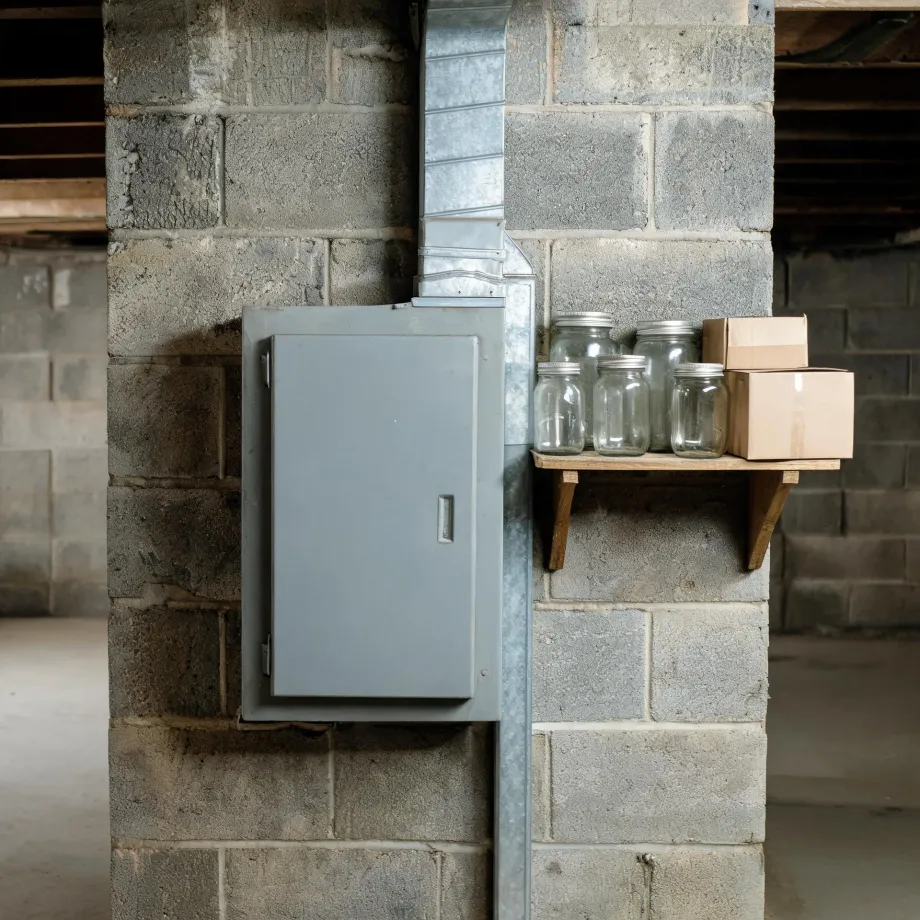
Boilers in houses of this age have typically been replaced at least once, sometimes more, and each successive system inherits the piping, valves, and expansion tanks its predecessor left behind. Half the homes in Faribault County, Minnesota were built in 1952 or earlier (2020-2024 ACS 5-year). That history accumulates inside the system: sediment at the bottom of the heat exchanger, corroded zone valves, pressure relief valves that have never been tested. A contractor opening a boiler here is not quoting a single unit in isolation. The condition of the distribution loop, the state of the bleed valves, and whether the circulator is original to the last boiler or the one before it all determine what the repair actually costs.
The Parts of a Boiler a Contractor Checks First
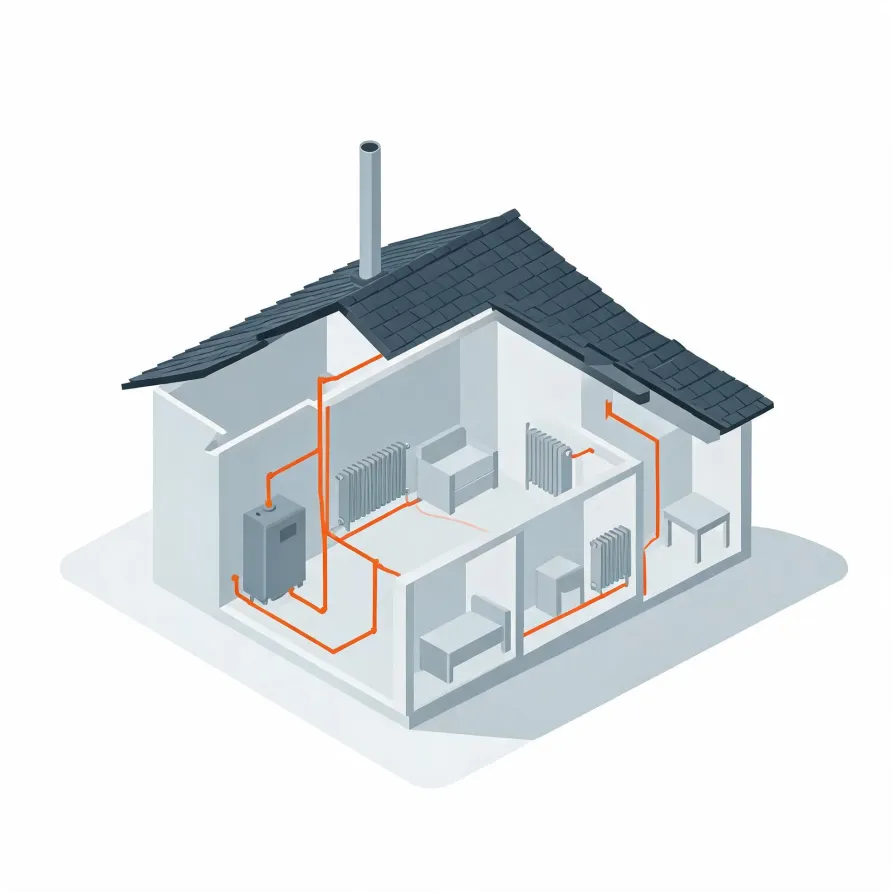
The boiler itself sits in the basement or a mechanical room and is the piece a contractor looks at first. It heats water and pushes it through the system. When heat stops reaching a room, or pressure drops, or the unit short-cycles, the boiler's burner assembly, heat exchanger, or pressure relief valve is where a contractor begins.
Pipes carry heated water out to radiators or baseboard units positioned along exterior walls and in each room. The circulator pump, mounted on the piping near the boiler, drives that flow. A failed pump or an air-locked line shows up as uneven heat or cold zones, and the expansion tank nearby absorbs pressure swings that would otherwise stress the whole loop.
The drawing shows the general layout of a boiler system, and a licensed contractor determines which components apply to your specific installation.
Get matched in Faribault CountyFaribault County, by the record
58 severe weather events were recorded in Faribault County, Minnesota between 2015 and 2024.
NOAA National Centers for Environmental Information, Storm Events Database, bulk CSV export, events 2015-01-01 through 2024-12-31.Half the homes in Faribault County, Minnesota were built in 1952 or earlier (2020-2024 ACS 5-year).
U.S. Census Bureau, 2020-2024 American Community Survey 5-Year EstimatesFaribault County, Minnesota holds 6,897 housing units (2020-2024 ACS 5-year).
U.S. Census Bureau, 2020-2024 American Community Survey 5-Year EstimatesOwners occupy 79.2% of the occupied homes in Faribault County, Minnesota (2020-2024 ACS 5-year).
U.S. Census Bureau, 2020-2024 American Community Survey 5-Year EstimatesBoiler Repair Rules & Standards for Faribault County, Minnesota2 sourced regulations and codes
Licensing and Legal Requirements in Faribault County, Minnesota
Minnesota defines a mechanical contractor as a business that installs, repairs or maintains heating, ventilating, cooling or refrigeration systems — the definition that carries the exemption from the residential contractor licence.
Minnesota's residential contractor licence does not reach HVAC work: the licensing section carries its own exemption list, and a mechanical contractor is exempt from the licence requirement by name.
Severe Weather Events in Faribault County
Minnesota winters put real stress on boiler systems, and Faribault County weather is part of what drives that load. Repair demand follows what the climate demands of the equipment.
58 severe weather events, 2015–2024. Source: NOAA National Centers for Environmental Information, Storm Events Database.