Tell us about the job
Takes about a minute. No obligation.
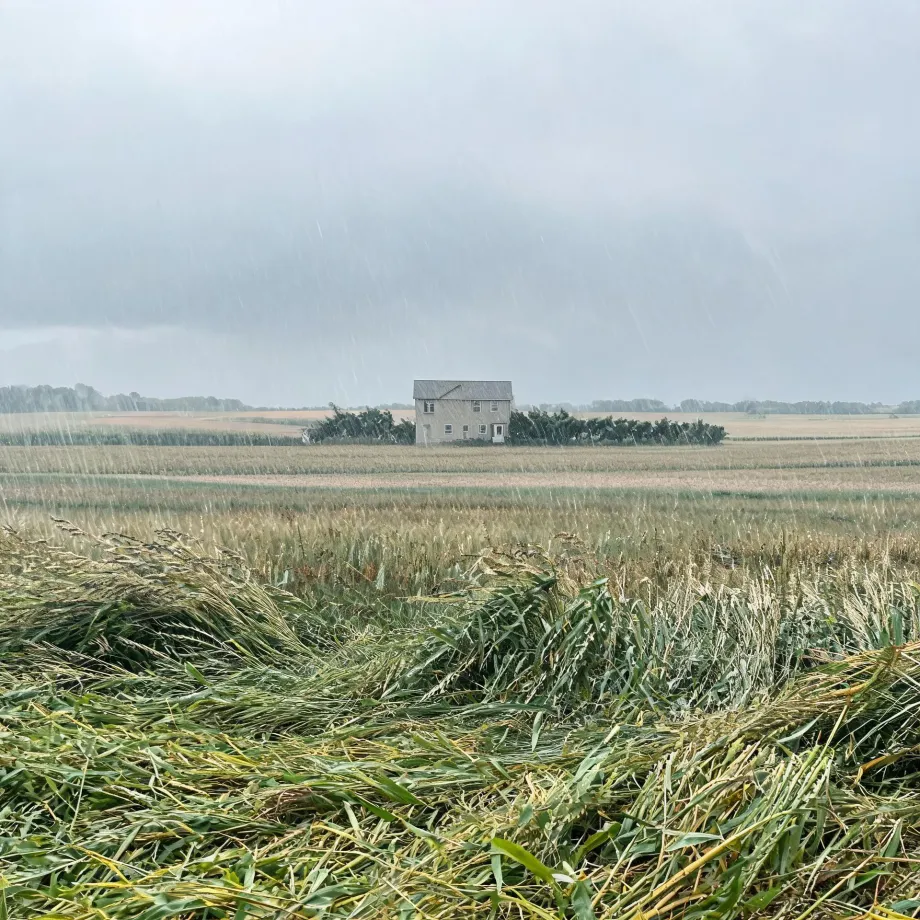
A boiler repair in Pipestone County starts with what the system has been asked to do and how long it has been doing it. 92 severe weather events were recorded in Pipestone County, Minnesota between 2015 and 2024. At that rate, severe weather is a genuine part of a boiler's working life here, enough that a contractor checks seals, pressure relief valves, and heat exchangers with the local record in mind. Even so, most failures a contractor finds in this county trace back to deferred maintenance or component age rather than storm load alone. That is where the diagnosis lands first, and it is where the repair estimate gets built.
Boiler repair in housing this old often stalls on one thing: whether the part a system needs is still being made. Half the homes in Pipestone County, Minnesota were built in 1956 or earlier (2020-2024 ACS 5-year). A boiler installed well after a house was built can still be old enough that its heat exchanger sections, zone valves, or pressure relief components are no longer in regular production. A contractor who opens the unit and identifies the failed part then has to determine whether it ships from a current distributor or requires sourcing through salvage channels, and that answer shapes the repair scope and the timeline more than the diagnosis itself does.
The Parts of a Boiler a Contractor Checks First
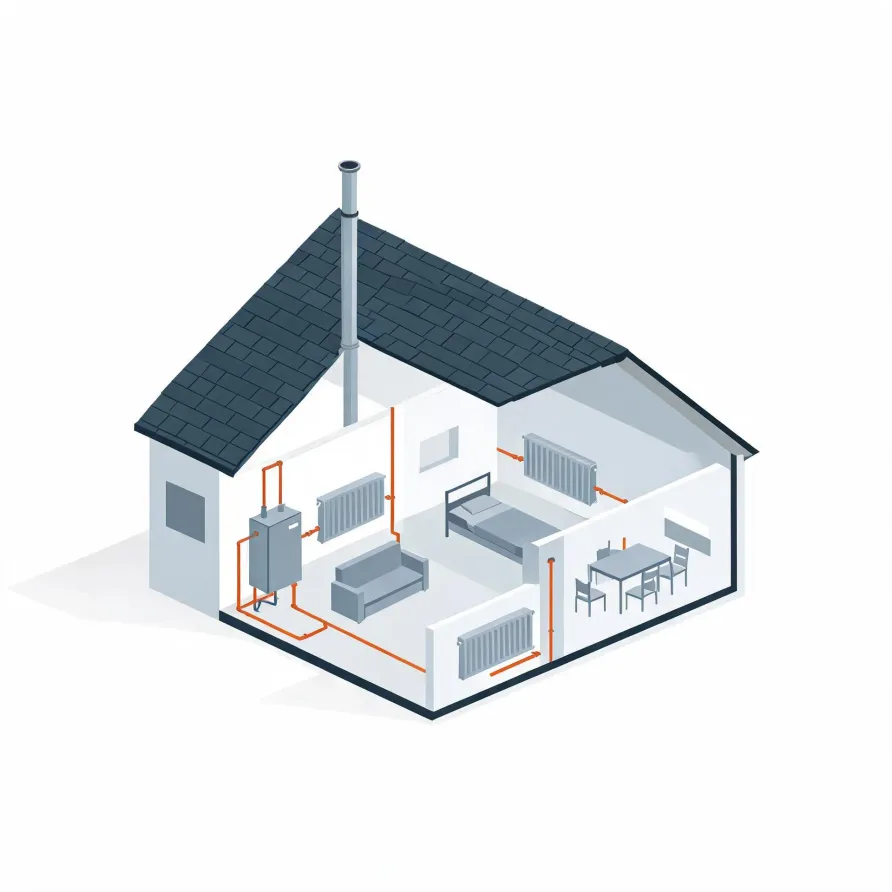
The boiler itself sits in the basement or a utility room and is the piece a contractor goes to first. It heats water and pushes it out through the system. When heat is absent or uneven, the problem often starts here, at the heat exchanger, the burner, or the pressure and temperature controls mounted on the unit.
From the boiler, supply pipes carry hot water to radiators or radiant panels in the living spaces, and return pipes bring cooled water back. The circulator pump, typically strapped to the return line near the boiler, is what moves water through that loop. When a room stays cold while others are warm, the pump or a stuck zone valve is where a contractor looks next.
The drawing shows the general layout of a boiler system, and a licensed contractor determines which parts and conditions apply to your specific home.
Get matched in Pipestone CountyPipestone County, by the numbers
92 severe weather events were recorded in Pipestone County, Minnesota between 2015 and 2024.
NOAA National Centers for Environmental Information, Storm Events Database, bulk CSV export, events 2015-01-01 through 2024-12-31.Half the homes in Pipestone County, Minnesota were built in 1956 or earlier (2020-2024 ACS 5-year).
U.S. Census Bureau, 2020-2024 American Community Survey 5-Year EstimatesPipestone County, Minnesota holds 4,325 housing units (2020-2024 ACS 5-year).
U.S. Census Bureau, 2020-2024 American Community Survey 5-Year EstimatesOwners occupy 80.8% of the occupied homes in Pipestone County, Minnesota (2020-2024 ACS 5-year).
U.S. Census Bureau, 2020-2024 American Community Survey 5-Year EstimatesBoiler Repair Rules & Codes for Pipestone County, Minnesota2 sourced standards and regulations
Licensing and Legal Requirements in Pipestone County, Minnesota
Minnesota defines a mechanical contractor as a business that installs, repairs or maintains heating, ventilating, cooling or refrigeration systems — the definition that carries the exemption from the residential contractor licence.
Minnesota's residential contractor licence does not reach HVAC work: the licensing section carries its own exemption list, and a mechanical contractor is exempt from the licence requirement by name.
Severe Weather Events in Pipestone County
Pipestone County weather puts real strain on boiler systems, and that strain shows up as repair calls. How hard the weather runs here shapes how hard the equipment works, which makes local conditions a practical matter for any boiler service.
92 severe weather events, 2015–2024. Source: NOAA National Centers for Environmental Information, Storm Events Database.