Tell us about the job
Takes about a minute. No obligation.

A boiler repair call in Olmsted County carries a specific diagnostic question: which parts failed from age and which ones failed from being worked hard. 230 severe weather events were recorded in Olmsted County, Minnesota between 2015 and 2024. At that rate, severe weather is a standing condition for every system in the county, not an occasional disruption. Heat exchangers, pressure relief valves, and expansion tanks absorb that load over years, and a contractor opening up a boiler here will check those components against what they find inside, not against what a catalog predicts. The repair scope follows from that inspection.
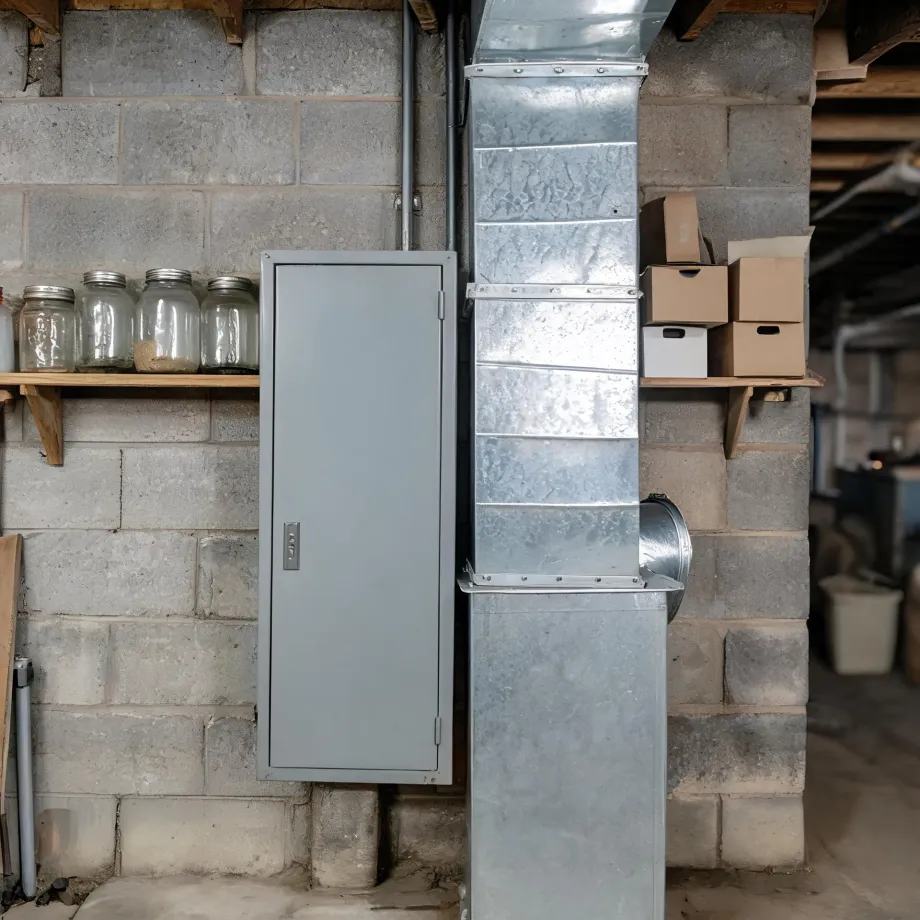
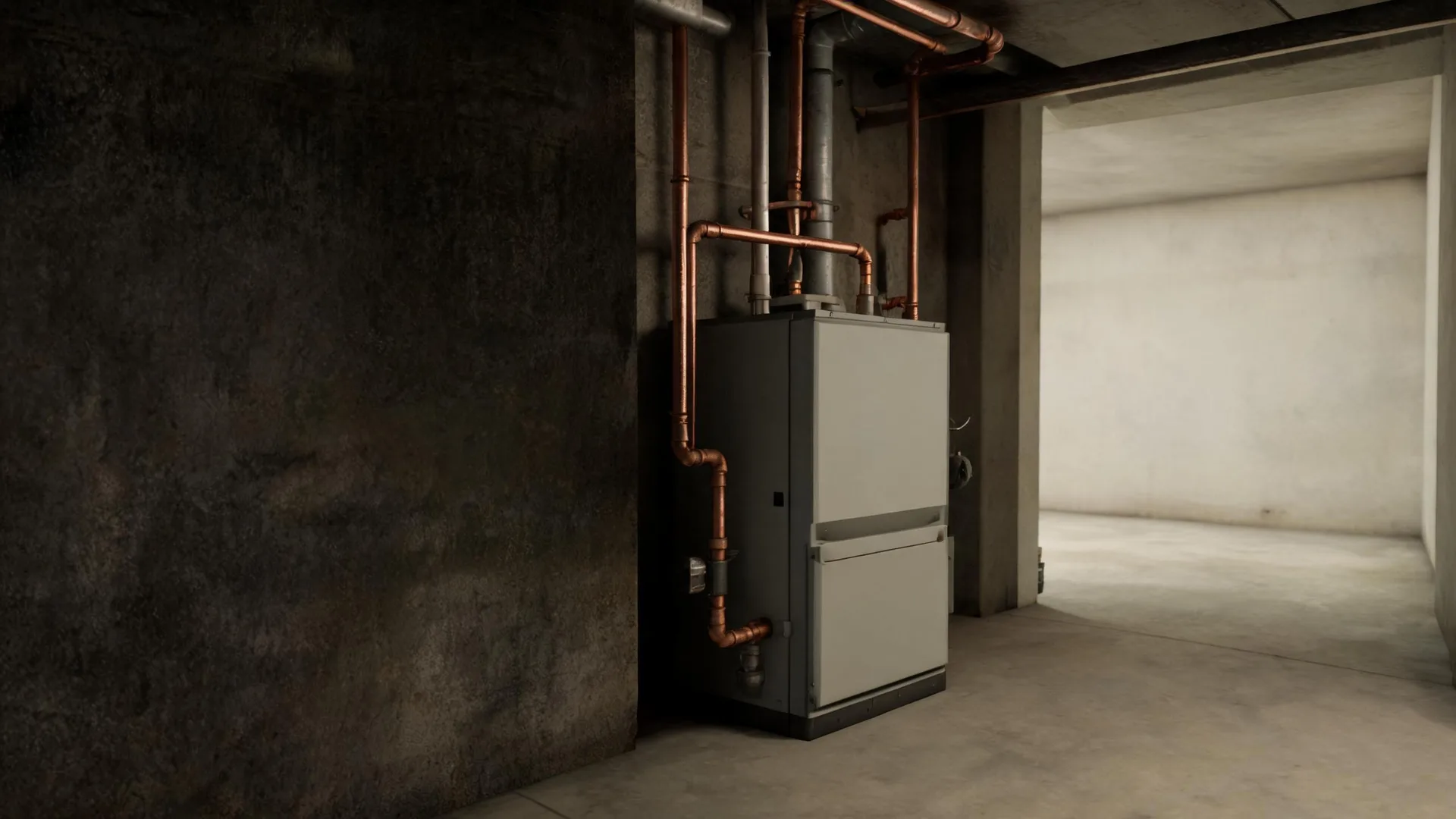
Boilers in this county get opened and what is inside them reflects a long service history: corroded heat exchangers, failed zone valves, sediment-packed systems, and expansion tanks that have long since lost their charge. Half the homes in Olmsted County, Minnesota were built in 1989 or earlier (2020-2024 ACS 5-year). A contractor working on a system in housing that old is not chasing a simple part swap in any predictable fraction of jobs. The real question is what condition the system is in once it is open, and whether the parts it takes are still in production.
The Parts of a Boiler a Contractor Checks First
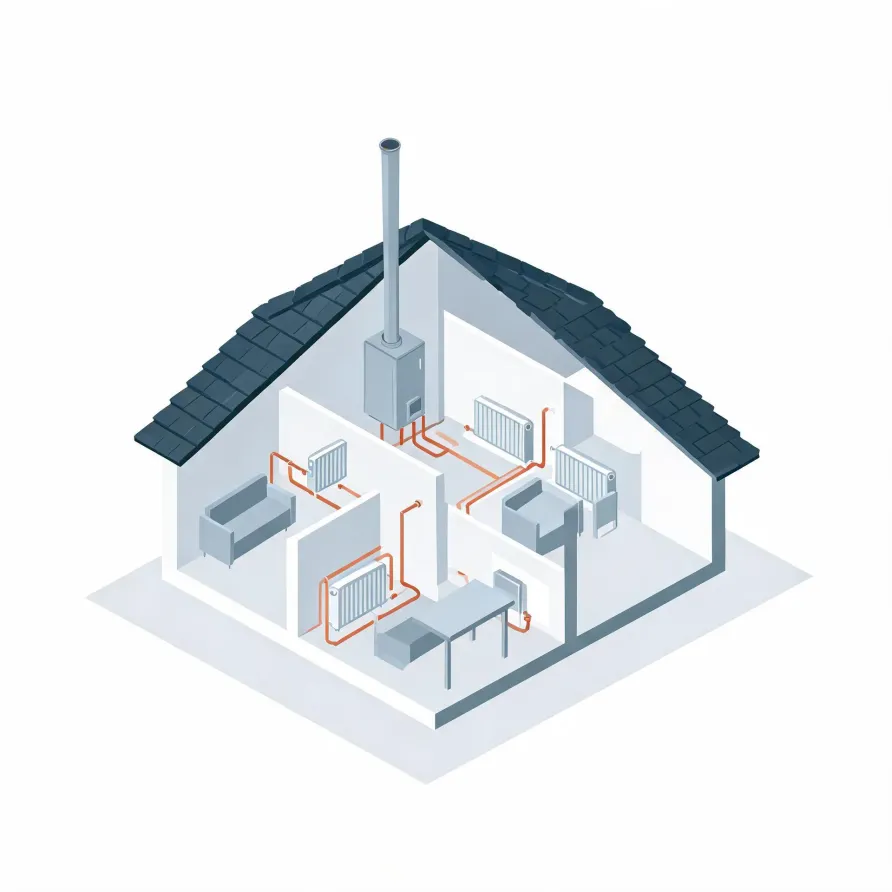
The boiler itself sits in the basement or mechanical room and is the piece a contractor goes to first. Inside it, the heat exchanger and burner assembly are common failure points: the burner produces the heat, and the heat exchanger transfers it to the water without letting combustion gases cross over. The pressure relief valve mounts directly on the vessel and is an early stop on any repair visit.
From the boiler, supply pipes carry hot water to radiators or baseboard units throughout the house, and return pipes bring cooled water back. The circulator pump drives that loop and is a frequent suspect when heat is uneven or absent from certain rooms. The expansion tank, usually hanging near the boiler, absorbs pressure changes in the system and shows up on a contractor's checklist whenever pressure readings are off.
The drawing shows a representative layout, and a licensed contractor determines which components and conditions apply to your specific system.
Get matched in Olmsted CountyOlmsted County, by the numbers
230 severe weather events were recorded in Olmsted County, Minnesota between 2015 and 2024.
NOAA National Centers for Environmental Information, Storm Events Database, bulk CSV export, events 2015-01-01 through 2024-12-31.Half the homes in Olmsted County, Minnesota were built in 1989 or earlier (2020-2024 ACS 5-year).
U.S. Census Bureau, 2020-2024 American Community Survey 5-Year EstimatesOlmsted County, Minnesota holds 71,151 housing units (2020-2024 ACS 5-year).
U.S. Census Bureau, 2020-2024 American Community Survey 5-Year EstimatesOwners occupy 70.6% of the occupied homes in Olmsted County, Minnesota (2020-2024 ACS 5-year).
U.S. Census Bureau, 2020-2024 American Community Survey 5-Year EstimatesBoiler Repair Rules on the Books for Olmsted County, Minnesota2 codes, standards & licensing rules
Licensing and Legal Requirements in Olmsted County, Minnesota
Minnesota defines a mechanical contractor as a business that installs, repairs or maintains heating, ventilating, cooling or refrigeration systems — the definition that carries the exemption from the residential contractor licence.
Minnesota's residential contractor licence does not reach HVAC work: the licensing section carries its own exemption list, and a mechanical contractor is exempt from the licence requirement by name.
Severe Weather Events in Olmsted County
Olmsted County weather puts real stress on boiler systems, and that stress compounds over time. Strain from temperature swings and storm conditions is one of the main reasons repair needs develop, which is why local weather history belongs on a page about boiler service.
230 severe weather events, 2015–2024. Source: NOAA National Centers for Environmental Information, Storm Events Database.