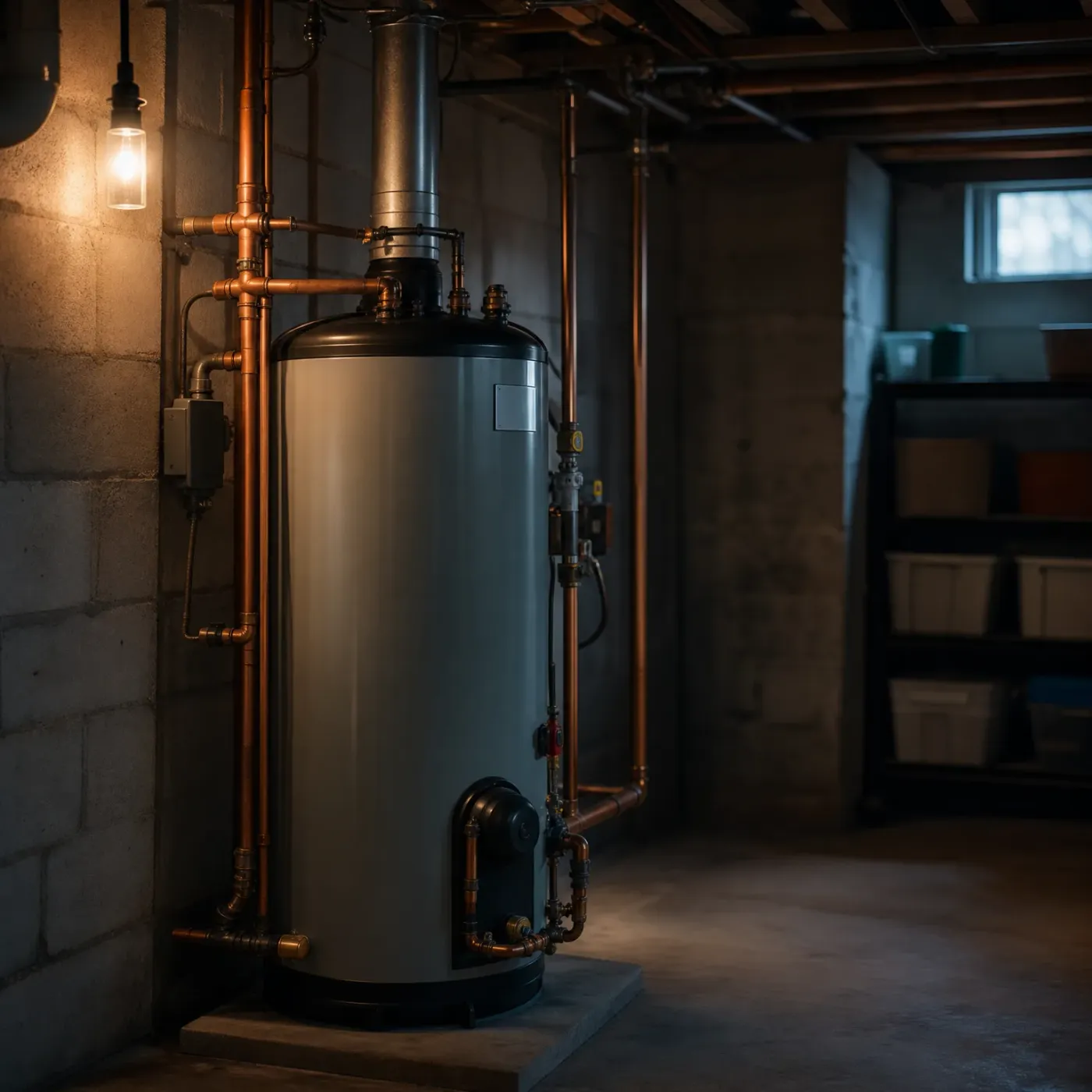




A cylindrical water heater or boiler with a flue pipe and copper piping stands on a concrete pad in a dim basement with concrete block walls, a hanging bulb at left and a shelving unit with bins at right.

Get the right pro for your boiler

Is a high-efficiency boiler worth it in Minnesota

A high-efficiency boiler runs longer and colder than your old one, and in a Minnesota winter that changes what it actually saves you. Whether it's worth it depends on your house, your current boiler, and what gas runs you each month. This page gets into what decides that, and what it takes to size and install one right. When you're ready, you can get matched with a contractor who'll look at your setup and reach out.

Get a boiler pro

Yes, for most Minnesota homes, because of how long and how hard your boiler runs here. Winters push a boiler through months of steady firing, not the occasional cold snap, and that's where the difference between an old boiler and a high-efficiency one shows up. A standard gas boiler sends a lot of heat straight out the flue. A high-efficiency, condensing model pulls more of that heat out of the exhaust before it leaves, which matters when the burner is running for a long stretch of the year. The payoff depends on what you're replacing. If your current boiler is old and was never efficient to begin with, the gap is bigger and the new one earns its keep faster. If it's a newer mid-efficiency unit, the gap is smaller. Either way, the house keeps its value either way, and a boiler that's doing its job without wasting gas is part of that.

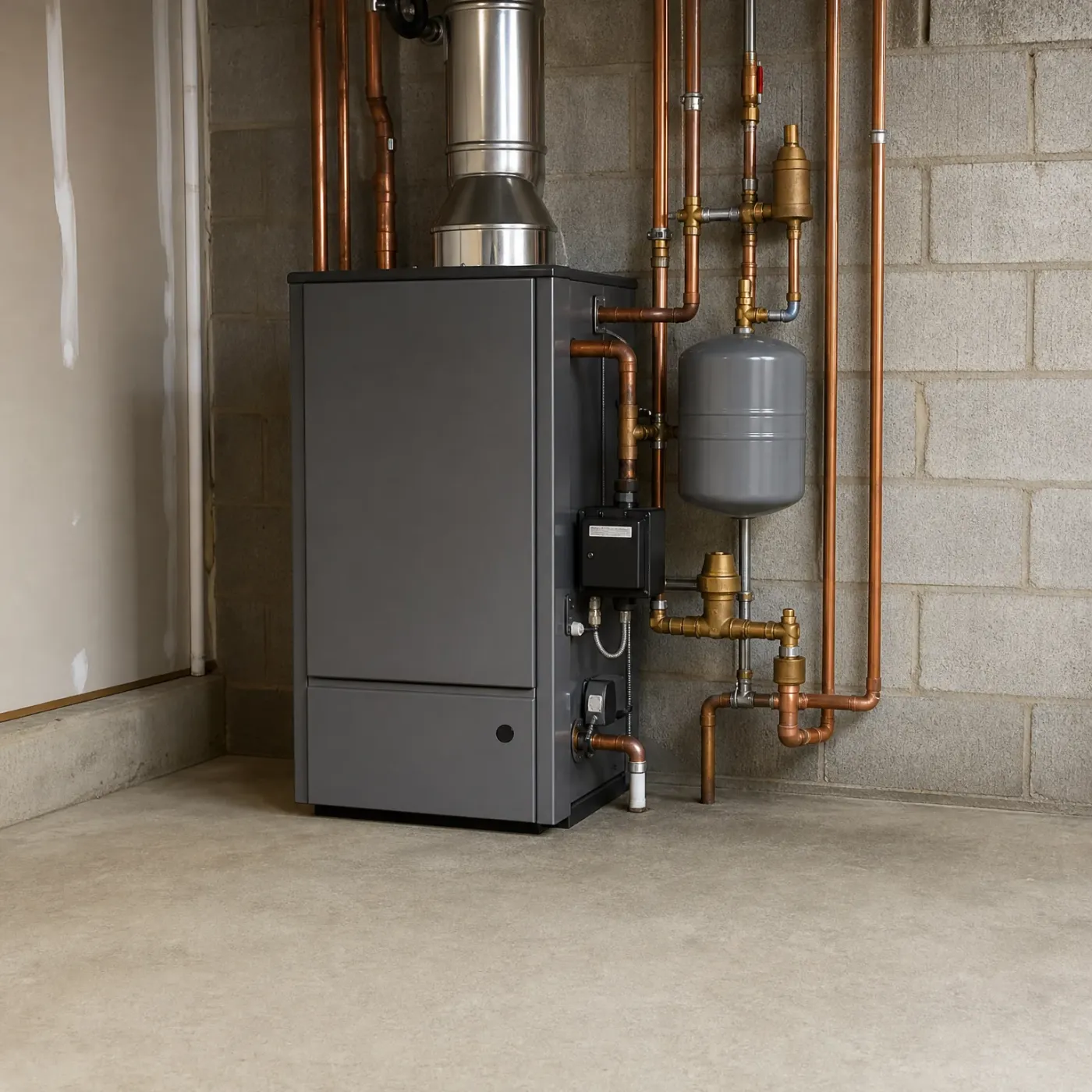
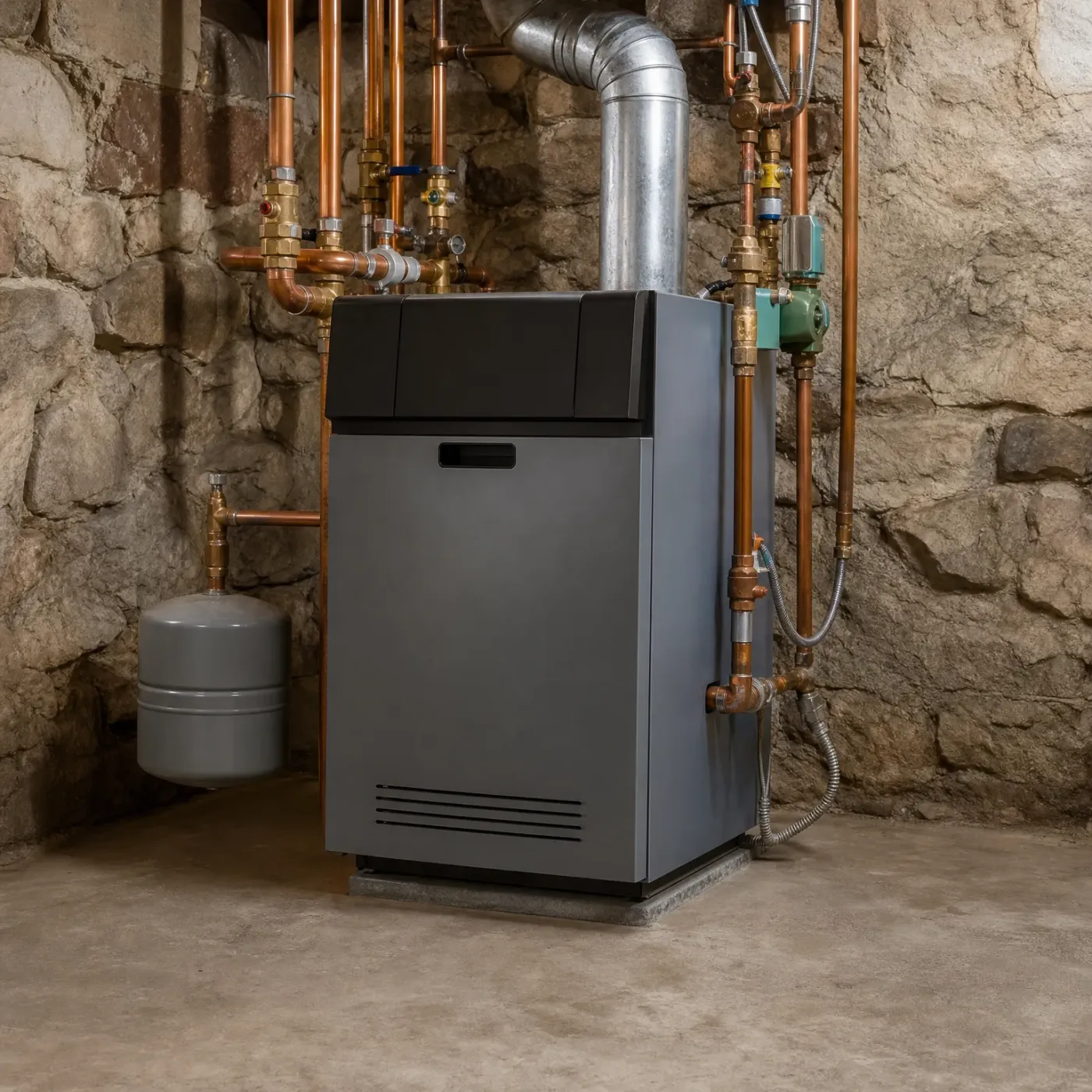
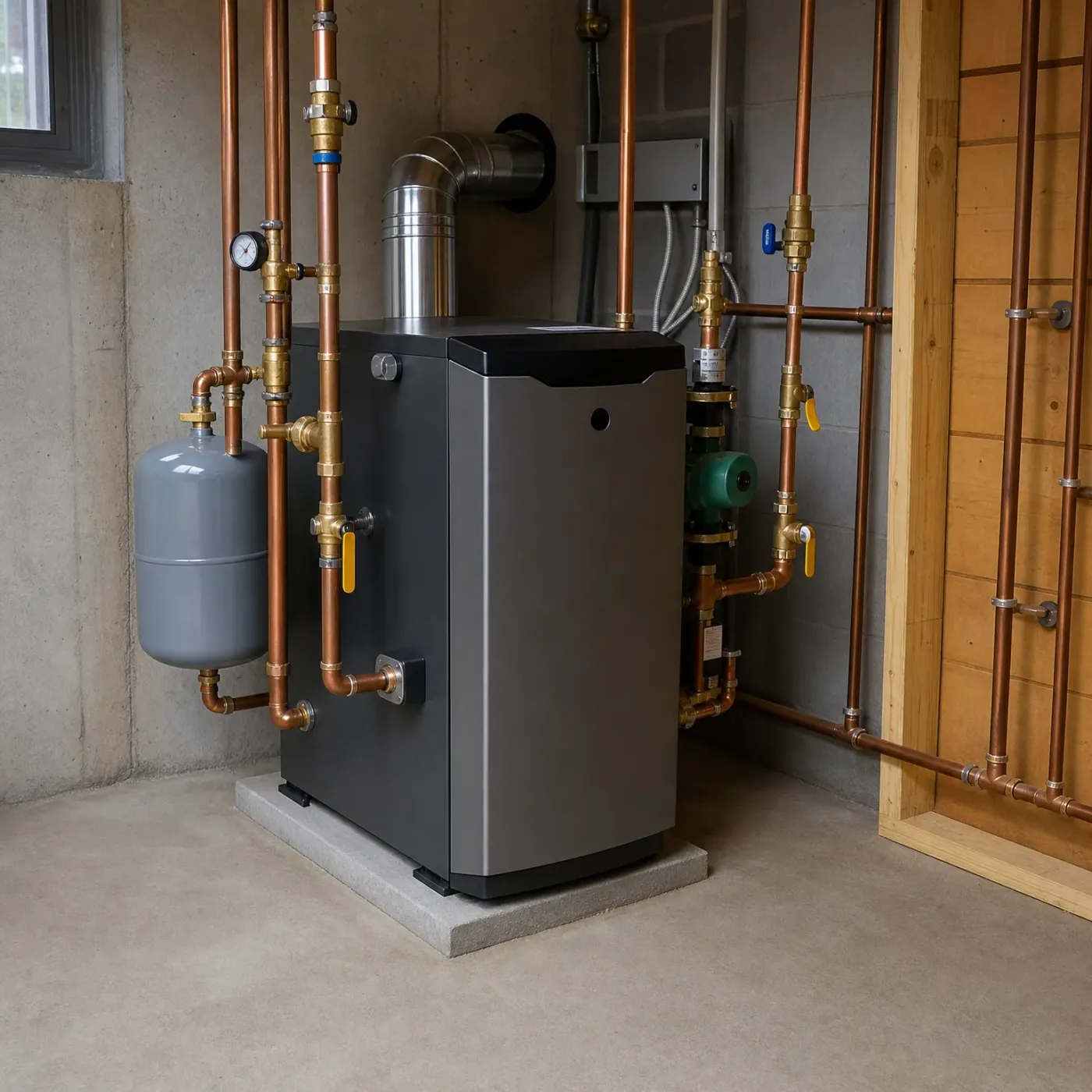
A gray floor-standing boiler with a metal flue stands against a concrete block wall, connected to copper pipes, brass valves and a gray expansion tank, on a bare concrete floor.
A boiler like this is still firing efficiently, pulling heat out of the exhaust before it goes out the flue instead of wasting it.
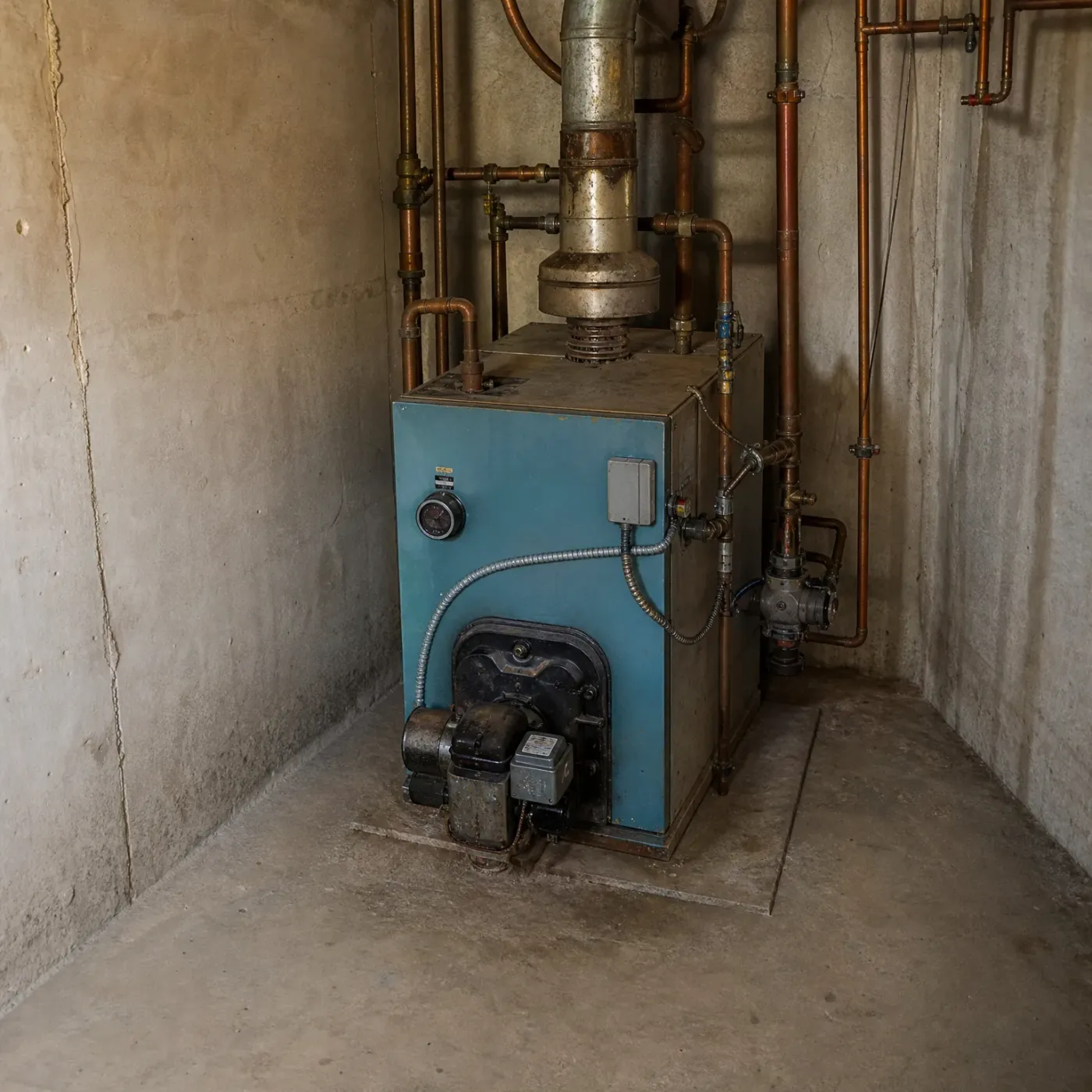
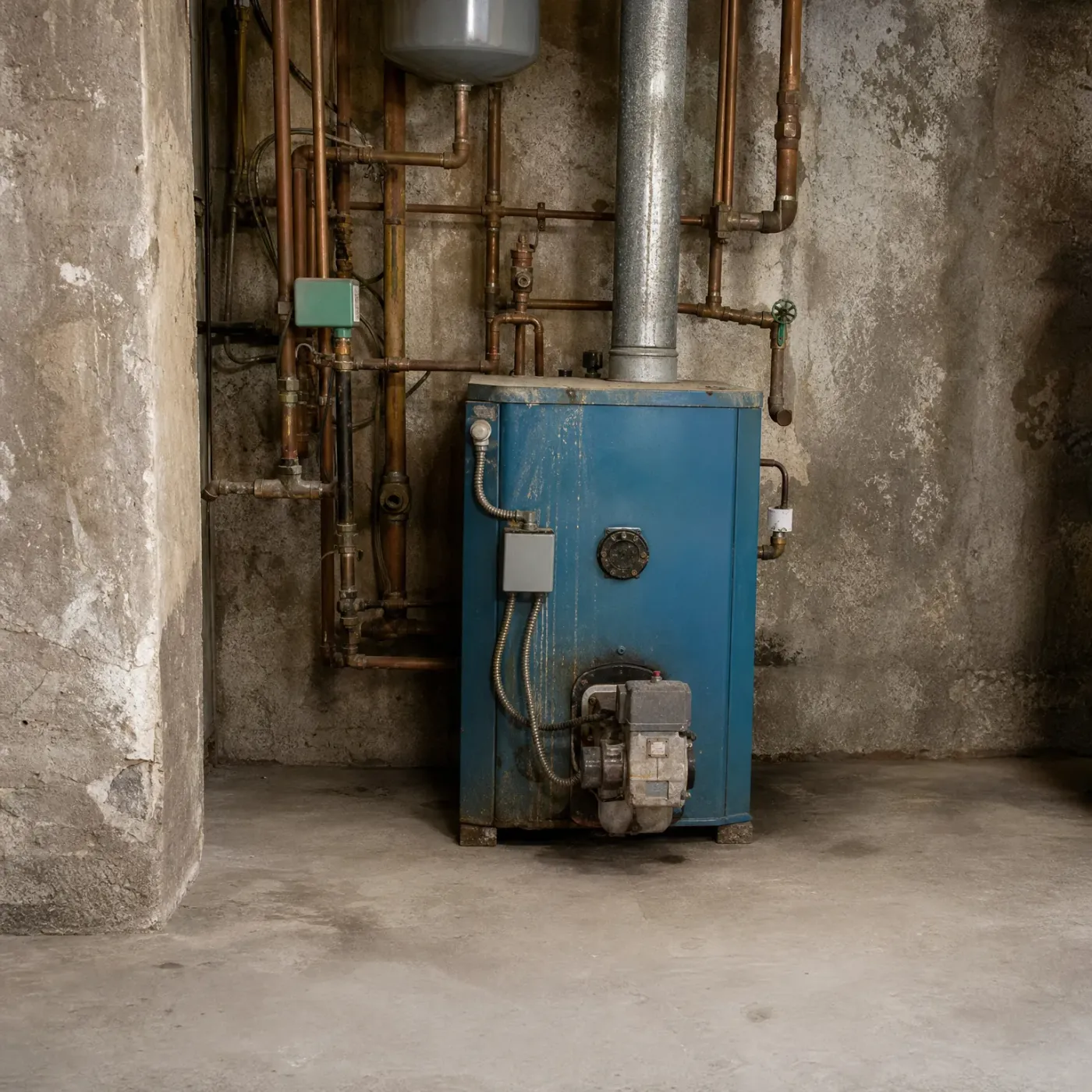
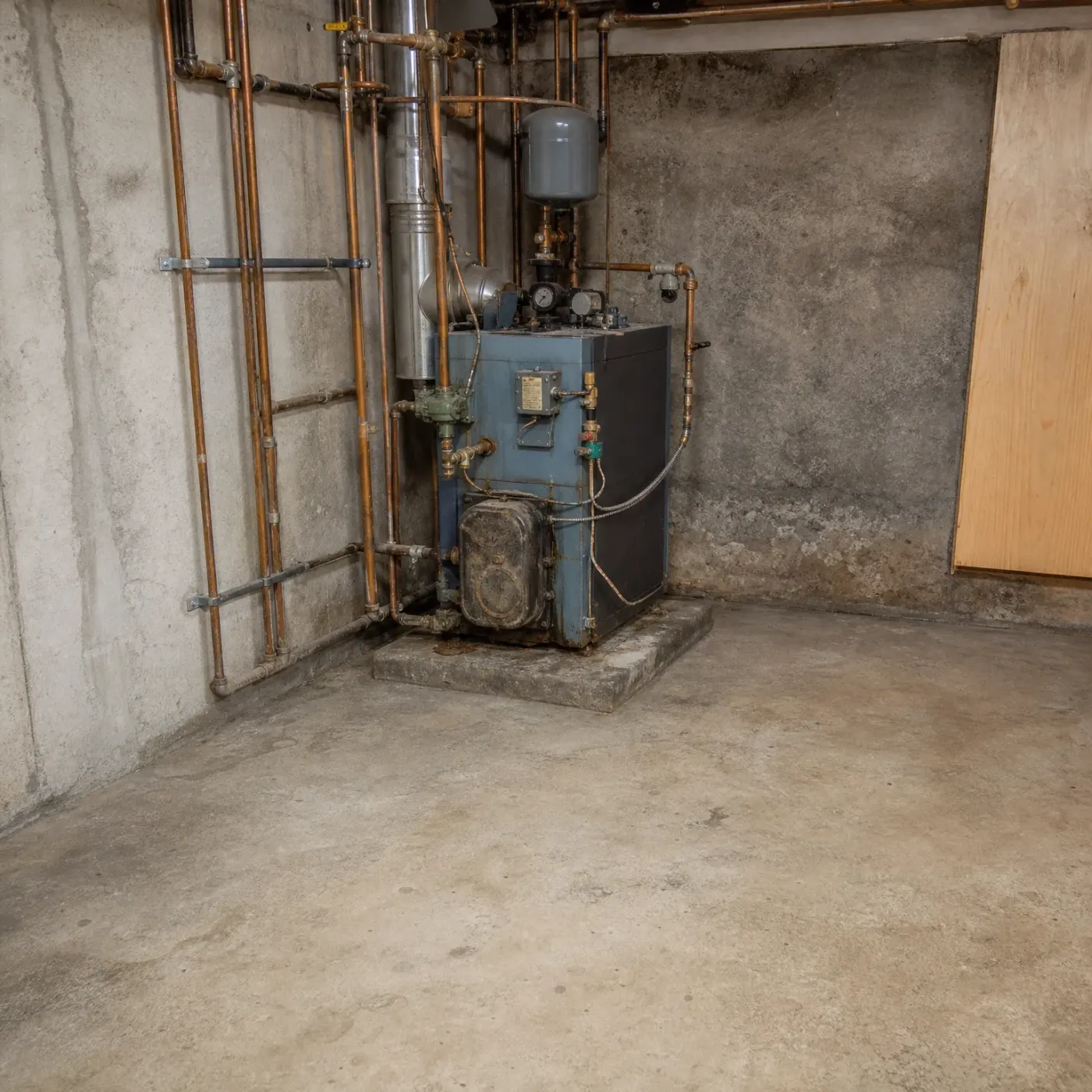
A blue oil-fired boiler with a burner unit and pressure gauge stands in a concrete basement corner, connected to copper pipes and a metal flue.
An old boiler like this one burns fuel at a flat rate all winter, so every degree below freezing costs you the same regardless of the loss.

How a condensing boiler actually works

  • A high-efficiency boiler uses a second heat exchanger to pull more heat out of the exhaust before it vents.
  • That exhaust runs cool enough to vent through PVC pipe out the side wall instead of a metal flue up the chimney.
  • The burner modulates, ramping output up and down to match the cold outside rather than firing at one flat rate.
  • Condensing boilers produce acidic condensate that drains out through a small pump or gravity line near the unit.
  • An old boiler's flue gas has to stay hot enough to rise up the chimney, and that heat is what gets lost.
  • Sensors track the return water temperature and adjust the burn so the boiler isn't working harder than the house needs.

An old boiler sends its exhaust up a metal flue, and that gas has to stay hot or it won't rise. All the heat it takes to keep that draft going is heat that doesn't make it into your house. A high-efficiency boiler doesn't need that draft. It has a second heat exchanger that pulls additional heat out of the exhaust before it leaves, so what's left is cool, sometimes close to room temperature. Cool exhaust can vent through PVC pipe straight out a side wall instead of up a chimney, which is part of why these units get installed where the old one's flue run doesn't make sense anymore.

Pulling that much heat out of the exhaust creates condensate, water mixed with a bit of acid, and it has to go somewhere. There's a small pump or a gravity line near the unit that drains it off, usually into a nearby floor drain or a condensate pump.

The burner itself doesn't fire at one setting the way an old boiler does. It modulates, ramping up when it's ten below and easing back on a 35 degree day, so it's not pushing out more heat than the house asks for. Sensors read the temperature of the water coming back from your radiators or baseboards and adjust the burn to match. On a milder day, that means a lower flame and less gas burned to hold the same temperature indoors.

A blue cabinet boiler with a metal flue pipe and copper piping stands against a bare concrete wall in a basement with a concrete floor.
Before you get your boiler installation
A gray residential boiler on a concrete pad in a basement with stone walls, connected to copper piping, brass valves, a circulator pump, an expansion tank, and a metal flue duct.
After you get your boiler installation

A pro who works on boilers

A Minnesota winter is a long test for a boiler, and if yours is old, you've probably already felt it in January and February, when it just runs and runs. Deciding whether a high-efficiency replacement is worth it means pricing out the actual unit, sizing it to your house, and figuring out venting, since swapping the flue for PVC often means rerouting it. That's not a job to guess at over the phone with three different companies, each wanting to come look at your basement before they'll even quote you. Getting matched with a contractor who installs these regularly means one visit, one person who already knows what Minnesota homes need for venting and sizing, looking at your actual boiler and your actual house. You still have a cold winter ahead of you either way. What you don't have to do is spend the next few weeks chasing quotes to find out what your options are.

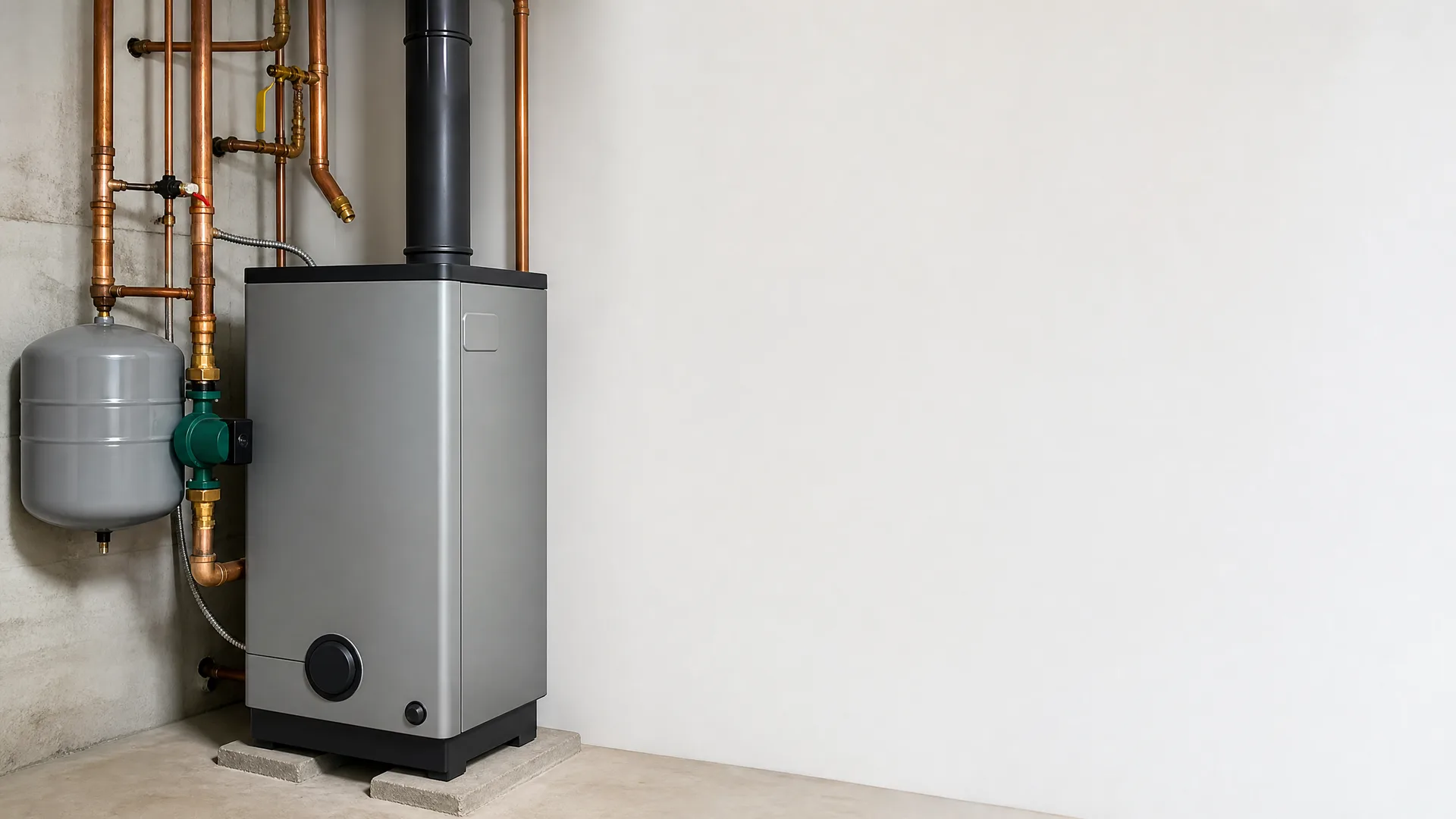
A gray floor-standing boiler with a black flue pipe stands on concrete blocks in a corner, connected to copper pipes, a green circulation pump, and a gray expansion tank on the wall.

Condensing heat means a wet vent

A high-efficiency boiler cools the exhaust enough that it gives up water vapor as it leaves, the same way your breath fogs on a cold day. That condensate has to drain somewhere, usually through a small tube into a floor drain or a pump. Your old boiler never had this problem because its flue gas left too hot to condense, which is also why it needed a metal chimney instead of PVC.

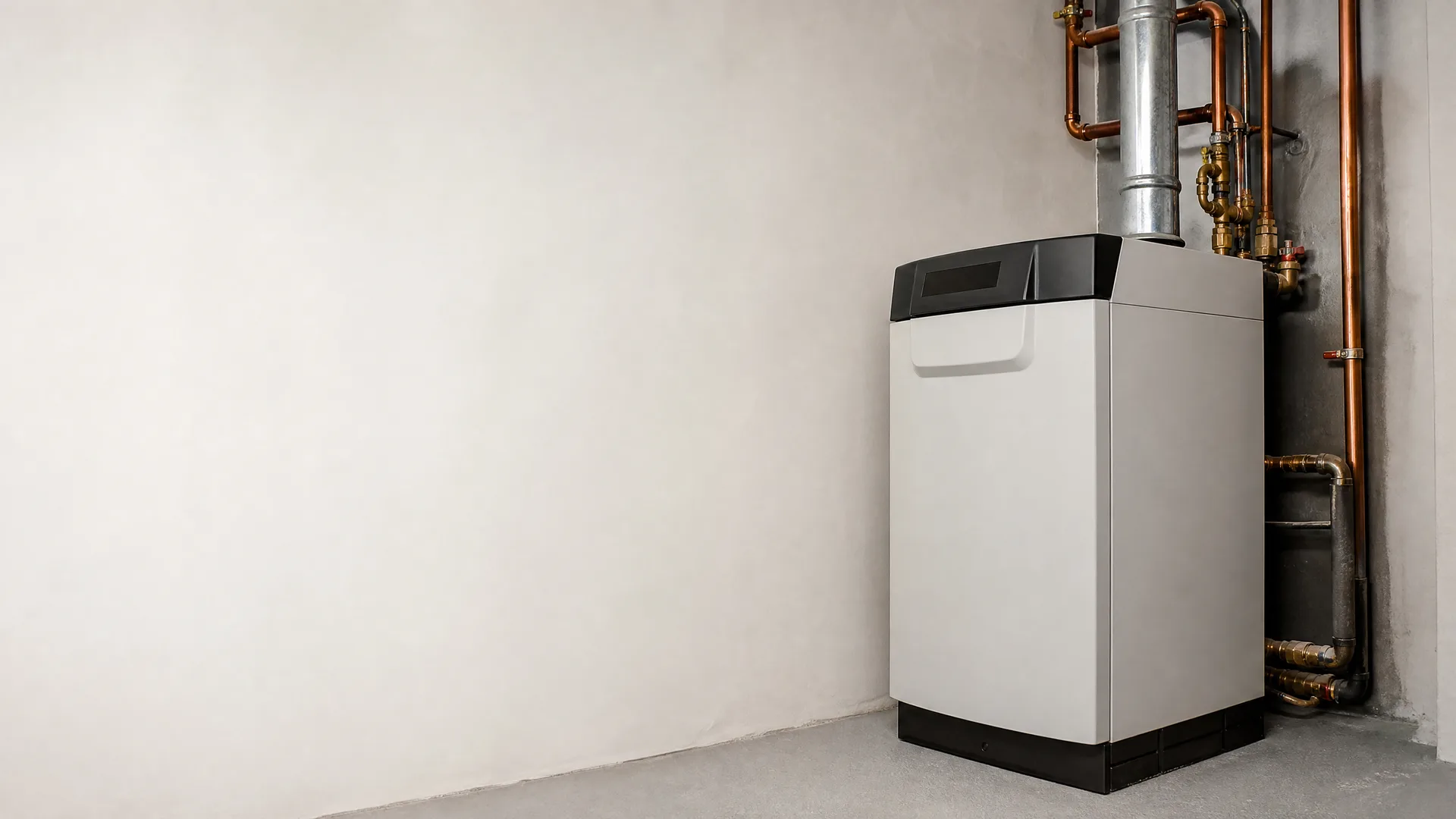
A white and black floor-standing boiler in the corner of a bare plastered room, with copper and metal pipes running up the wall behind it.

Modulation matters more than peak output

An old boiler fires at one rate: full blast, whether it's 34 degrees outside or minus 10. A high-efficiency unit ramps its burner up and down to match the heat your house is actually losing at the moment. On a mild March day in Minnesota, that might mean running at a fraction of full output for hours instead of cycling on and off at full fire, which is where a lot of the gas savings actually come from.

Why does a high-efficiency boiler need a condensate pump?

You've seen the alternating image section mention the condensate draining through a tube into a floor drain, and now you're wondering why some installs need a pump for that instead of just letting it drain. It matters because not every mechanical room has a floor drain nearby, and that changes what your installer has to work with.

It pumps the condensate uphill when gravity can't get it to a drain

A high-efficiency boiler produces condensate the whole time it runs, and that water has to go somewhere. If your mechanical room has a floor drain right below the boiler, gravity does the job through a length of tubing. Most basements don't have a drain in the right spot. When the nearest drain is across the room, up a wall, or a level away, the installer sets a small condensate pump next to the boiler. The boiler drains into it, a float switch triggers, and the pump pushes the water out through a thin line to wherever it can drain. It's a small part, but if it fails, the boiler usually locks out rather than flooding the room.

A gray-haired, bearded man in a dark coat dusted with snow stands smiling in a dimly lit room with a lamp, mirror, framed art, and a sofa in the background.
An older man with white hair and a beard, wearing a dark snow-dusted coat and scarf, stands in a warmly lit interior hallway with a framed landscape picture, a table lamp and a potted plant behind him, and a snowy view through a window at left.
An older man in a dark snow-flecked overcoat and scarf stands smiling in a warmly lit home entryway, with a glass-paned door showing darkness outside and a lamp-lit room visible through a doorway behind him.
An older man with gray hair and a beard, wearing a dark snow-dusted jacket and scarf, stands smiling in a warmly lit interior hallway with a lit table lamp, a vase of dried branches, and a framed picture in the background.

Winter nights average 8°F statewide

8°F is the average overnight low here across December, January and February, not the coldest night but the ordinary one. At that temperature your boiler isn't cycling on and off, it's holding a steady fire most of the night, which is exactly where a high-efficiency unit pulls ahead.

NOAA nClimDiv 1991-2020 county normals weighted by homes

A dark gray floor-standing boiler on a concrete pad in a basement, surrounded by copper piping, brass valves, a gray expansion tank, a circulator pump, and a metal flue pipe against concrete block walls.

Running clean through a cold snap

That green pump and the sealed network of copper feeding it are doing steady, quiet work. The pressure gauge holds where it should, the flue pipe stays narrow because the exhaust leaves cool, and the system keeps modulating instead of slamming on and off all night.

A blue boiler on a raised concrete pad in a basement corner, with copper and steel pipes, a gauge cluster, an expansion tank, and a metal flue running up the bare concrete walls.

An old boiler on borrowed time

That wide metal flue running up to the ceiling is venting exhaust still hot enough to need it, heat your gas bill paid for and never got back. Bare concrete and a raised pad don't tell you its age, but a boiler run this hard every Minnesota winter wears down the same way regardless.

A man in a dark blue shirt stands in an open front doorway of a stucco and wood-clad house, facing a blond woman seen from behind in the foreground on a stone walkway.

Where that leaves you

A high-efficiency boiler earns its keep in a Minnesota winter, through the long stretches of steady firing that your old one just burns through at a flat rate. The math on your house, your current boiler, and your gas bills points the same direction most of the time: replacing it is worth doing.

Getting there still means the usual work, pricing out units, checking who's licensed for the venting changes, sorting quotes that all describe the job differently. You don't have to do that part alone. Answer a few questions about your boiler and your house, and a contractor who handles this kind of installation in Minnesota will reach out to you directly, with the specifics already in hand.

Interior corner of a dining room with a round wooden table, a ceramic vase holding olive branches, a dark spindle-back chair near a curtained window, and a sideboard with a lamp against beige walls.
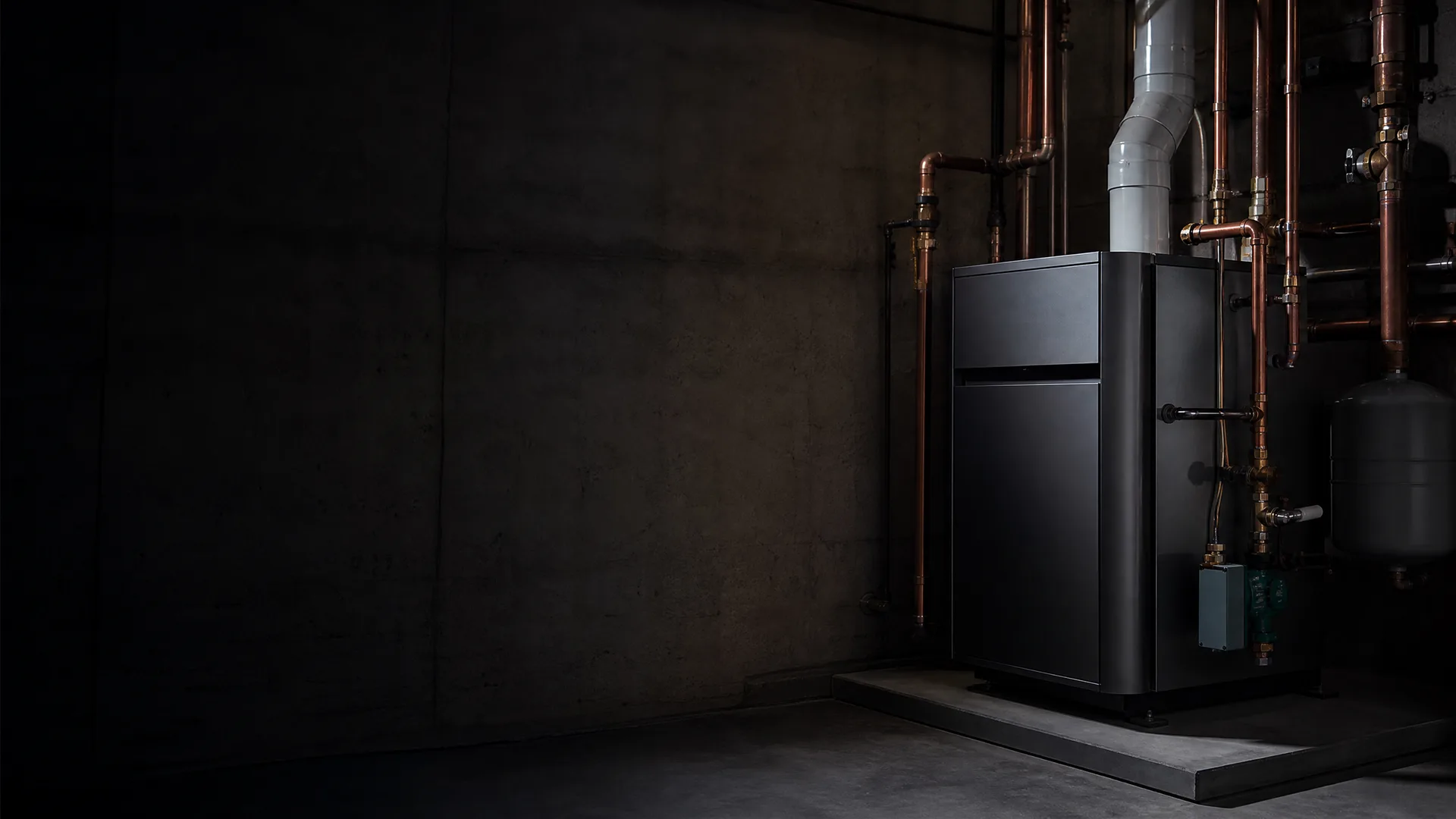
A black boiler unit on a concrete pad in a dim basement room, connected to copper pipes, a metal flue duct, and an expansion tank against a bare concrete wall.

Get your boiler to the right pro

Skip the round of in-home estimates for a new boiler.

Step 1 of 3: Equipment