

Repair or replace an old boiler in Minnesota

Send the form and the search for an installer is over.

Let a pro reach out

Most boilers in Minnesota are worth repairing before age 15 and worth replacing after that, especially if the heat exchanger is cracked or it's running on a repair that's already failed once before. A boiler that's 15 to 20 years old and needs a part beyond a circulator pump or a zone valve usually costs more to keep patching than to replace, and with winters here running cold from November into March, a breakdown means more than an inconvenience. If your boiler is under 10 years old, a repair almost always makes sense. Past 20, most contractors will tell you straight that a new install is the better bet, since a failing boiler on a January night isn't something you want to gamble on. The real deciding factor is what's actually wrong with it and how old it is when that failure happens.

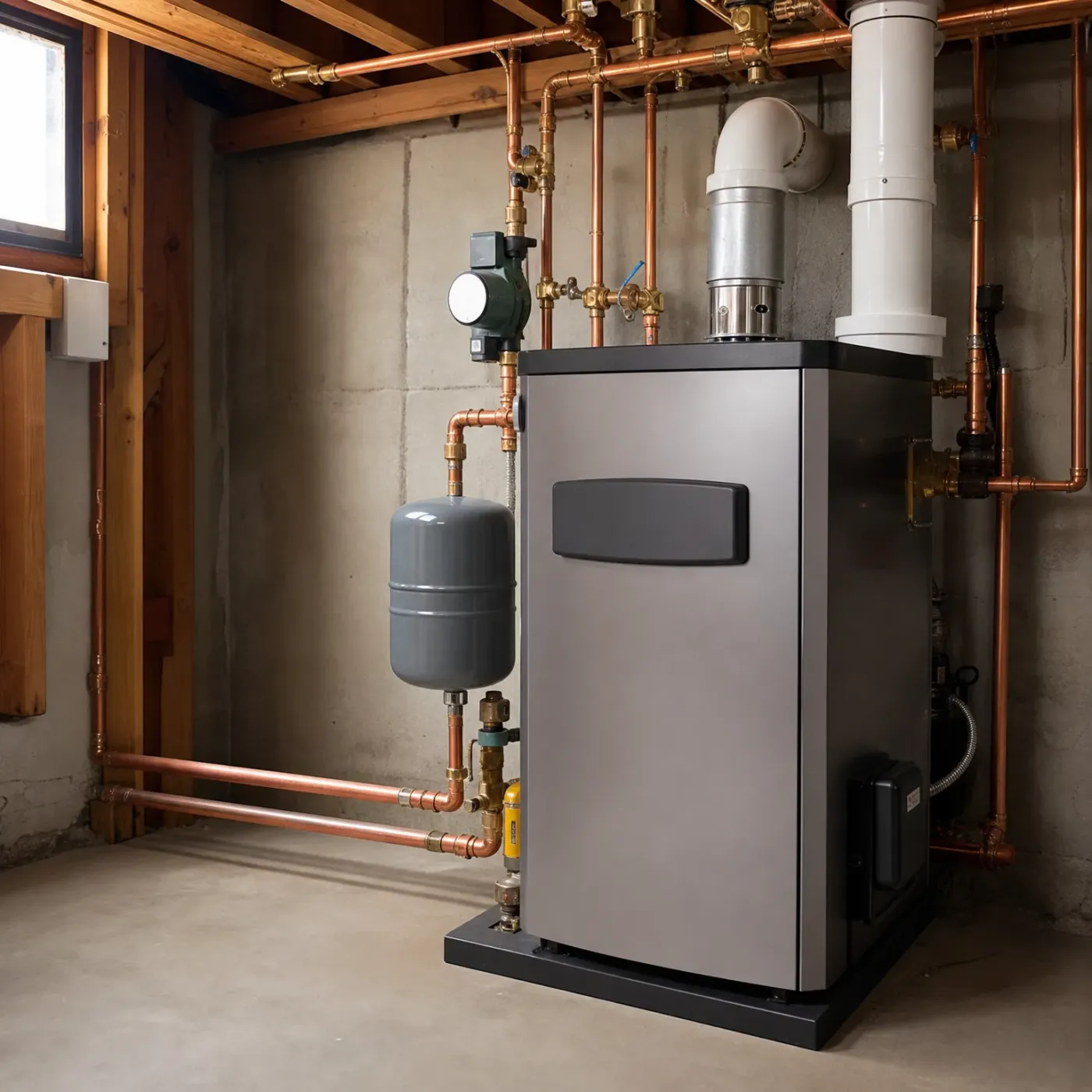
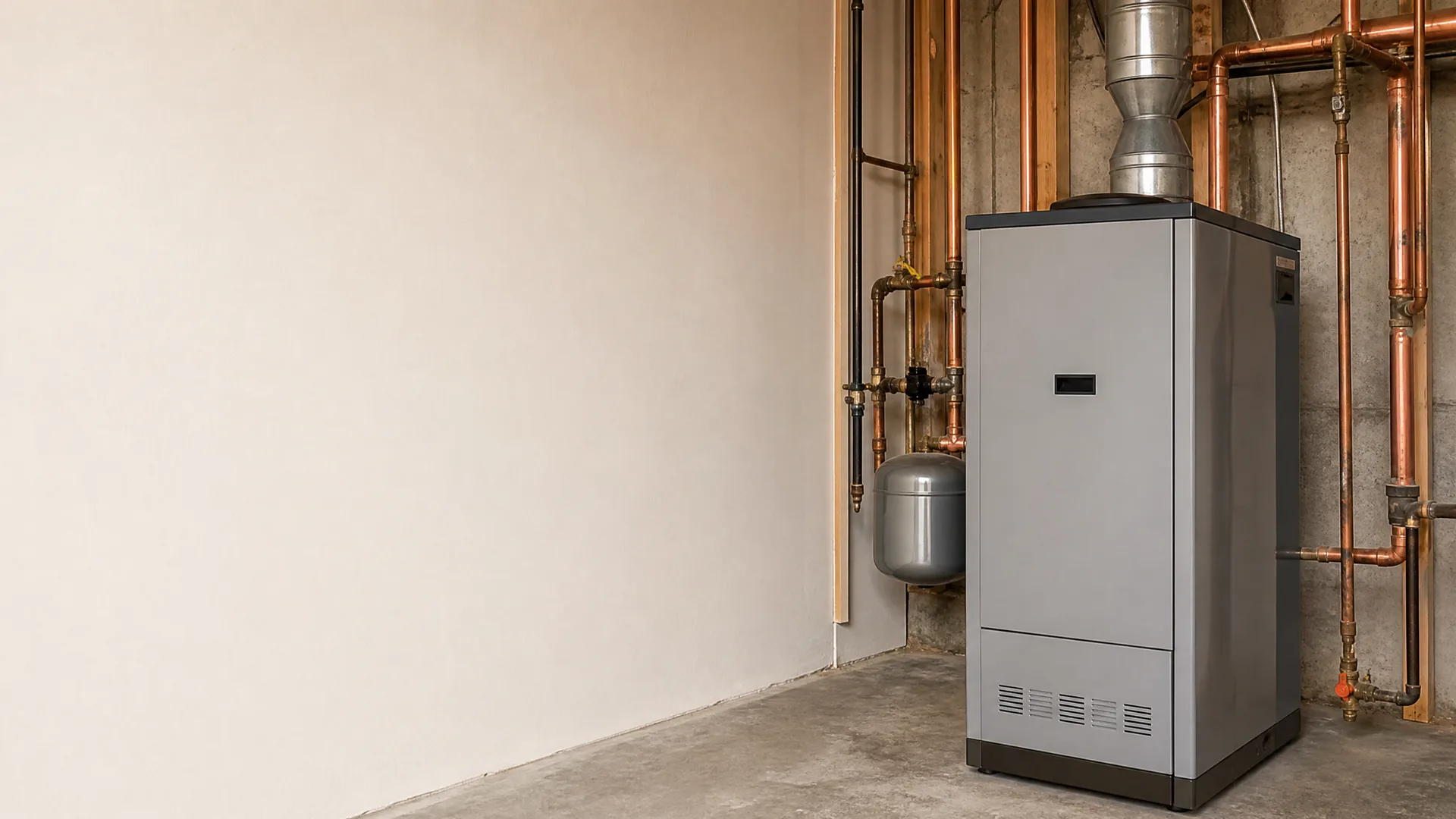
A dark grey floor-standing boiler on a concrete floor in front of a plywood wall, with copper pipes, valves, a pressure gauge, a flue pipe and a white expansion tank above it, beside a plain light-coloured wall.

What usually fails first

A boiler's heat exchanger, circulator pump, and igniter take the most wear over years of winter use. The circulator pump pushes hot water through the system, and when it weakens, some rooms stop getting heat while others stay fine. A cracked heat exchanger is different. It can let combustion gases mix into the heating water, and that's a safety issue, not a comfort one, and the usual answer at that point is a new boiler.

A gray boiler unit with a metal flue pipe stands in a basement corner, surrounded by copper piping and an expansion tank against a plain light wall and concrete floor.

Why age changes the math

A older boiler runs less efficiently than it did new, so the gas bill creeps up even when nothing has failed yet. Pair that with one major repair, a new circulator pump or a control board, and the cost starts to rival what a chunk of a new system would run. A local contractor who services boilers all winter can tell you quickly whether the one in your house is near that point.

Aging Boiler: Repair It or Replace It

Repair

  • A circulator pump replacement or a new igniter keeps a boiler under 15 years running without touching the heat exchanger.
  • If this is the first repair the system has needed, fixing it costs less than installation and buys more winters out of it.
  • Parts for common gas boiler brands sold in Minnesota are usually still available, so a repair doesn't mean a long wait for the part.
  • A boiler that's kept up with yearly service often just needs the one failed part, not a full teardown.
  • Repairing now and replacing later is reasonable if the rest of the system, the venting and the gas line, is in good shape.

Replace

  • A cracked heat exchanger can't be patched, and running the boiler with one puts carbon monoxide into the house.
  • A boiler past 15 to 20 years old failing a second time on the same part is telling you the next failure is close behind.
  • A new boiler installed for Minnesota winters is sized and set up for how this house actually loses heat, not just swapped in part for part.
  • If the circulator pump and the igniter have both already been replaced, the heat exchanger is usually what gives out next.
  • Replacing before a midwinter breakdown means the house doesn't go without heat on the coldest week of the year waiting on a part.
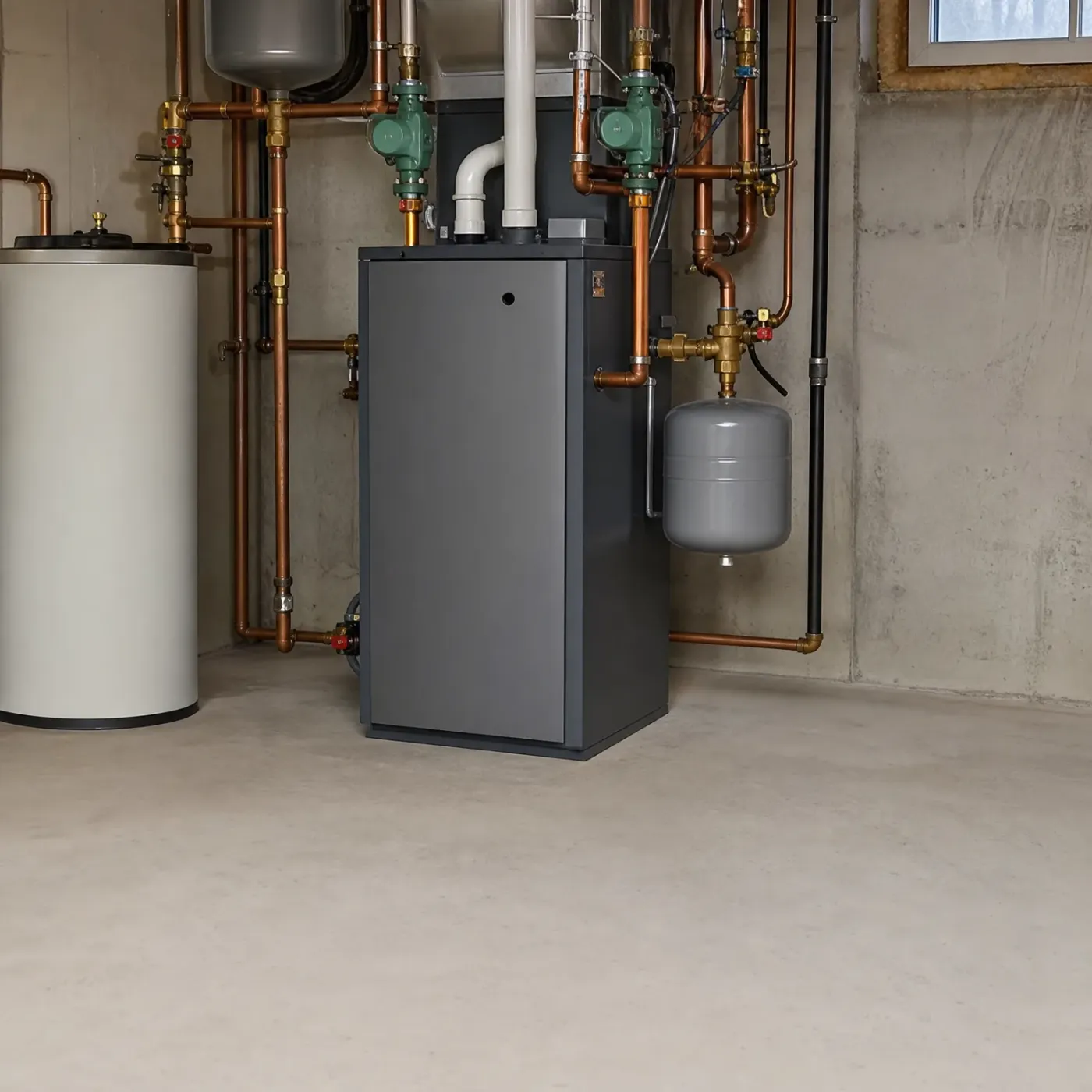
A dark gray floor-standing boiler in a concrete-walled basement, connected to copper piping, circulator pumps, a gray expansion tank, and a cream-colored storage tank to the left.

Running the way it should

Hot water moves through the copper lines without a sound out of place. The pumps keep a steady pressure, the fittings stay dry, and every room on the loop gets even heat. A boiler built on a setup like this one holds up for years with nothing more than yearly service.
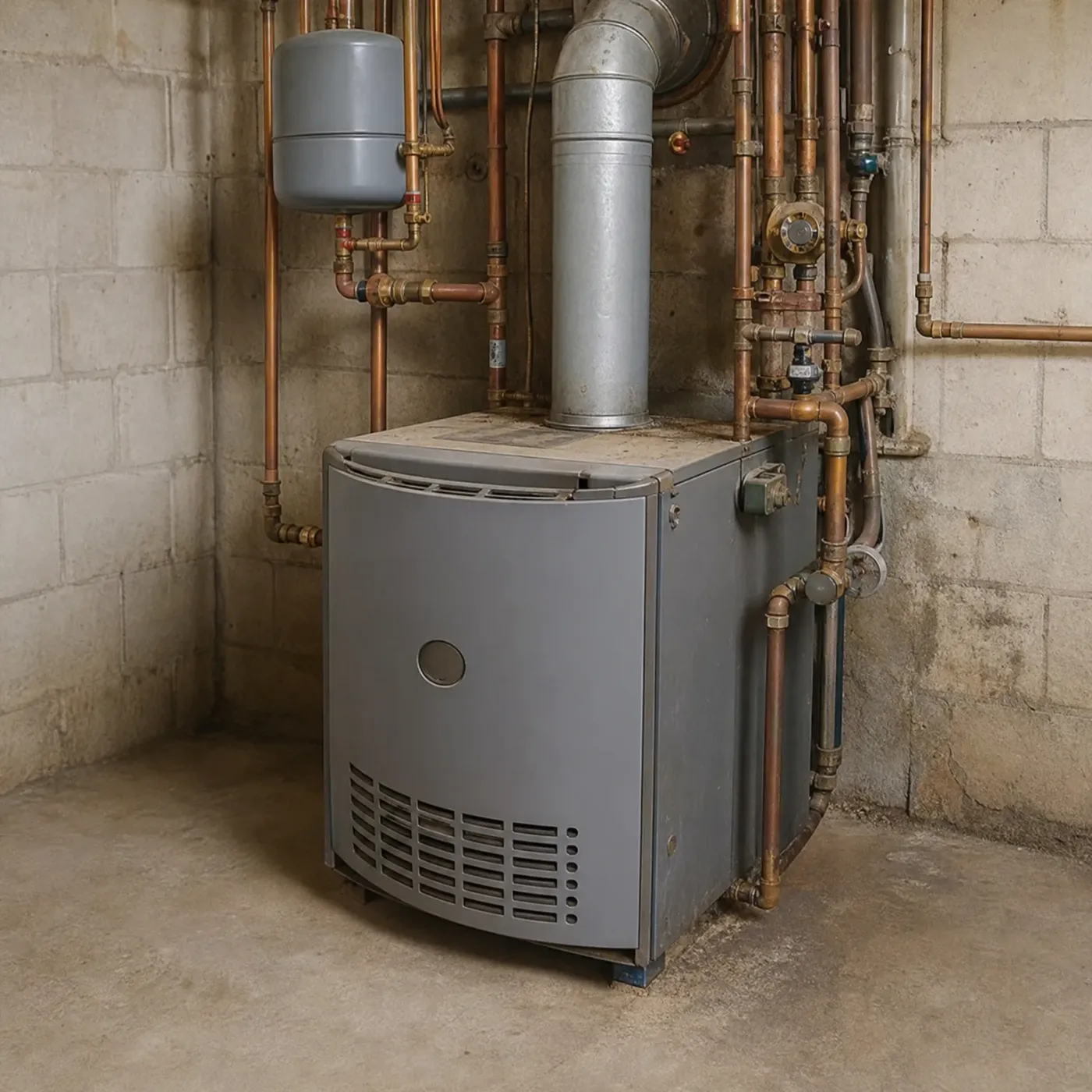

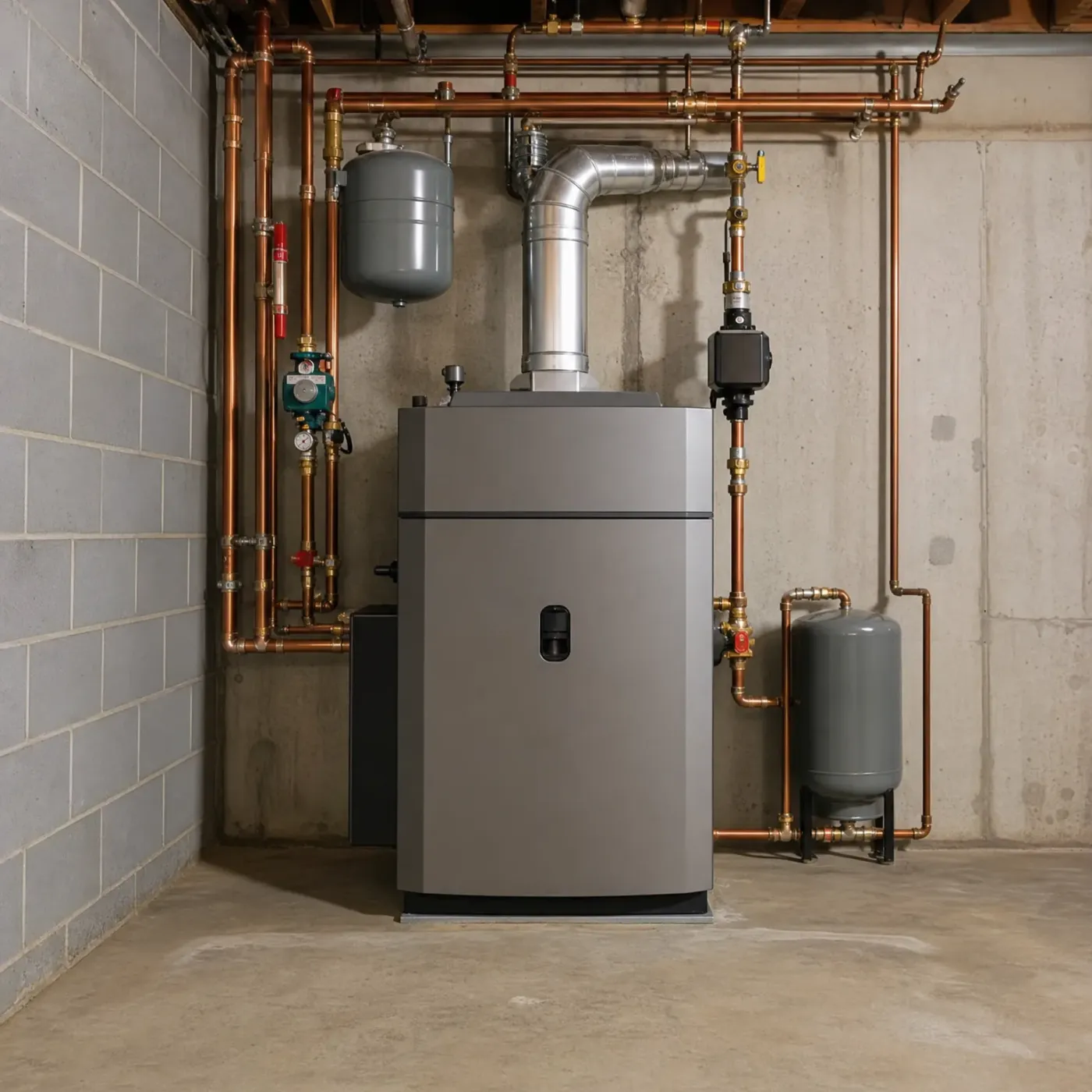
A gray residential boiler with a metal flue pipe stands in a concrete-block basement corner, surrounded by copper piping, valves and a gray expansion tank.

Past its working years

The flue pipe shows its age before the boiler itself does, and rust at the joints usually means moisture has been sitting somewhere it shouldn't. Once the expansion tank or the venting starts to go along with the heat exchanger, you're replacing a system, not fixing a part.

A woman in a knitted shawl sits in a living room with a fireplace, shelves, a sofa with cushions, and a lamp by a bright window, looking off to the side.
A woman with long brown wavy hair in a green shirt over a white top stands in a living room with built-in white shelves, a ceiling fan, a potted plant and a sliding glass door.
A woman with shoulder-length gray-streaked hair in a light gray knit sweater stands smiling and looking off to the side in a living room with a sofa, houseplant, framed picture, and sunlit sliding glass door.
A woman with shoulder-length curly gray hair wearing a gray knit sweater stands near a window with a sheer curtain, looking to the side, with a blurred interior room behind her.
A gray boiler on a black base in a basement with concrete walls, connected to copper piping, a circulator pump, a gray expansion tank, and white and metal flue vent pipes.

Finding a pro stops being your job

One installer gets your project, so there's no bidding war over it.

Send the form and stop researching installers for the new boiler.

Get a licensed local pro

You're not committing to anything by asking.

Why does one room never get warm

You might notice a bedroom upstairs stays cool while the rest of the house is fine, or the boiler runs longer than it used to just to hold the same temperature. You hear a kettle sound before it kicks on, or a knock in the pipes at night. Maybe there's a damp patch near the base of the unit, or the pilot light looks more orange than blue. None of these stop the heat outright, but left alone they wear on the same parts, and a leak at the heat exchanger that goes unchecked can mean carbon monoxide instead of just a cold room.

A gray boiler with a metal flue pipe stands in a basement against concrete and concrete-block walls, connected to copper piping, a circulator pump, and two gray expansion tanks.

Holding up fine

The pipes stay dry and the fittings are tight. Both expansion tanks are doing their job, and the gauges read where they should. A boiler running like this through a Minnesota winter is earning its keep, and a repair now, if it ever needs one, is money well spent.

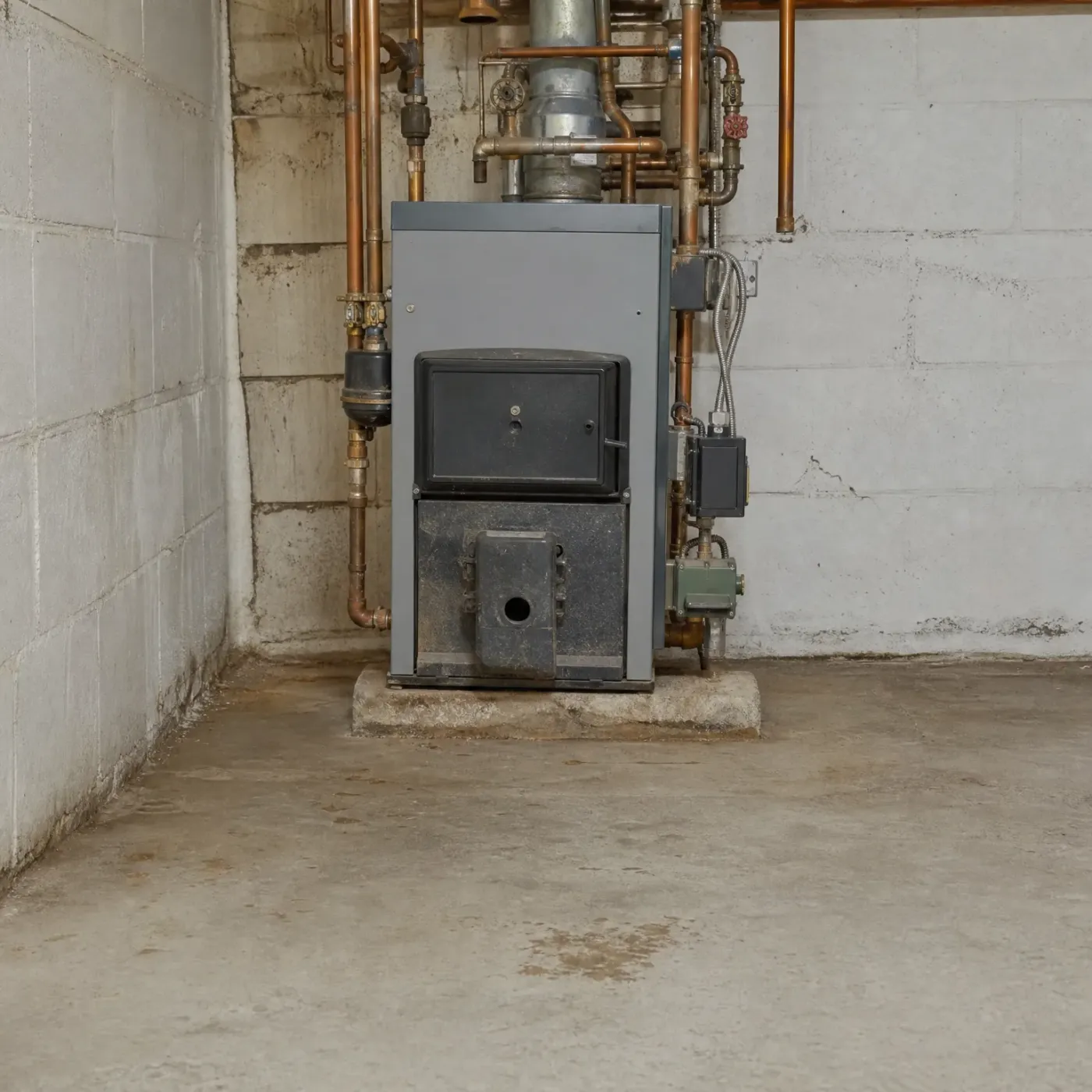
A gray boiler on a concrete pad in a basement with painted concrete block walls, copper piping, a metal flue, and electrical control boxes.

On its way out

A boiler sitting on an old concrete pad in the corner, flue and wiring original to the install, is telling you its age. Once it's past 15 years and the next failure hits something major, putting more money into it stops making sense. Replacement is the better call here.

Why does my boiler make a knocking sound before it starts

You hear a knock or a bang in the pipes right before the boiler kicks on, and it's loud enough that you've started waiting for it. It doesn't happen every cycle, or maybe it does now. You want to know if this is something that fails next, or if it's just a noise a boiler makes and keeps on making for years without trouble.

It's called kettling, and it means the heat exchanger has scale built up inside it

Minnesota water runs hard enough that mineral scale builds up inside a boiler's heat exchanger over years of winters. That scale traps water against the metal, and the trapped water flashes to steam before the rest of the water around it heats up. The steam bubbles collapse fast and knock against the exchanger walls, which is the sound you're hearing. It gets louder as more scale builds, and the exchanger is working harder to heat water through a layer that's blocking the heat instead of passing it along. On a boiler under 15 years, a contractor can often flush the scale out. Past that age, kettling is usually a sign the exchanger itself is wearing out from the inside.

A woman and a sleeping child wrapped together in a cream knitted blanket on a couch, with a potted plant, framed photo and lit lamp in the background.
An older woman with gray hair in a bun and glasses, wearing a beige knit sweater, smiles while looking to the side in a warmly lit kitchen, with a loaf of bread on the counter in the foreground and a snowy scene outside the window.

Winter nights average 8°F statewide

An 8°F overnight low means your boiler is holding a lot of heat against the cold for a long stretch most nights, December through February. That's steady work for the circulator pump and the heat exchanger both. A boiler past 15 that's already had a repair fail once is being asked to do this same job again with less margin left in it.

NOAA nClimDiv 1991-2020 county normals weighted by homes

Where this leaves you

  • A boiler under 15 with its first repair is worth fixing, one past 20 with a cracked heat exchanger is not.
  • What fails first is almost always the circulator pump, the igniter, or the heat exchanger itself.
  • A knock before startup or a cool room upstairs are both signs worth checking before the coldest months arrive.
  • A local contractor who services boilers all winter knows which parts give out first in homes around here.
  • Sending one request means one contractor calls, not a handful, and the search is off your plate.

A boiler under 15 that's needed one repair is worth fixing. One past 20 with a cracked heat exchanger isn't, no matter how well it's running otherwise. Everything between those two points comes down to what's actually failed and how many times. The circulator pump, the igniter, and the heat exchanger are where the wear shows up first, and a knock before startup or a room that won't hold heat is usually the first sign one of them is giving out. None of that is something to wait on once the cold settles in for the winter.

Finding the right person to look at it shouldn't be its own project. A contractor who works on boilers all winter in Minnesota has seen which parts fail first in homes built the way yours likely was, and knows the difference between a repair that buys you several more winters and one that's just delaying the inevitable. That's the kind of judgment that's hard to get from a stranger on the phone reading off a script.

Send one request and one local, licensed contractor calls, not three or four competing for the job. There's no bidding war to manage and no list of numbers to sort through. Once it's sent, the search is no longer something you have to carry. Whether the answer turns out to be a new circulator pump or a full replacement, you'll know it came from someone who actually looks at boilers like yours for a living, not a guess made over the phone.

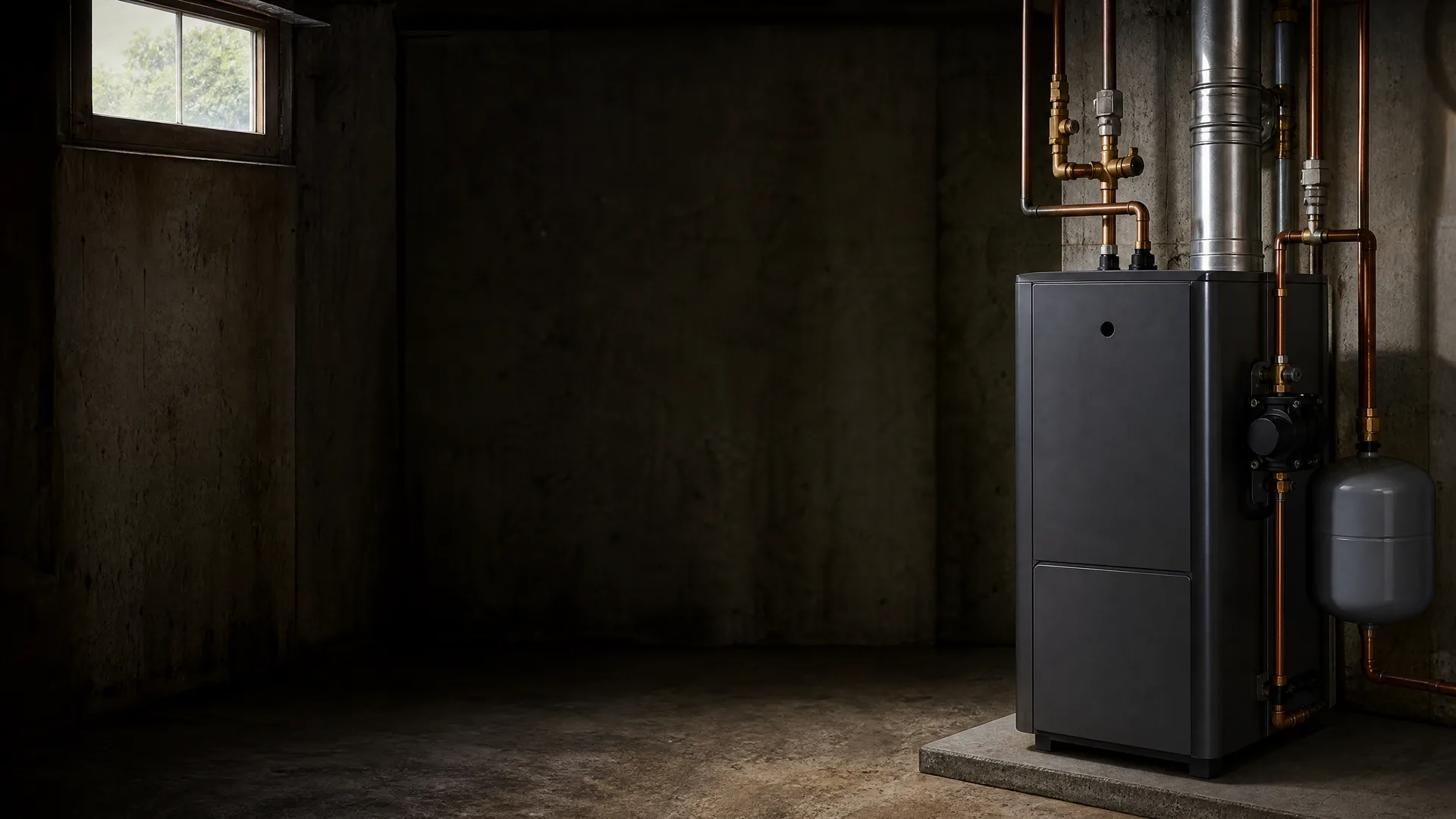
A dark grey boiler unit on a concrete pad in a dim basement, with copper pipes, a metal flue, and a grey expansion tank on the wall, and a small window with daylight on the left.

Let someone else find the pro

The pro who reaches out is licensed in Minnesota.

Step 1 of 3: Equipment