
Minnesota Boiler Works
Profile view of a bearded man wearing a dark green baseball cap and a dark gray T-shirt against a plain light background.

Signs your boiler won't last a Minnesota winter

Step 1 of 3: Equipment

What are the signs my boiler won't make it through winter?

A boiler that struggles in October is not going to get easier to live with in January, and in Minnesota that gap matters. You want to know what to look for now, before a cold snap finds the weak spot for you. Banging pipes, a pilot that won't stay lit, rooms that used to heat evenly but don't anymore, these are the kind of things worth paying attention to before the real cold sets in.

Strange noises, uneven heat, and a boiler that cycles on and off too often

A boiler that's wearing out usually tells you before it fails outright. Banging or kettling in the pipes means sediment has built up inside, and that makes the boiler work harder to move heat where it needs to go. If some rooms run warm and others stay cold, the heat isn't reaching the whole house the way it should. Short cycling, where the boiler fires up and shuts off again and again, puts extra strain on the parts that get it running each time. Any one of these on its own is worth a look. Together, they mean the boiler is losing ground, and losing ground in a Minnesota winter, where the heat has to hold from October through April, is not something to wait out.

  1. Water enters the boiler and the burner fires to heat it.

  2. A failing igniter or pilot means the burner won't light at all.

  3. Heated water or steam moves out through the supply pipes.

  4. Low pressure or a stuck circulator pump stops that flow cold.

Why does my boiler sound different lately

Listen to it the next time it fires. A bang or a knock as the water heats usually means sediment has built up on the bottom of the tank, and that layer makes the burner work harder to reach the same temperature. A low, steady hum from the circulator pump is normal. A grinding or whining sound is not, and it often means the pump is close to failing. Check your radiators or baseboards too. Cold spots at the top with warm underneath usually mean trapped air, but cold all the way through on one unit can mean a closed valve or a clogged line. Any of these left alone through a Minnesota winter can mean a cold house on the night you need heat most.

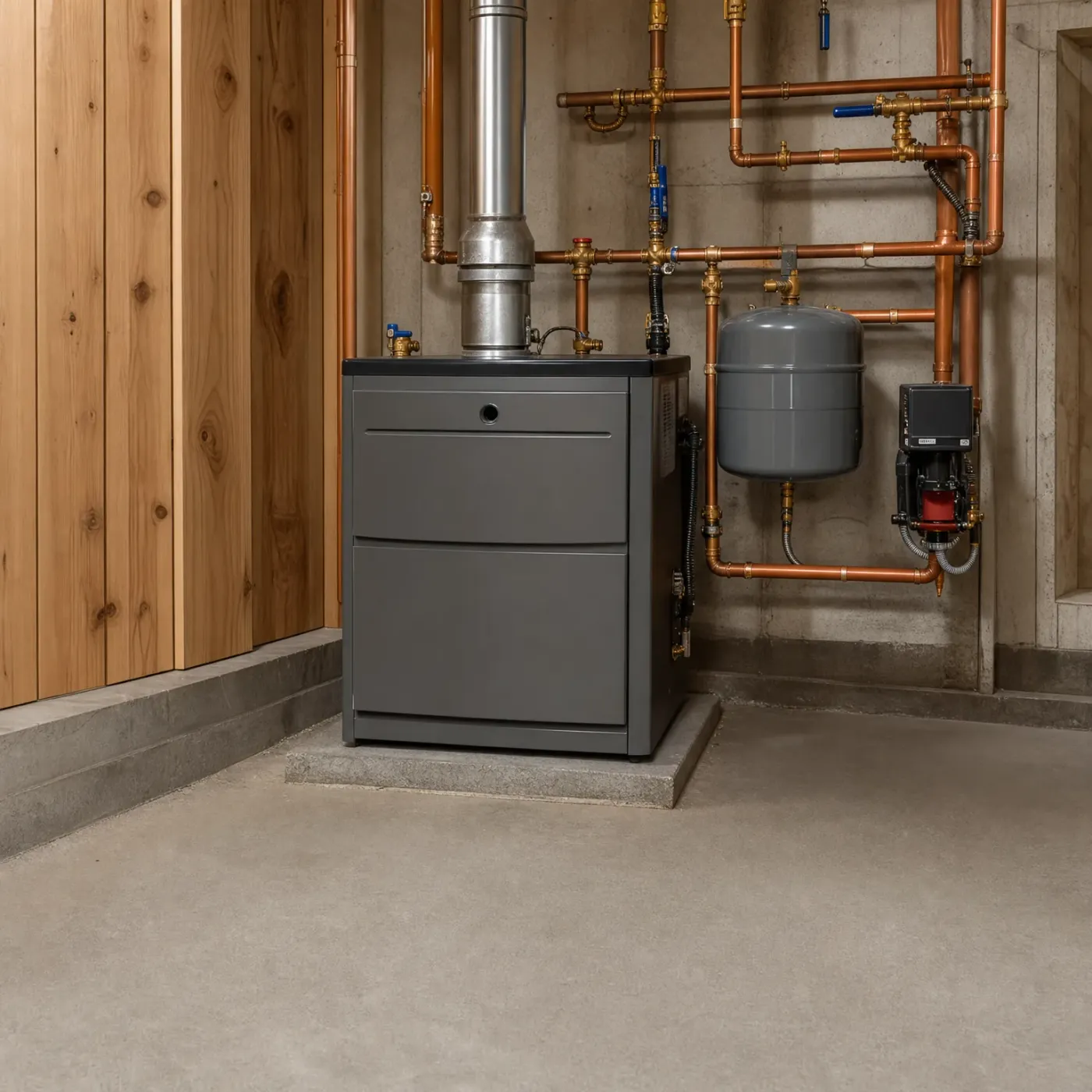
A gray boiler on a concrete pad in a basement, with a metal flue pipe and copper piping, brass valves, a gray expansion tank and a circulator pump mounted on the concrete wall beside wood paneling.

Running the way it should

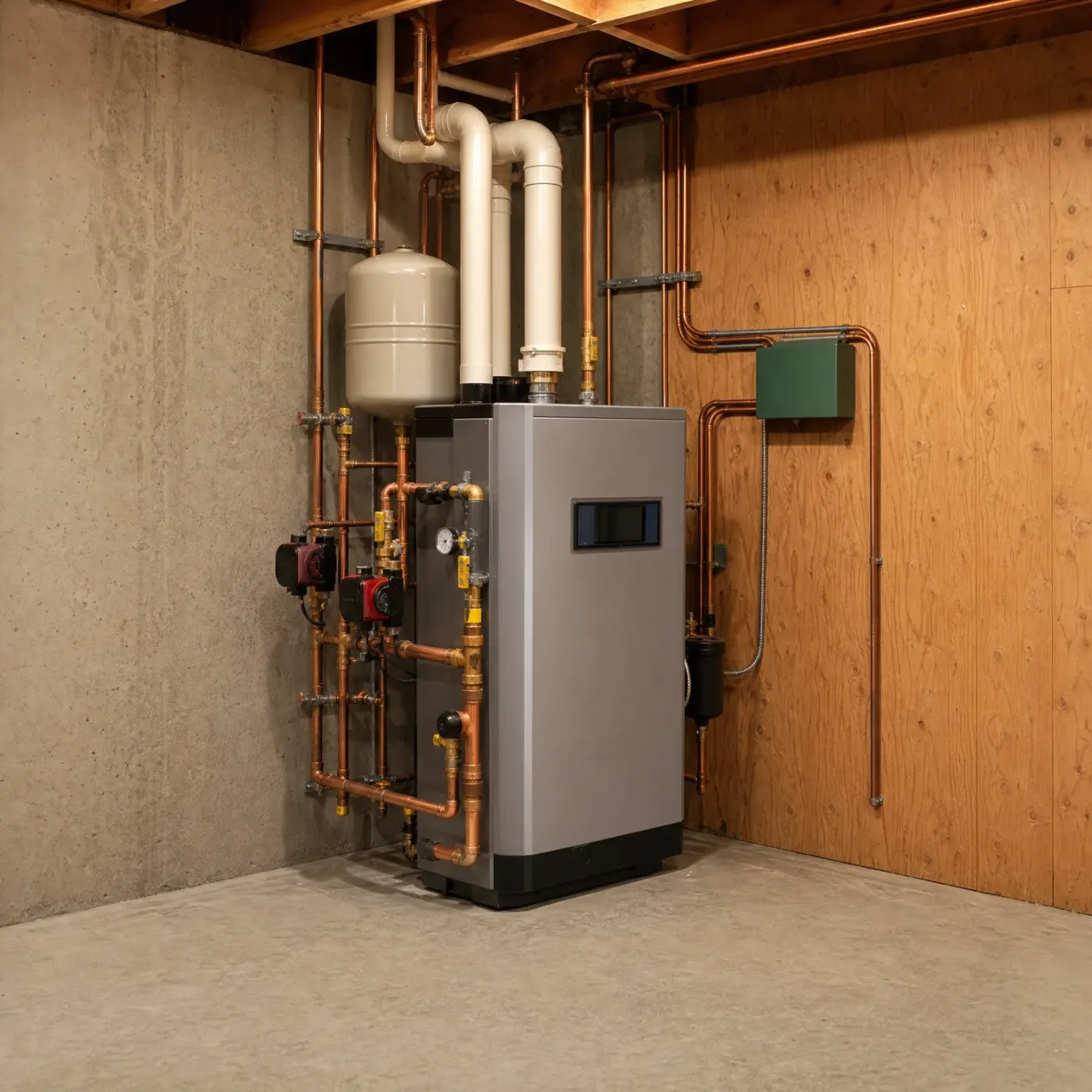
A boiler like this fires cleanly, holds pressure, and moves hot water through the copper lines without fuss. The pump runs quiet. No rust at the fittings, no streaks under the expansion tank. This one will see you through to spring.
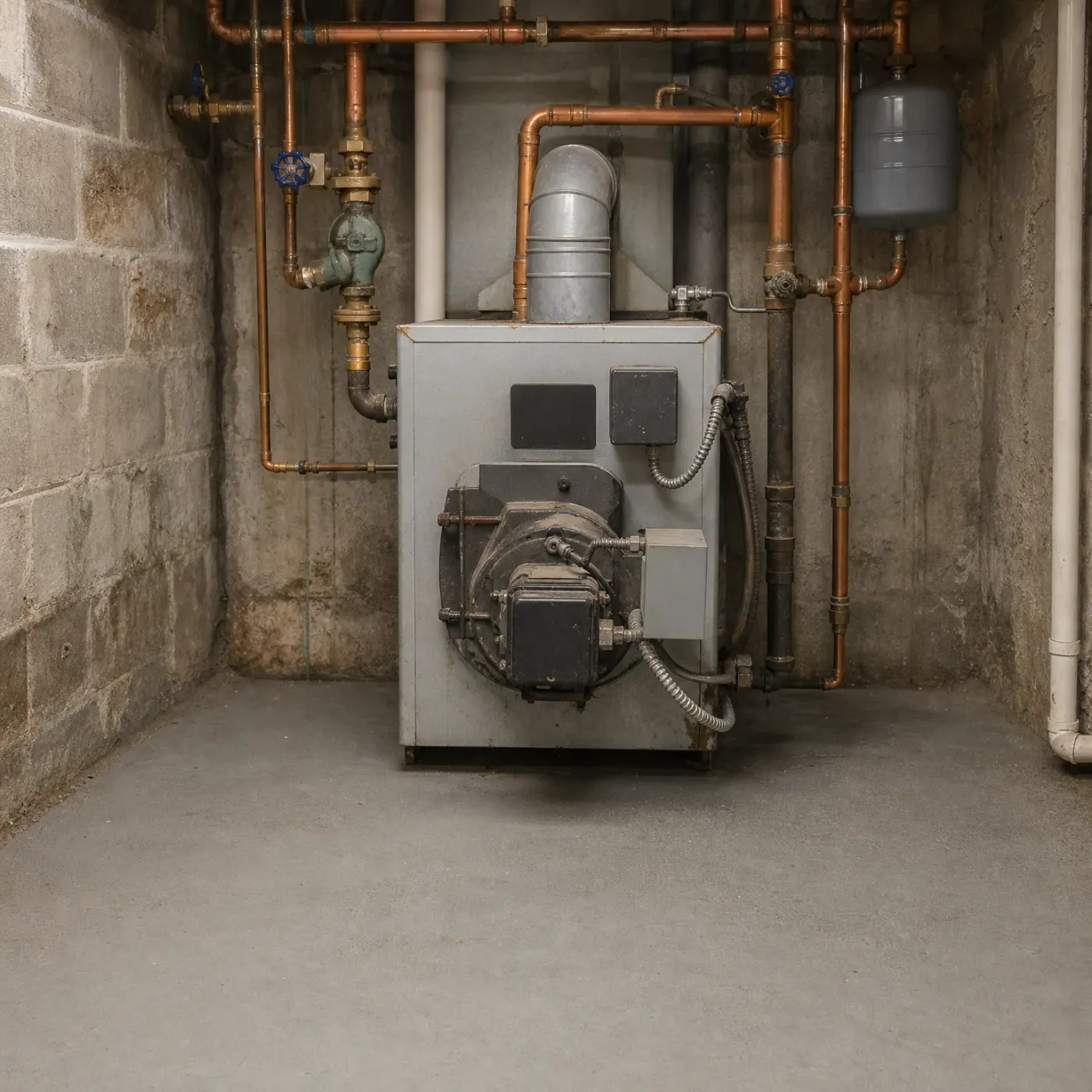

A gray boiler with a flue pipe and burner unit stands against a concrete block basement wall, surrounded by copper and steel piping, valves, and a gray expansion tank, on a bare concrete floor.

Running on borrowed time

This one sits in an unfinished basement doing the same job under strain. Check the valves and fittings for a crust of white or green buildup, and look at the floor under the tank for any sign of water. Either one means a repair call shouldn't wait.

Repair It or Replace It

Worth Repairing

  • A pilot or igniter that fails but still fires most of the time is a part replacement, not a sign the boiler is done.
  • Rust limited to a single fitting or valve usually means that one part is leaking, and a contractor can swap it without touching the rest.
  • If the boiler held its pressure fine last winter and this trouble started recently, something specific changed and likely has a specific fix.
  • A circulator pump that's gone loud or stopped moving water is a common failure on its own, separate from the condition of the boiler itself.
  • One or two short cycles a day during a cold snap can come from a thermostat or a limit switch, not from the heat exchanger underneath.

Likely Done For

  • Rust at more than one joint, especially near the base of the tank, usually means the tank itself is corroding from the inside out.
  • A boiler that won't hold pressure even after a contractor has refilled and bled it has a leak somewhere in the system that keeps coming back.
  • Water pooling under the unit, not just at a fitting, points to a crack in the heat exchanger, and that part isn't repaired, it's replaced.
  • If the burner has needed relighting several times this fall before winter even set in, that pattern tends to get worse once it's below zero.
  • A knock that's gotten louder over more than one season usually means sediment has built up enough that the metal underneath is wearing thin.
A man with grey hair and stubble in a dark sweater sits on a grey sofa indoors, looking off to the side, with a potted plant and a sunlit window behind him.
A man with gray hair, a beard and glasses, wearing a dark green sweater, sits on a gray sofa in a sunlit living room with a potted plant, table lamp and wooden sideboard behind him.
A middle-aged man with graying hair and a short beard sits on a blue sofa in a living room, looking toward a window, with a bookshelf, lamp and framed picture in the background.
A man with graying curly hair and a dark green sweater sits on a gray sofa in a sunlit living room, looking off to the side, with a framed picture, shelving, an armchair and a window with sheer curtains behind him.

Stop chasing a boiler pro

A boiler that's already shown you a knock in the tank, a pump that struggles, or rust at a fitting isn't going to fix itself once the temperature drops. Minnesota doesn't give a boiler room to limp along. Once that first real cold snap sets in and the system is running almost nonstop, whatever is marginal now gets found out fast, usually on the coldest night of the week. You don't have to figure out which of those signs matters most or whether it's the pump, the pressure, or the sediment doing the damage. A contractor local to you who works on boilers all winter has seen that same knock or that same rust a hundred times and knows what it usually turns out to be. Sending the form means that's no longer something you have to sort out alone at ten at night with the heat barely holding. One contractor gets your request, the one who already knows this equipment, and from there it's off your plate.

Why pressure drops matter so much

A boiler is built to hold somewhere around 12 to 15 psi when the system is cold. That number is on the gauge for a reason. When pressure sits below that range, water isn't filling the loop the way it should, and the circulator pump can start pulling air instead of water. Air in the line is what causes the banging and the cold spots on radiators or baseboard. A boiler that needs the pressure topped off every few weeks has a leak somewhere in the system, even if you can't see it. That leak doesn't heal on its own, and a Minnesota winter gives it every chance to get worse.

What the flue and vent pipe tell you

Gas boilers push combustion gas out through a flue pipe, and that pipe tells you things the burner flame can't. Rust or white staining where the flue meets the boiler usually means moisture is condensing inside instead of venting out, which happens when a heat exchanger is cracked or the draft is weak. A flue pipe that's warm to the touch low down, near the floor, is worth a second look too. None of this means the boiler is finished, but it's the kind of detail a contractor checks first, because it points straight at whether the heat exchanger is still sound.

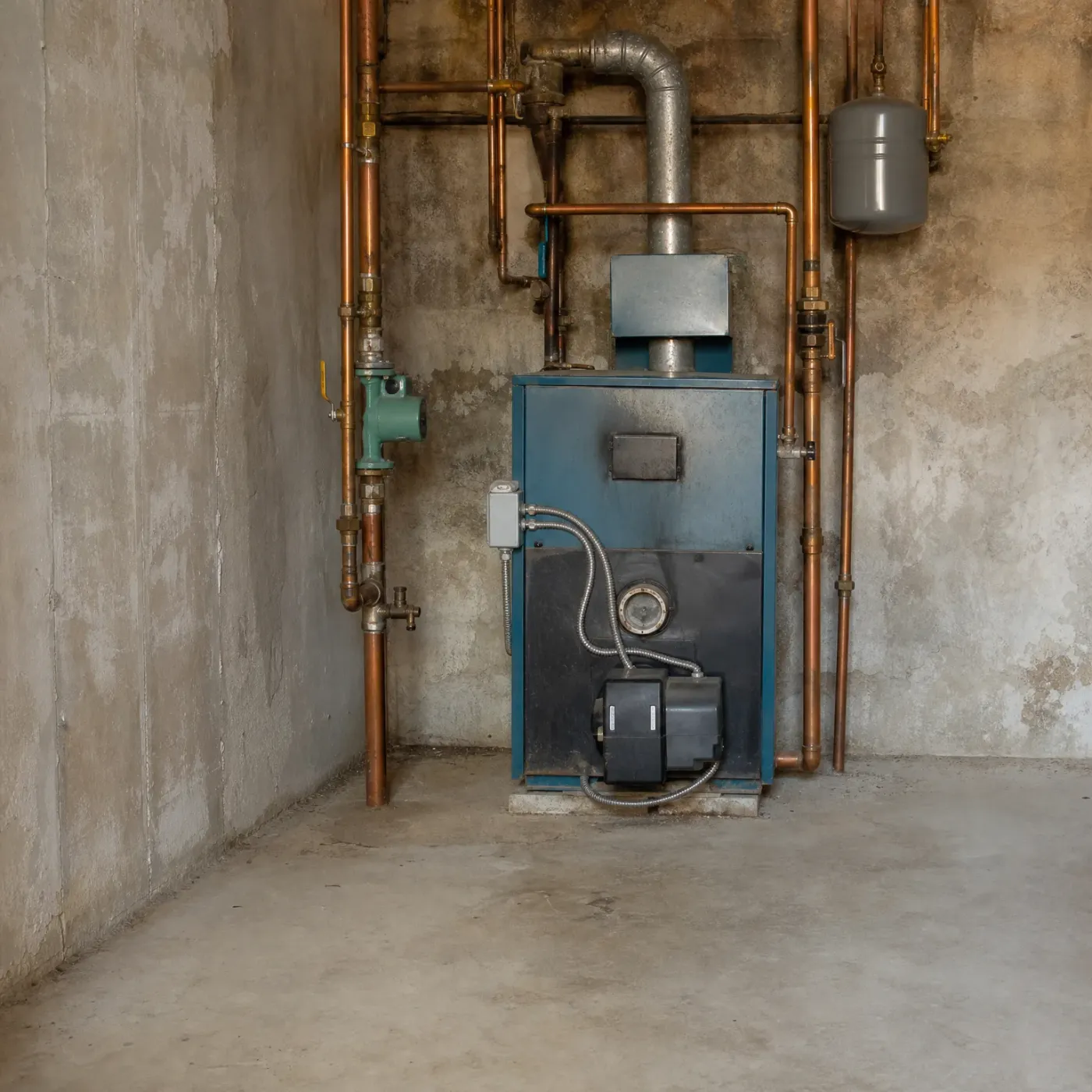
A blue residential boiler with a metal flue, pressure gauge and burner unit stands against a stained concrete basement wall, surrounded by copper pipes, a green circulator pump and a gray expansion tank.
Before you get your boiler repair
A gray floor-standing boiler in a basement corner with copper piping, two red circulator pumps, a beige expansion tank, white PVC vent pipes, concrete and plywood walls.
After you get your boiler repair

A boiler that's limped through the last two Minnesota winters on one sketchy igniter and a pressure gauge you've learned to tap isn't offering you much margin. If it lets go in January, you're the one without heat, not the boiler.

The same boiler, looked at now by someone who services this equipment all season, is a different story. A worn part gets replaced on a Tuesday afternoon instead of discovered at two in the morning when the house is already cold.

A woman with shoulder-length brown hair wearing a beige knit cardigan sits in a gray upholstered armchair near a window, looking off to the side with a slight smile, with bookshelves blurred in the background.
A woman and a child wrapped together in a knitted gray blanket on a couch, with the child's head resting on her shoulder and a lit table lamp and houseplant in the background.
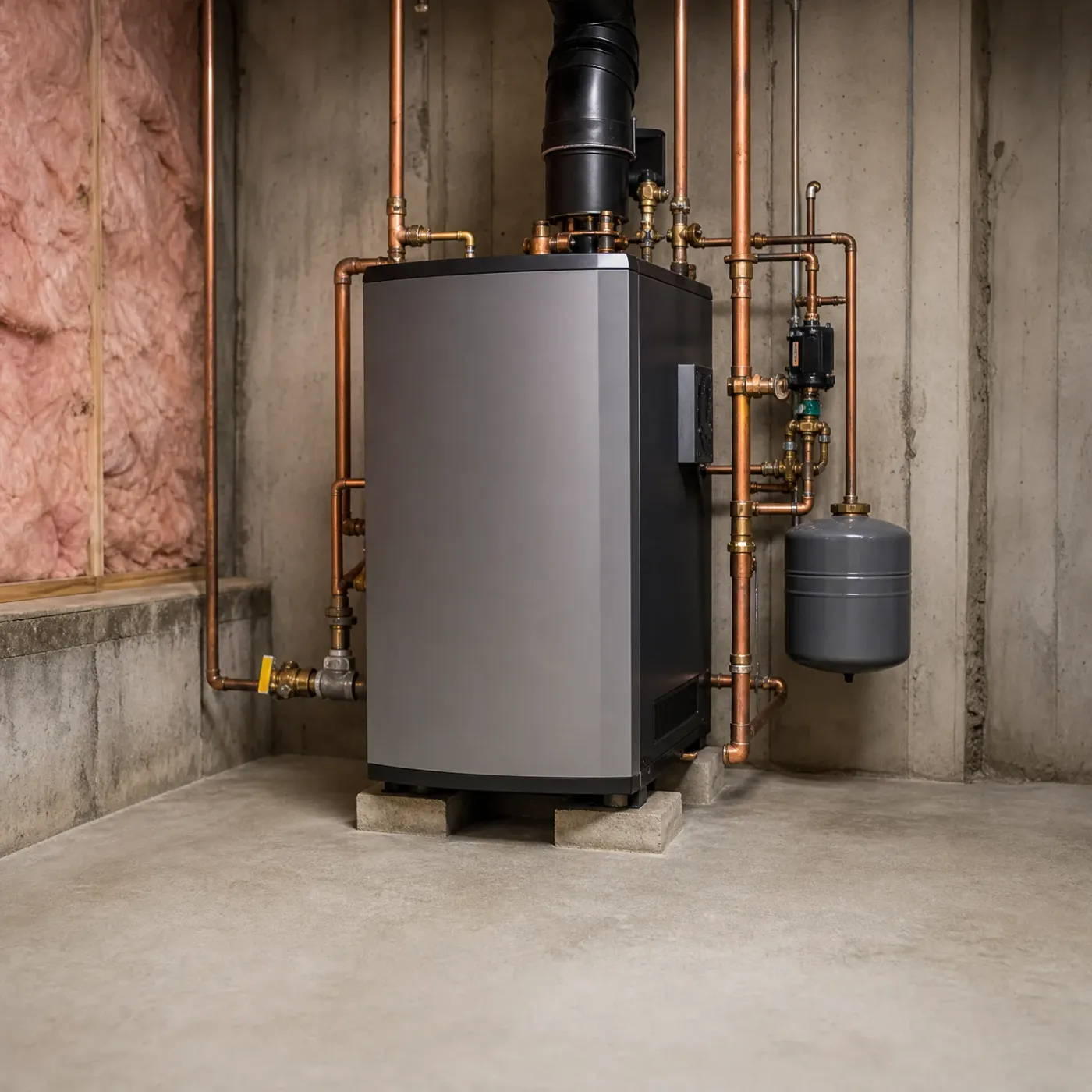
A gray and black boiler unit sits on concrete blocks in a basement corner, connected to copper piping, valves, a black flue duct, and a gray expansion tank, with bare concrete walls and exposed pink insulation at left.
Copper lines run clean to the circulator and the expansion tank holds steady, nothing rushed, nothing patched.
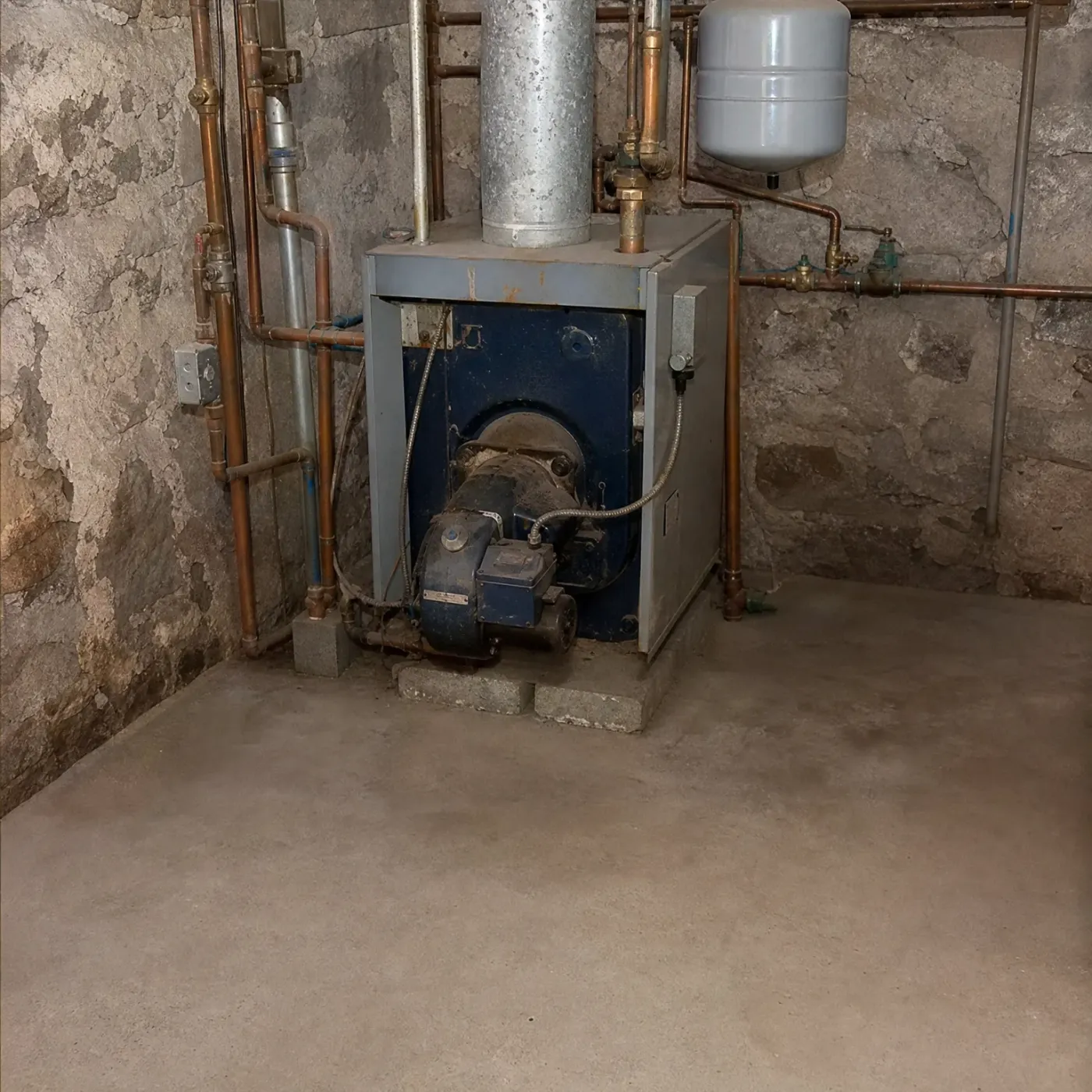
An oil-fired boiler with a blue and gray cabinet and burner sits on concrete blocks in a basement corner with stone walls, connected to copper pipes, a metal flue, and a wall-mounted expansion tank.
Propped on blocks with a galvanized flue and stone walls close around it, this one is older than it looks and running out of margin.

Winter nights average 8°F statewide

Eight degrees is the average overnight low across a Minnesota winter, and plenty of nights run colder than that. A boiler that's already knocking or losing pressure in the fall has no slack left once nights settle in that low. That's the stretch where a weak unit quits.

NOAA nClimDiv 1991-2020 county normals weighted by homes

A boiler that bangs when it fires, loses pressure between checks, or shows rust at a fitting is telling you something plain: it's running out of margin, and Minnesota winters don't leave room to find out the hard way. The signs don't need to be dramatic to matter. Once you've seen one of them, the honest move is to get a contractor who works on boilers all season looking at it, not guessing from a list. A local contractor who services this equipment through every Minnesota winter has seen what a knocking tank or a slow pressure drop usually turns into, and knows which of these is a quick fix and which one means trouble in January. You'll be matched with one contractor, not a handful calling at once, so the person who calls you is already familiar with what Minnesota winters do to a boiler like yours. From here, the part that was on your plate, figuring out who to call and whether they know this equipment, is off it.

Kitchen corner with cream upper cabinets, oak lower cabinets, white marble-look countertop, beige tile backsplash, a ceramic vase of greenery, a wooden cutting board and bowl, and a black-framed window at right.
Interior corner of a room with a white-framed window and wide sill, beige walls with panel molding, a wooden cabinet holding a ceramic vase with a green leafy plant, and blurred shrubs and trees outside.
A wood-framed armchair with beige cushions and a woven lumbar pillow sits in a corner beside a large window overlooking green trees, with a tall ceramic vase holding leafy branches on the left and plaster walls and wood flooring.
Interior corner with a white-framed window above a sill, beige walls with baseboard molding, a greige shaker-style cabinet with brass knobs and a potted plant on top, light wood flooring and a woven jute rug.
A dark-framed six-pane window with white trim and sill set in gray horizontal lap siding, with hydrangea shrubs below and a white column and shingled roof section at left.

Hand off the boiler problem

Your request stays with one local pro.

Find a licensed boiler pro

No charge to send it. You decide if you hire them.