



Profile view of a bearded man wearing a dark baseball cap and a dark gray T-shirt against a plain off-white background.

What size boiler a Minnesota home needs

Step 1 of 3: Equipment

There's no single boiler size that fits every house in Minnesota. The right size comes from a heat loss calculation, which looks at your square footage, your insulation, your windows, and how cold it actually gets where you live. A boiler that's too small will run constantly on the coldest days of January and still leave rooms cold. One that's too big cycles on and off too often, which wears out parts faster and wastes gas without making the house any warmer. A contractor sizes the unit in BTUs per hour, matched to how much heat your specific house loses on a design-day cold snap, not just its square footage. Minnesota winters push that number higher than it would be in a milder state, since the furnace or boiler has to cover a bigger gap between outside and inside temperature for months at a time. Getting the size right now means fewer repairs and a more even heat through the whole winter.

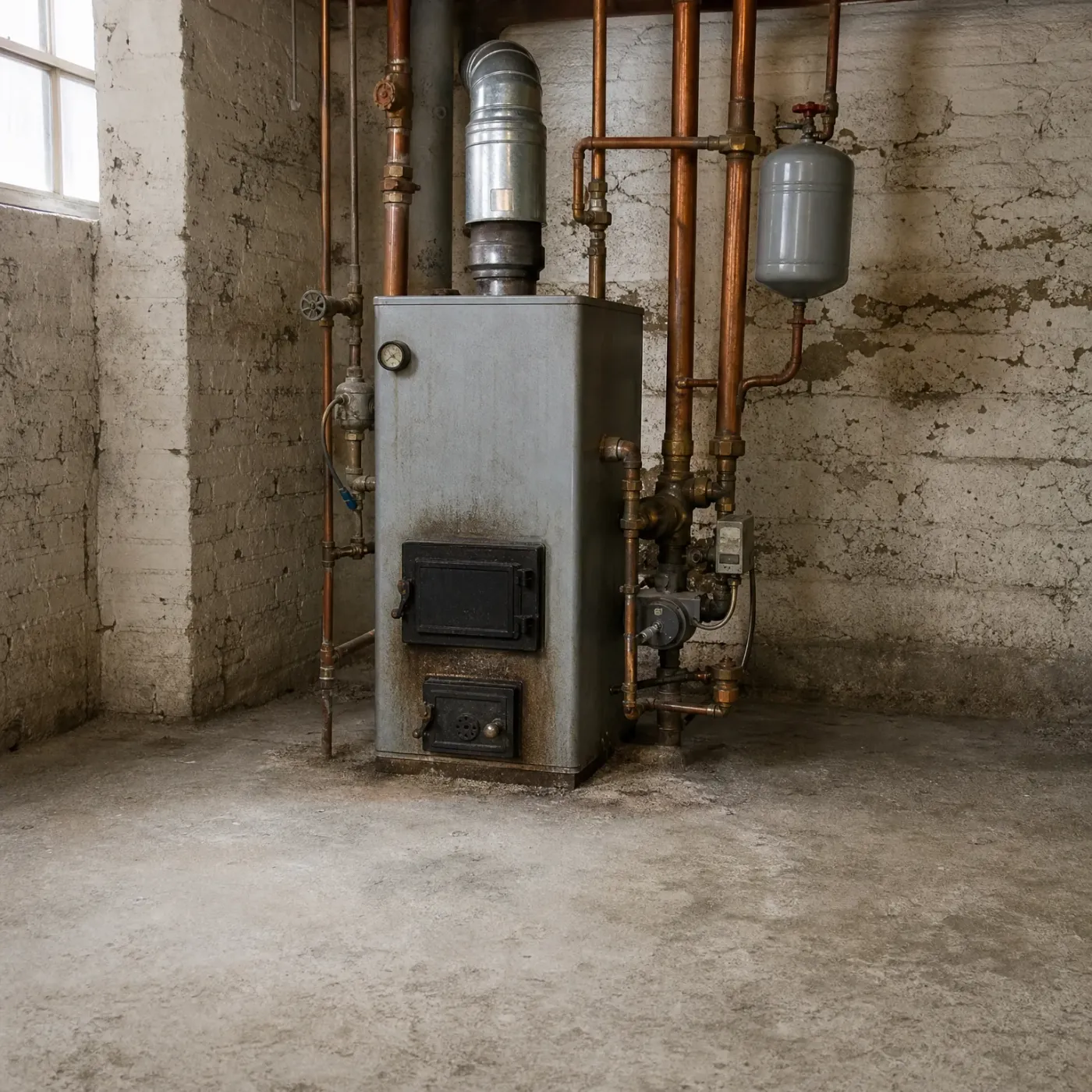
An old gray boiler with copper piping, a flue duct, pressure gauge and an expansion tank stands in the corner of a basement with painted masonry walls and a bare concrete floor.
Before you get your boiler installation
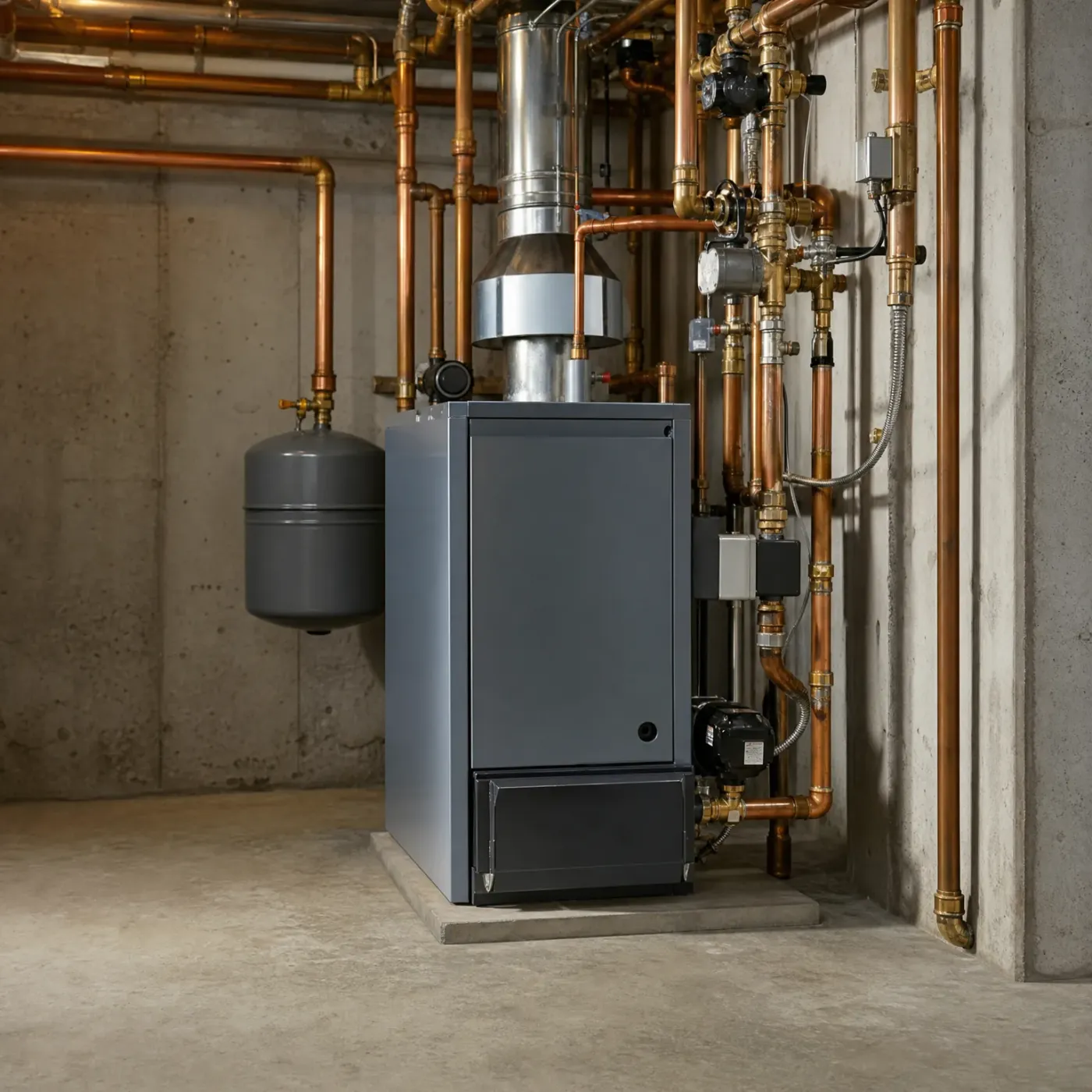
A gray boiler on a concrete pad in a basement, connected to copper piping, valves, circulator pumps, a metal flue, and a wall-mounted expansion tank.
After you get your boiler installation

Sizing a boiler right means walking the house first. An installer goes room by room, measuring walls, windows, and ceilings, and checking what kind of insulation sits behind them. That gets fed into a heat loss calculation, which works out how many BTUs per hour the house loses on its coldest day. Where you live in Minnesota matters here, because the calculation uses a design temperature for your area, not just an average cold day.

It's tempting to look at the old boiler and match its output, but that number was never a guarantee it was right. Plenty of boilers go in oversized from the start. A unit that's too big for the house will short cycle, kicking on and off more than it should and wearing out its own parts faster. One that's too small will run flat out on the coldest nights and still lose the battle to keep every room warm. The only way to land in between is to measure the house as it actually is, not guess from its square footage or its last boiler.

How an installer actually sizes it

  • A Manual J heat loss calculation measures how many BTUs per hour your house loses on the coldest design day for your area.
  • An installer measures every wall, window, and ceiling, then checks the insulation behind them rather than guessing from square footage alone.
  • A boiler sized above what the house needs will short cycle, turning on and off more often and wearing out its parts sooner.
  • A boiler sized below what the house needs will run constantly on the coldest nights and still leave rooms short of warm.
  • The old boiler's rated output is not a safe stand-in for sizing, since it may have been oversized from the day it was installed.
  • Design temperature for your part of Minnesota sets the baseline the calculation works from, not the average winter day.
An older man with gray hair and a beard, wearing a dark coat dusted with snow, stands smiling in a doorway of a warmly lit home with a sofa, lamp and window visible behind him.
An older man with grey hair and a beard, wearing a dark coat dusted with snow, stands in a dimly lit entryway with a ceiling lamp, a side table with two shaded lamps, and a lit fireplace visible in a room beyond.
A bearded older man in a dark snow-dusted coat and scarf stands just inside a home's front door, with a lamp-lit room and snowy window visible behind him.
An older man with gray hair and a beard stands in a doorway of a home, wearing a dark coat dusted with snow, with a lit fireplace and lamp visible in the blurred room behind him.
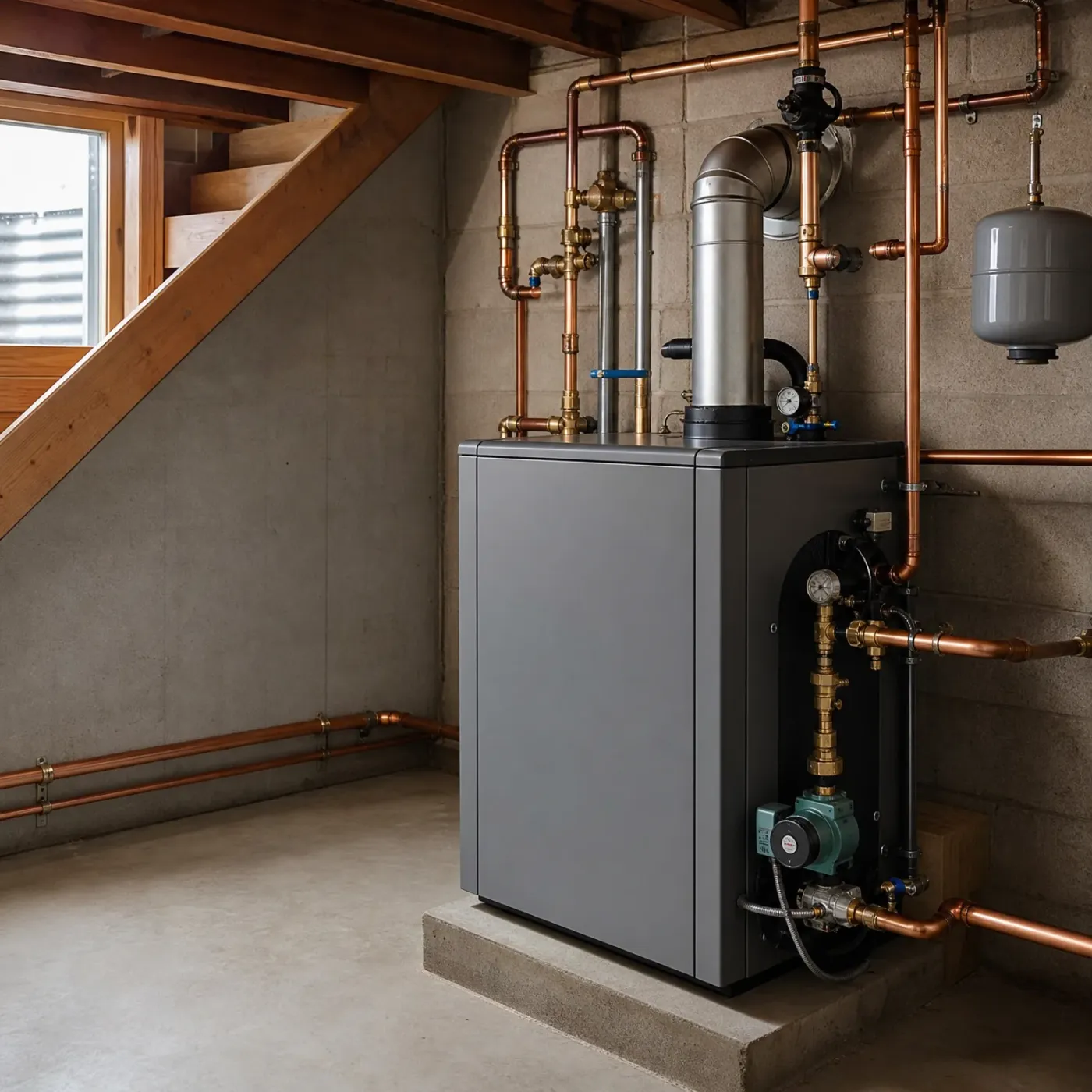
A gray boiler on a concrete pad in a basement, connected to copper and black pipes with valves, gauges, a circulator pump, a flue, and a wall-mounted expansion tank, beside a wooden staircase.

The right pro for this job

Send the form and the search for an installer is over.

A local installer who puts in boilers gets your project.

Get my match

It costs nothing to send, and you don't have to hire anyone.

Is your boiler the right size for your house

An oversized boiler short cycles. It fires, heats the place up fast, shuts off, then fires again twenty minutes later. You'll hear it kick on and off all day, and some rooms still feel uneven, too warm near the boiler and cool at the far end of the house. An undersized one does the opposite. It runs long stretches without stopping, especially once it gets below zero outside, and you still don't feel warm enough. Either way, the boiler is working harder than it should, and that wear adds up over the winters it has to get through. If your current one has always run this way, the size was likely wrong from the start, not something that changed.

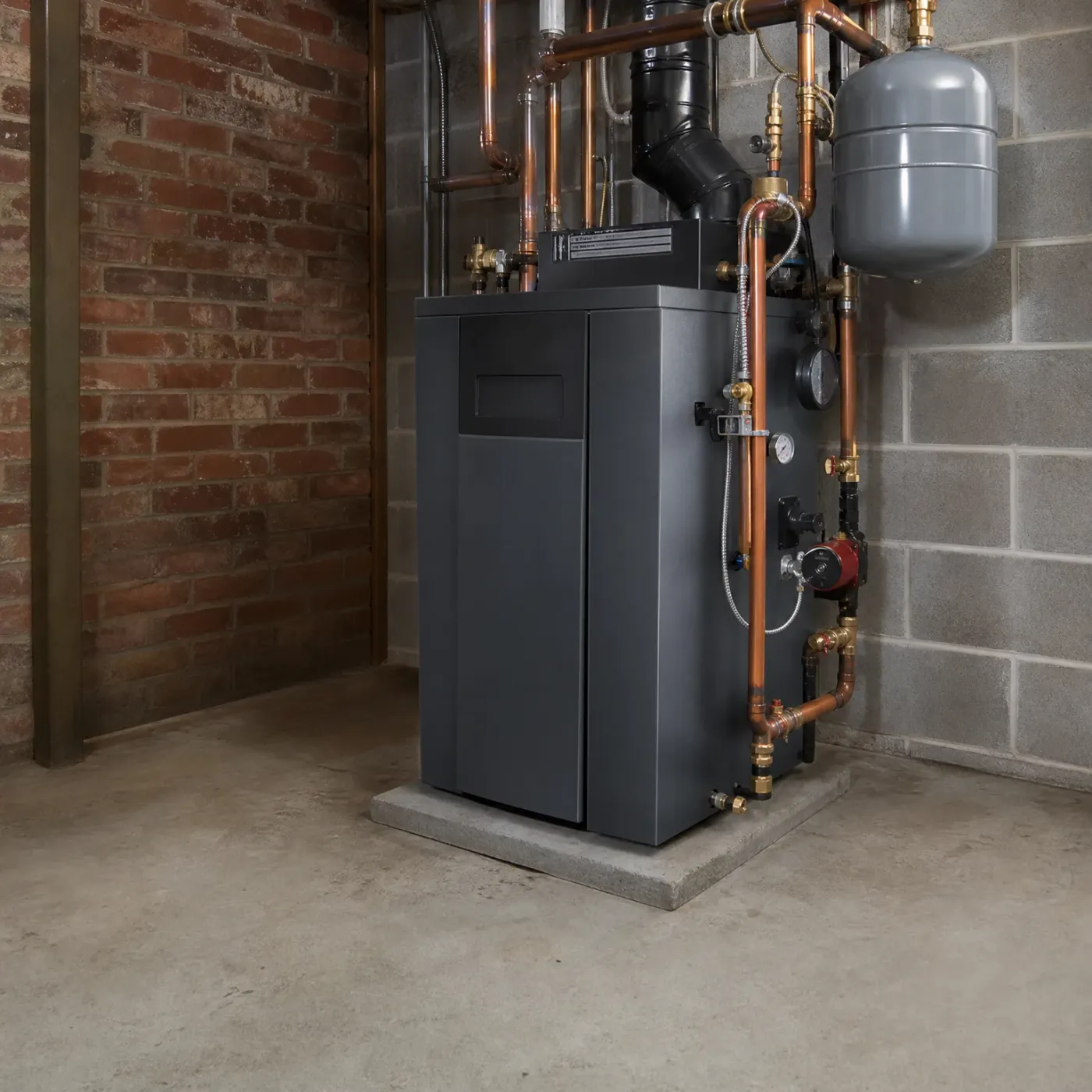
A dark gray floor-standing boiler on a concrete pad in a basement, connected to copper piping, valves, a circulator pump, a gauge, a black flue pipe, and a gray expansion tank, with a brick wall on the left and concrete block wall behind.

Correctly sized boiler

This boiler matches the heat loss of the house it serves. It runs long, steady cycles that keep every room even, from the bedrooms upstairs to the basement where it sits. The gauges stay in normal range, and the piping was sized to match, not pieced together after the fact.
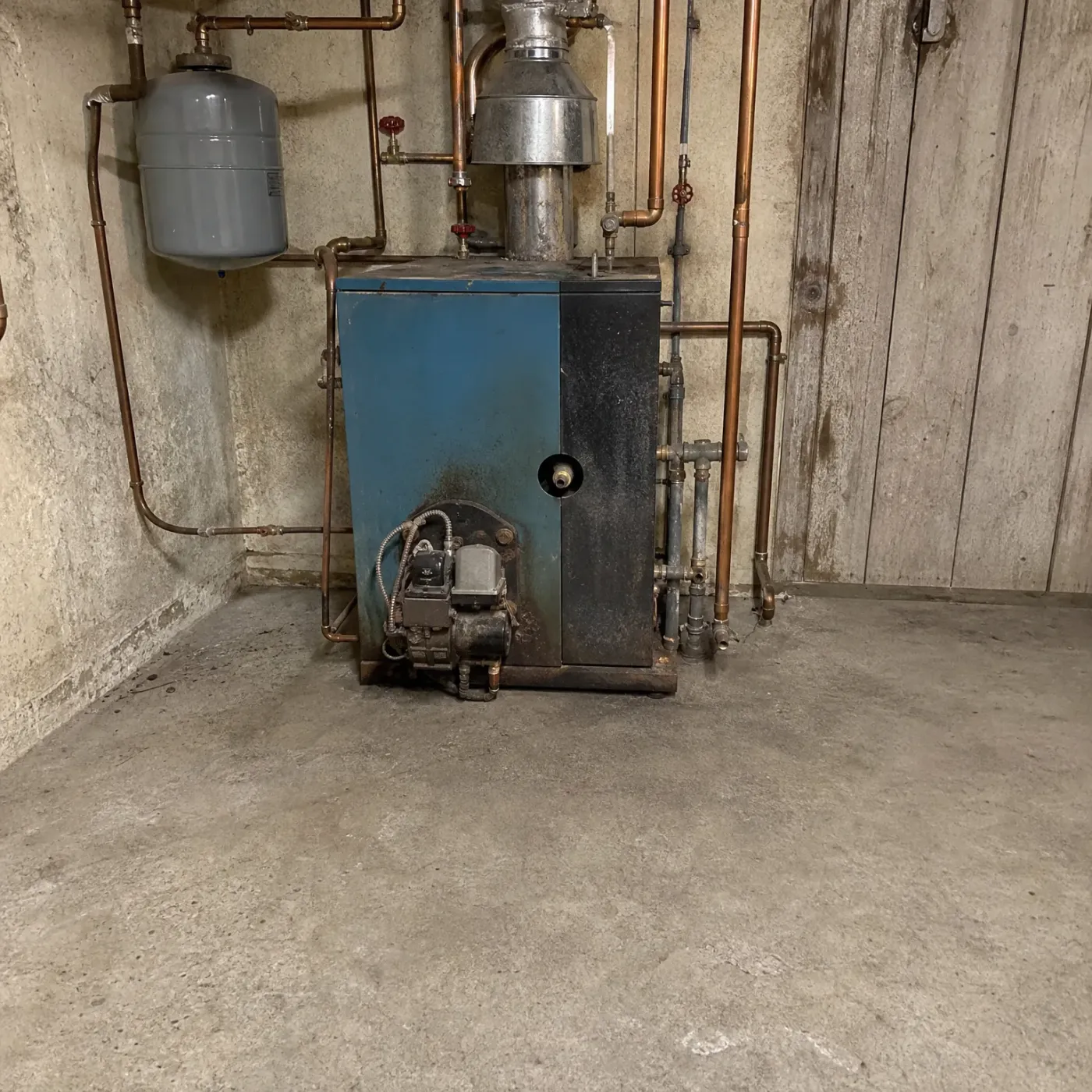

A blue and black boiler with a burner unit, flue, expansion tank and copper and steel piping stands on a concrete basement floor against a concrete wall and wooden plank partition.

Wrong size for the house

This boiler is old oil-fired equipment doing a job it may never have been sized for in the first place. A unit sized by guesswork instead of a heat loss calculation runs too much or too little, and the strain on the piping and expansion tank shows over the years it's been down here.

A woman wrapped in a cream textured blanket sits in an armchair beside a lit lamp and a dark window, with an open book in the foreground.
A bearded man in a blue and brown plaid flannel shirt stands indoors looking out a window at snow-covered trees, with a ceramic mug on the windowsill.

-20°F design temperature

That's the kind of cold a sizing calculation has to plan for in Minnesota. Your boiler needs to hold the house warm on the coldest night it actually sees, not just an average one.

Request a pro

140 to 180°F supply water

Boilers heat water to this range before it moves through the pipes to your radiators or baseboards. The right size keeps that water circulating in steady, even cycles instead of short bursts.

Request a pro

Winter nights average 8°F statewide

That's the average night. Your boiler still has to cover the nights that drop well past it, since a design calculation plans for the coldest night your house sees, not the typical one. Sizing for the average leaves you cold when it matters.

NOAA nClimDiv 1991-2020 county normals weighted by homes

  1. Installer measures every room and tallies the square footage

  2. Installer checks insulation levels in walls, attic, and basement

  3. Installer counts windows and doors and rates their heat loss

  4. Installer runs a Manual J calculation for your design temperature

A woman stands in the open doorway of a white stucco house holding the dark door, facing a man in a black cap and shirt seen from behind in the blurred foreground, with a potted flowering plant beside the entry.

The right size comes from your house, not a guess

A heat loss calculation is the only way to know what boiler your house actually needs. Square footage alone won't tell you, and neither will the size of the unit you're replacing. Insulation, windows, and that -20°F design night all factor in, and the number that comes out the other end is specific to your walls and your address.

Once you know that number, the rest of the decision gets easier. You're not guessing between a few models hoping one works out. You're matching a boiler to a figure an installer measured room by room. A contractor who serves your area can run that calculation and tell you exactly where you stand, so you're not the one left weighing BTU ratings against each other.

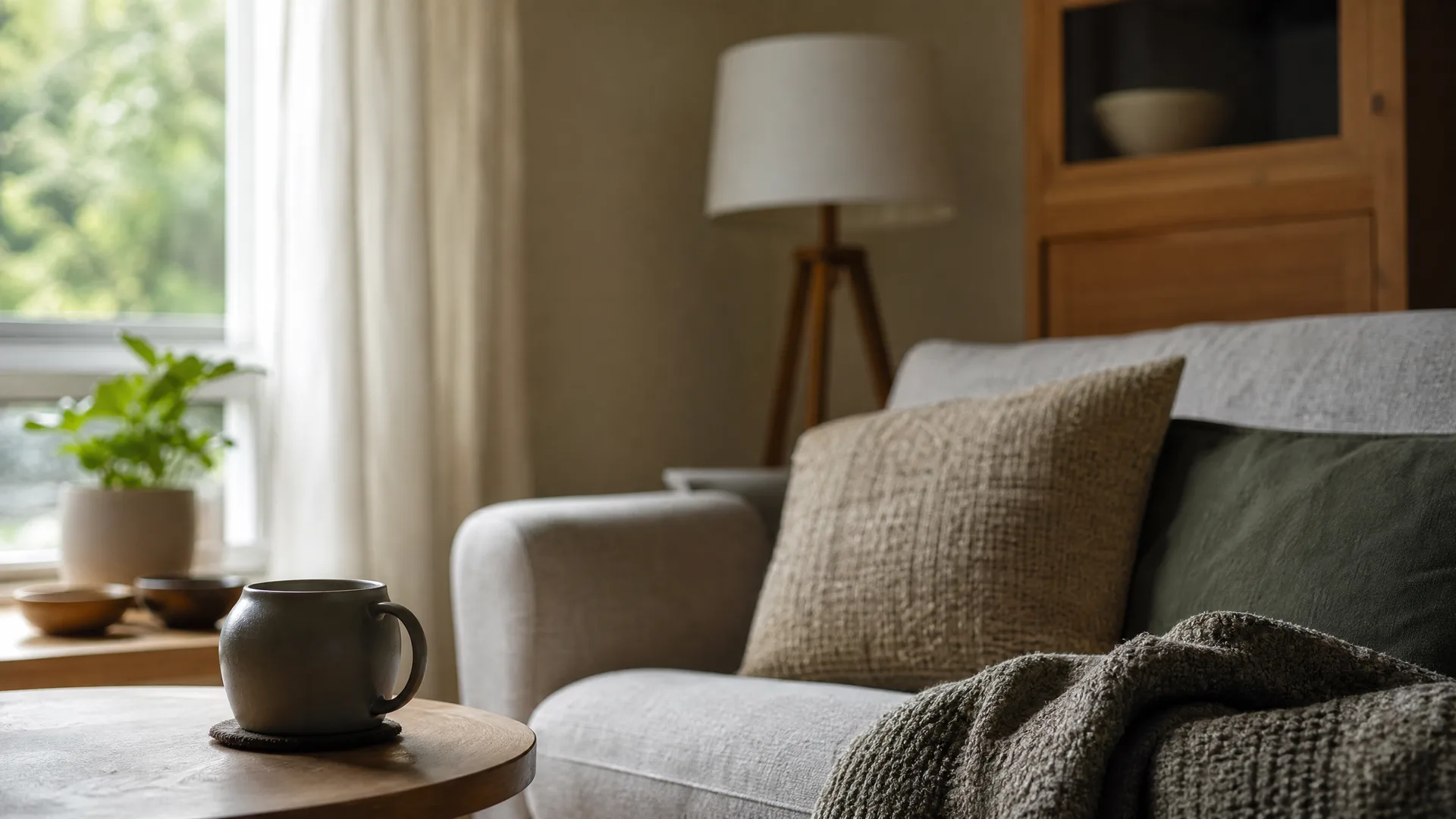
A dark ceramic mug on a round wooden table beside a light grey sofa with a woven cushion and knit throw, with a window, potted plant, floor lamp and wooden cabinet blurred in the background.
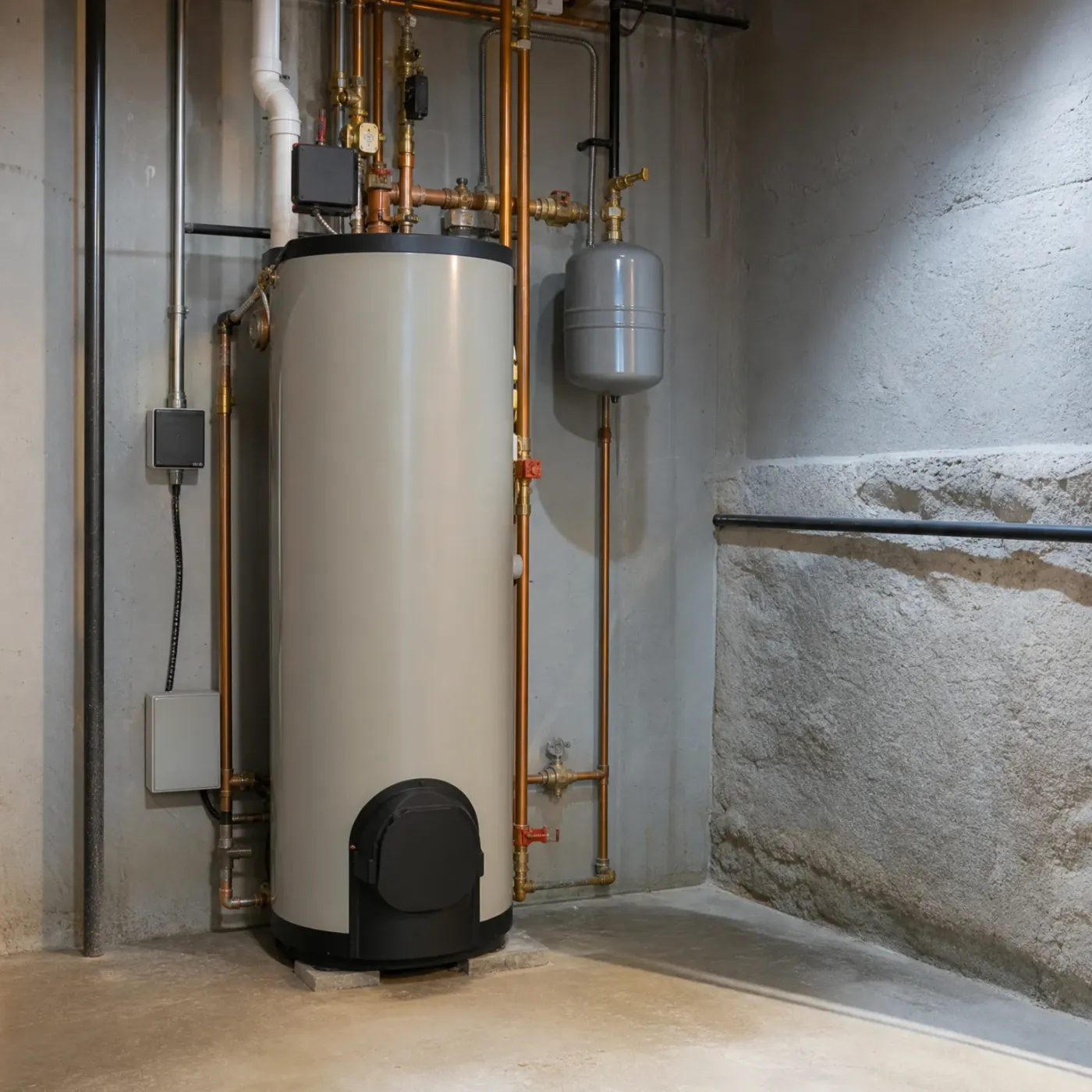
A tall cylindrical boiler or water heater with a black burner cover stands in a concrete-walled basement corner, surrounded by copper pipes, valves, electrical boxes, and a gray wall-mounted expansion tank.

A boiler pro near you

Let a pro reach out

One request ends the search for a boiler installer.

There's no charge for the request.