

What your boiler pressure should be in Minnesota
Say what's going on with your boiler, and a pro who works on them reaches out.
Get my matchWhat should my boiler pressure be in Minnesota?
Your boiler pressure gauge is sitting somewhere and you're not sure if the number is right or if you've got a problem brewing before the cold really sets in. With winter in Minnesota being long and unforgiving on a heating system, you'd rather check this now than find out the hard way in January.
It should read between 12 and 15 psi when the system is cold
A cold boiler should sit at 12 to 15 psi on the gauge. That number climbs some once the system fires and the water heats up, which is normal and not a sign of trouble. What matters is where the needle sits before the burner kicks on. Below 12, you're low on water and the system may struggle to circulate heat through the radiators or baseboards. Above 15, you're carrying too much pressure, which stresses the relief valve and the boiler itself over time. In a Minnesota winter, a boiler running low on pressure can mean cold rooms on the coldest nights, which is exactly when you need the heat to hold steady.




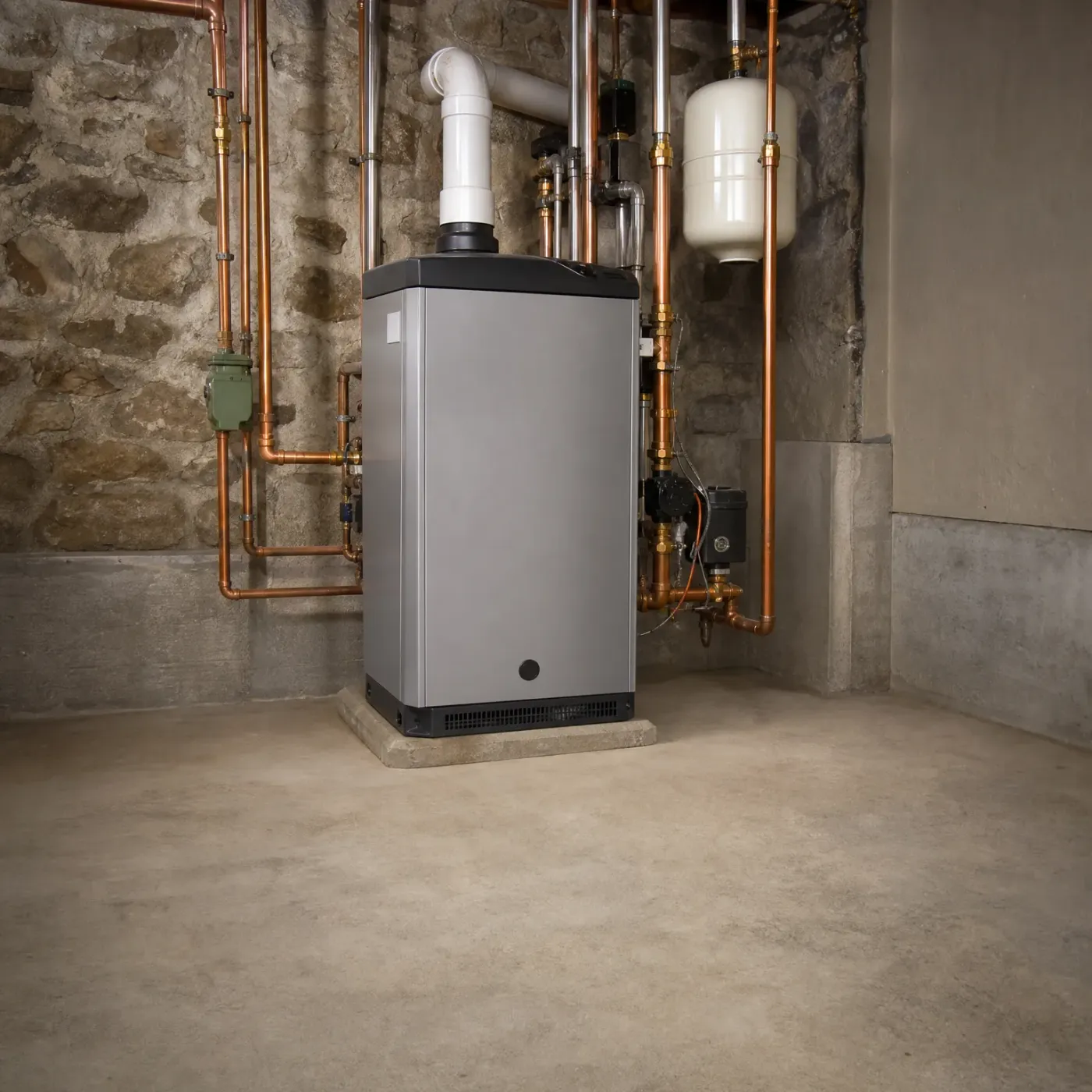
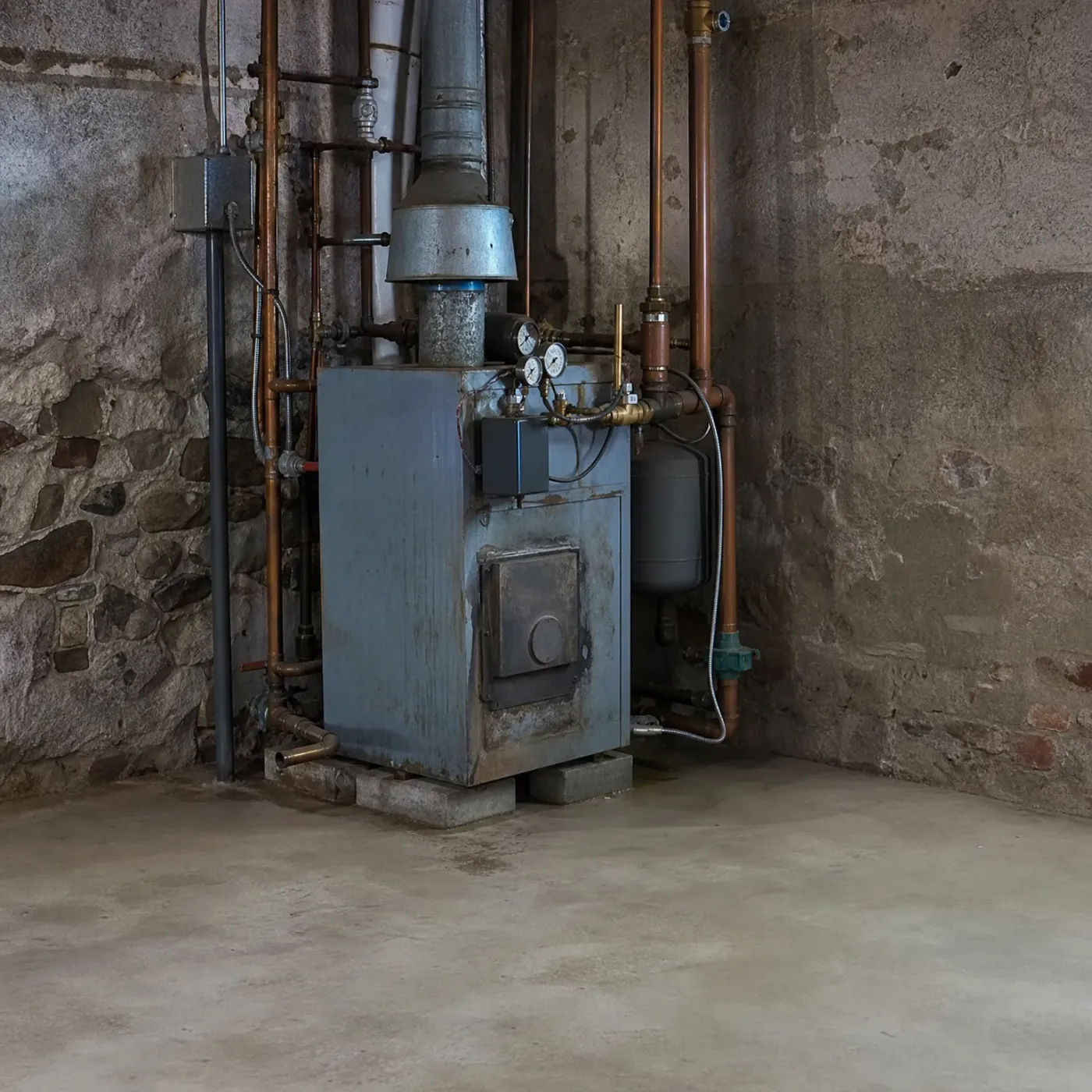
The gauge isn't a fixed number. It moves because the water inside the boiler moves. When the system is cold and idle, the fill valve has already set the baseline, whatever psi you see first thing in the morning before the burner has run. Once heat is called for, that water expands as it warms, and the pressure climbs a little while the burner is running. That's normal. The expansion tank is what keeps this rise small instead of letting it run away, by giving the expanding water somewhere to go. When that tank is waterlogged or has failed, the extra volume has nowhere to sit, and the needle climbs past where it should. Above 30 psi, the relief valve opens on its own to protect the boiler, and if you're finding water under it, the expansion tank is usually the reason. The opposite problem, pressure that keeps falling overnight, points somewhere else entirely: a slow leak at a fitting or the pump seal. And if you bled a radiator recently, check the gauge again afterward. Letting air out lets some water out too.
How your boiler pressure moves
- Cold water enters the boiler through the fill valve, and that reading is what the gauge shows when the system is idle.
- Once the burner fires, the water heats and expands, which pushes the pressure up by a pound or two as it moves through the loop.
- The expansion tank absorbs that extra volume, so a waterlogged or failed tank is often why the needle climbs too high.
- A pressure relief valve opens automatically above 30 psi to protect the boiler, and water dripping from it usually means the tank isn't doing its job.
- Pressure that drops overnight and keeps dropping points to a slow leak somewhere in the near piping, a fitting, or the pump seal.
- Bleeding a radiator releases trapped air but also lets out water, so the gauge reading drops afterward and needs to be checked again.
Get the right pro for your boiler
Send the form and the boiler tune-up stops being something to remember.
A local pro who knows boilers gets your details and gets in touch.
Sending the form costs nothing.
Boiler pressure running low or high
Low pressure
- Pressure under 12 psi often means the system lost water somewhere, through a bleed valve left loose or a slow leak at a fitting.
- A boiler running low on pressure can trip on its low water cutoff, and the burner won't fire until that's corrected.
- Radiators or baseboard loops farthest from the boiler may run cool or stay cold even with the thermostat calling for heat.
- Topping off the pressure yourself only helps if the water is staying in the system; if it drops again in a few days, something is letting it out.
- A contractor checking a low pressure complaint will look at the pressure relief valve, the fill valve, and the near-boiler piping for signs of water.
High pressure
- Pressure above 20 psi puts strain on the pressure relief valve, and that valve may start weeping water to relieve it.
- An expansion tank that's lost its air charge can't absorb the water's expansion as it heats, which pushes the whole system's pressure up.
- A fill valve stuck open will keep adding water to the loop instead of stopping once the system reaches its set pressure.
- High pressure that shows up only after the burner has been running a while points to the expansion tank rather than the fill valve.
- Letting high pressure go means more wear on the relief valve and a higher chance of finding water around the boiler on a cold morning.
Why pressure rises when it runs
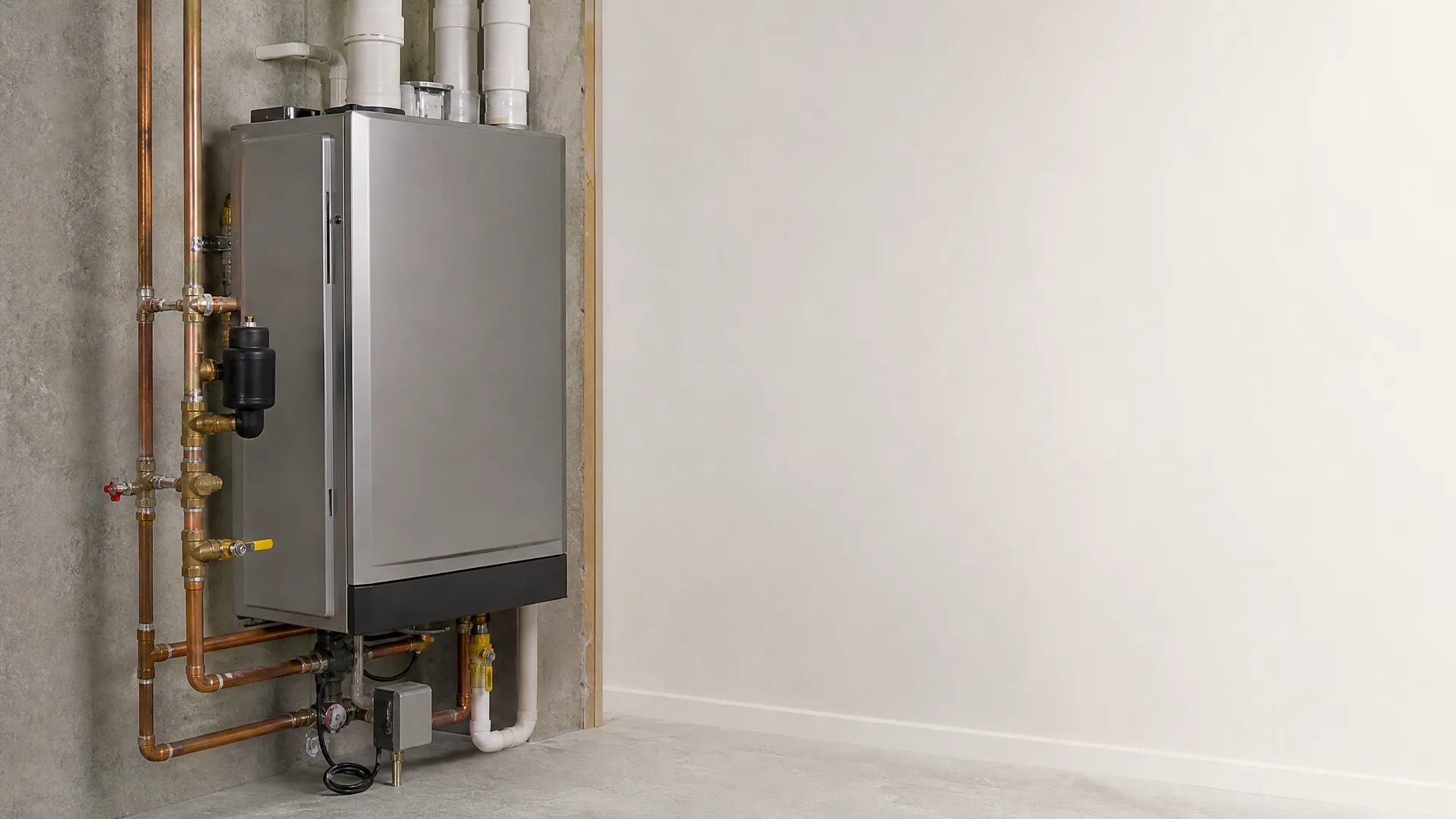
The expansion tank is what keeps a rise in temperature from turning into a rise you can't control. Water expands as it heats, and the tank gives it somewhere to go, a cushion of air on one side of a rubber diaphragm. If that diaphragm has failed or the tank was never charged right, the system has nowhere to put the extra volume, and the gauge climbs past where it should sit once the burner's been running a while.
What the relief valve is for
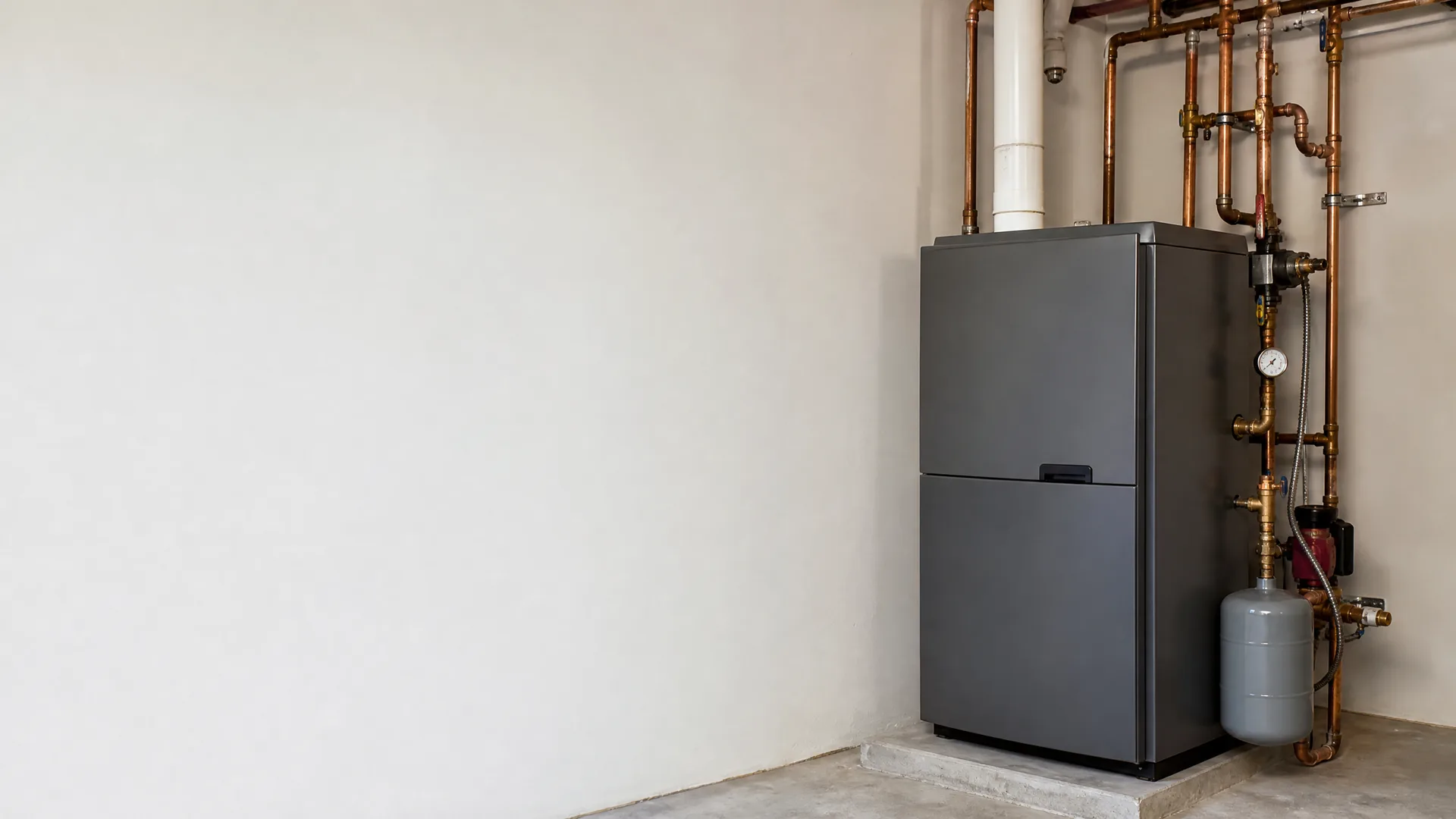
Every boiler has a pressure relief valve set to open around 30 psi, and it exists for one reason: to let water out before something gives. It's not meant to be the system's normal release. If it's dripping or spitting water during a heating cycle in Minnesota's coldest stretch, the pressure is already running too high, and the valve is doing the job the expansion tank or the fill valve should have been handling.

What this means for your house this winter
A boiler that's low on pressure in January doesn't wait for a convenient time to shut down. You'll notice it when the radiators go cold on a night the wind chill is well below zero, and by then you're bleeding a valve in the basement at 11pm instead of sleeping. A gauge that's crept up past 20 psi is just as easy to miss, because the house still heats fine right up until the relief valve lets go and you've got water on the floor near the boiler.
Checking the gauge now, before the deep cold settles in, is the kind of thing that saves you a call during the worst week of the year instead of a quiet one in October. If the number isn't where it should be, you don't have to figure out the fill valve or the expansion tank yourself. Send in what you're seeing and a contractor who works on boilers in your area will follow up, so the fix is someone else's job and not another thing on your list this winter.

Winter nights average 8°F statewide
At 8 below, a boiler that's lost pressure overnight has no margin left. The water in those radiators is working against real cold, and if the level drops below 12 psi the burner can cut out before the house catches up.
NOAA nClimDiv 1991-2020 county normals weighted by homes
Keep that number between 12 and 15 psi and the boiler should carry you through a Minnesota winter without drama. Below that, you're watching for cold radiators and a burner that won't fire. Above 20, you're watching for a relief valve letting go somewhere it shouldn't. Either way, the gauge told you before the cold did, which is the whole point of checking it now instead of in February. If yours is already outside that range, or it won't hold steady from one day to the next, that's not something to track for another month and see what happens. Send the form and the search for someone qualified is off your plate. A contractor who works on boilers in this state will take it from there, and you'll have done the one thing that actually matters before the hard cold sets in: caught it while there was still time to fix it on your schedule, not the boiler's.
A pro who works on boilers
One request and finding someone for the tune-up is handled.