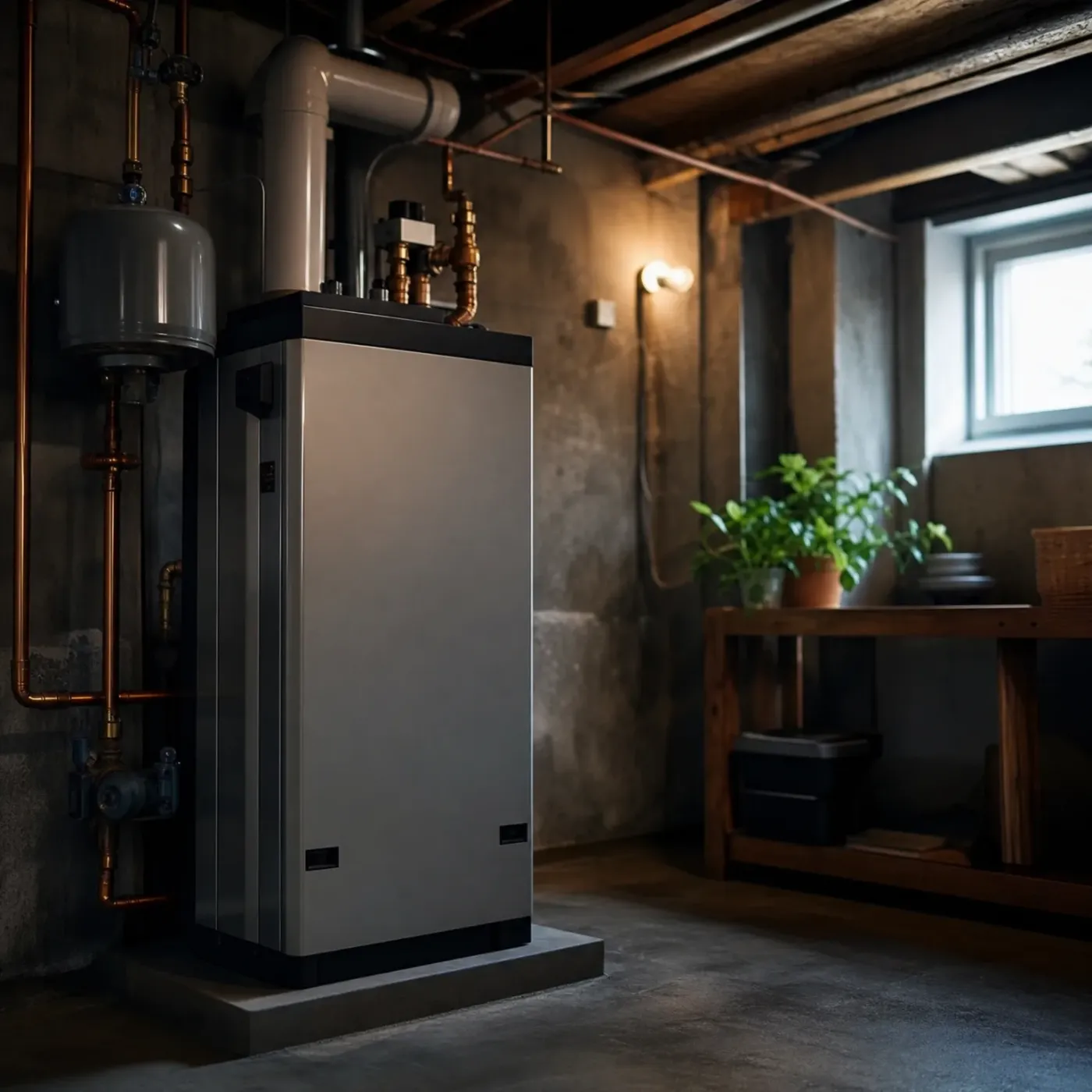
A floor-standing gray boiler unit on a concrete plinth in a basement, with copper pipes, an expansion tank, and a flue pipe above, a wall light, a small potted plant on a wooden shelf, and a window in the background.

One request and it's handed off

Why one radiator stays cold in a Minnesota winter

One cold radiator while the rest of the house heats fine usually comes down to air trapped in that loop, a valve that won't open all the way, or sludge blocking flow right at that spot. This page gets into which one it is and what a boiler tech checks first. Send the form and skip calling around to find someone who works on boilers.

Hand it over

A single cold radiator while the rest of the house is warm almost always comes down to air caught in that loop. Hot water boilers push water through pipes to each radiator, and if air gets into that line, it sits at the high point and blocks the water behind it. That radiator stays cold no matter how long the boiler runs. The fix is usually bleeding the radiator, letting the trapped air out through the little valve at the end until water runs steady. If bleeding it doesn't help, the problem is further down. The valve feeding that radiator may be shut partway or stuck, or sediment built up inside the line is choking off flow before the water gets there. In a Minnesota winter, a radiator that stays cold for even a day or two is worth dealing with fast. A boiler tech can bleed it, check the valve, and tell you if sludge in the line is the real cause.

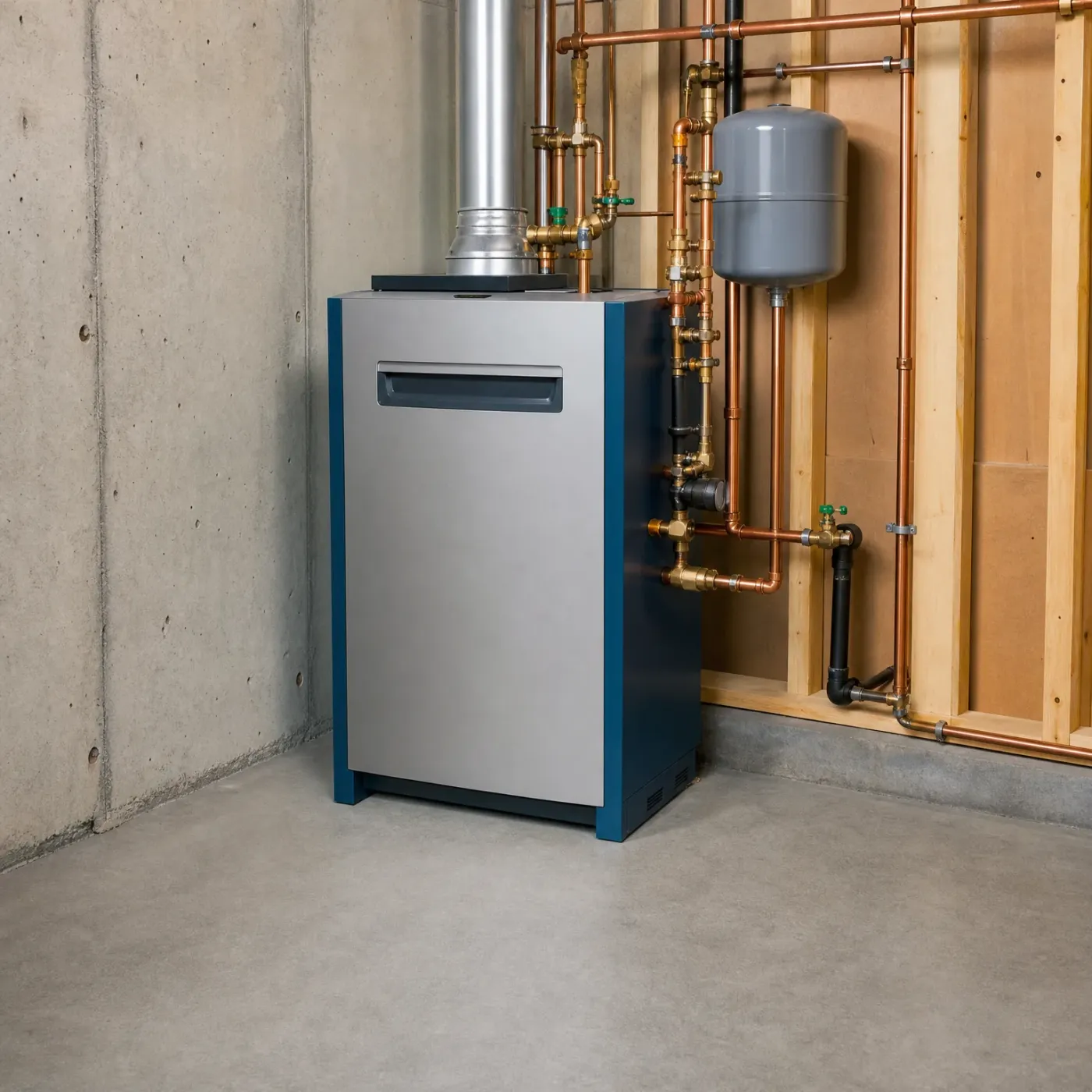
A gray and blue floor-standing boiler in a basement corner, with a metal flue pipe and copper and black piping, valves, and a gray expansion tank mounted on an unfinished wood-framed wall beside a concrete wall.

The rest of the house, heating fine

Every other radiator in the house ticks and hisses as it fills, then holds a steady heat. Water is moving the way it should through the copper and black iron, out to each room and back to the boiler. This is the baseline for what the cold one should feel like.
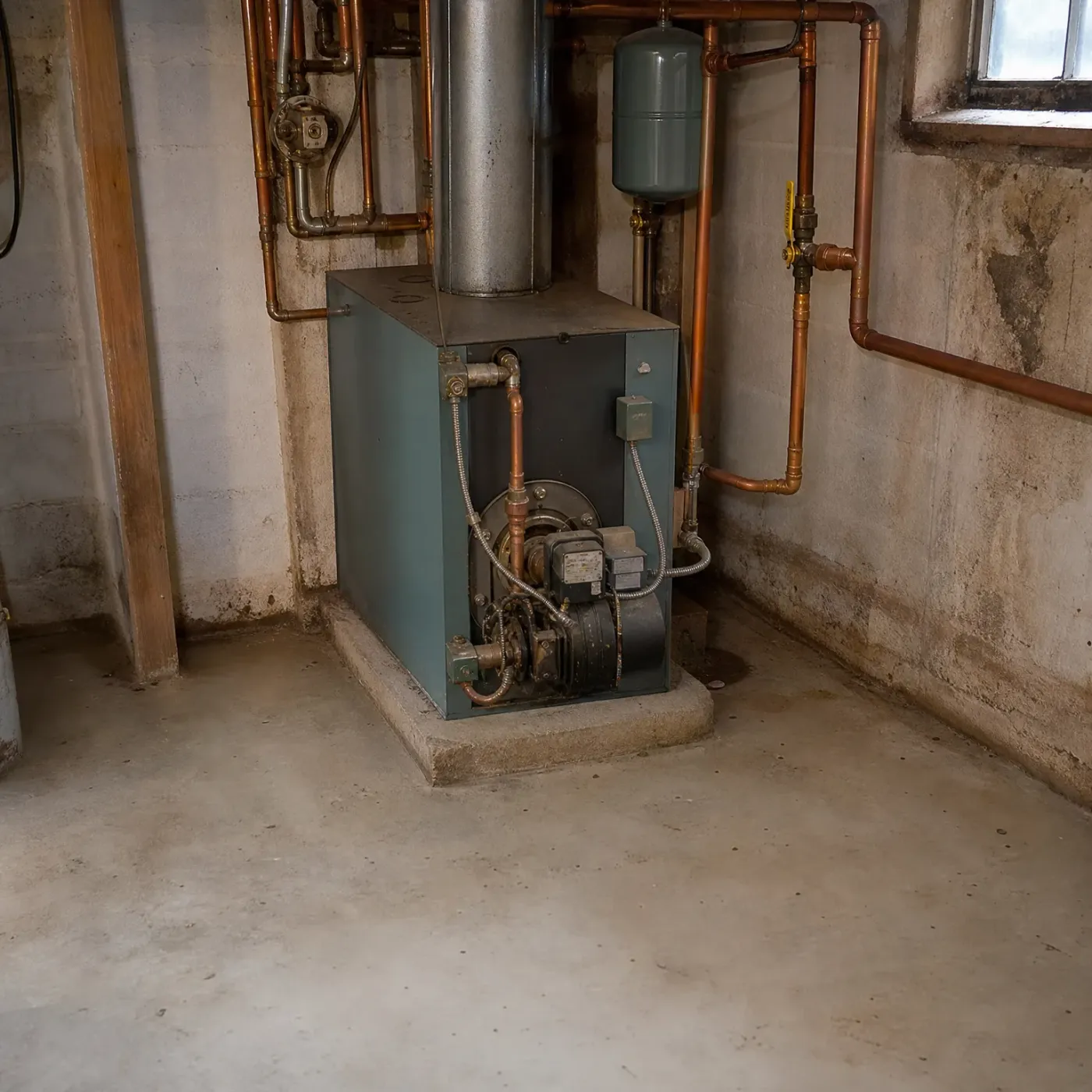
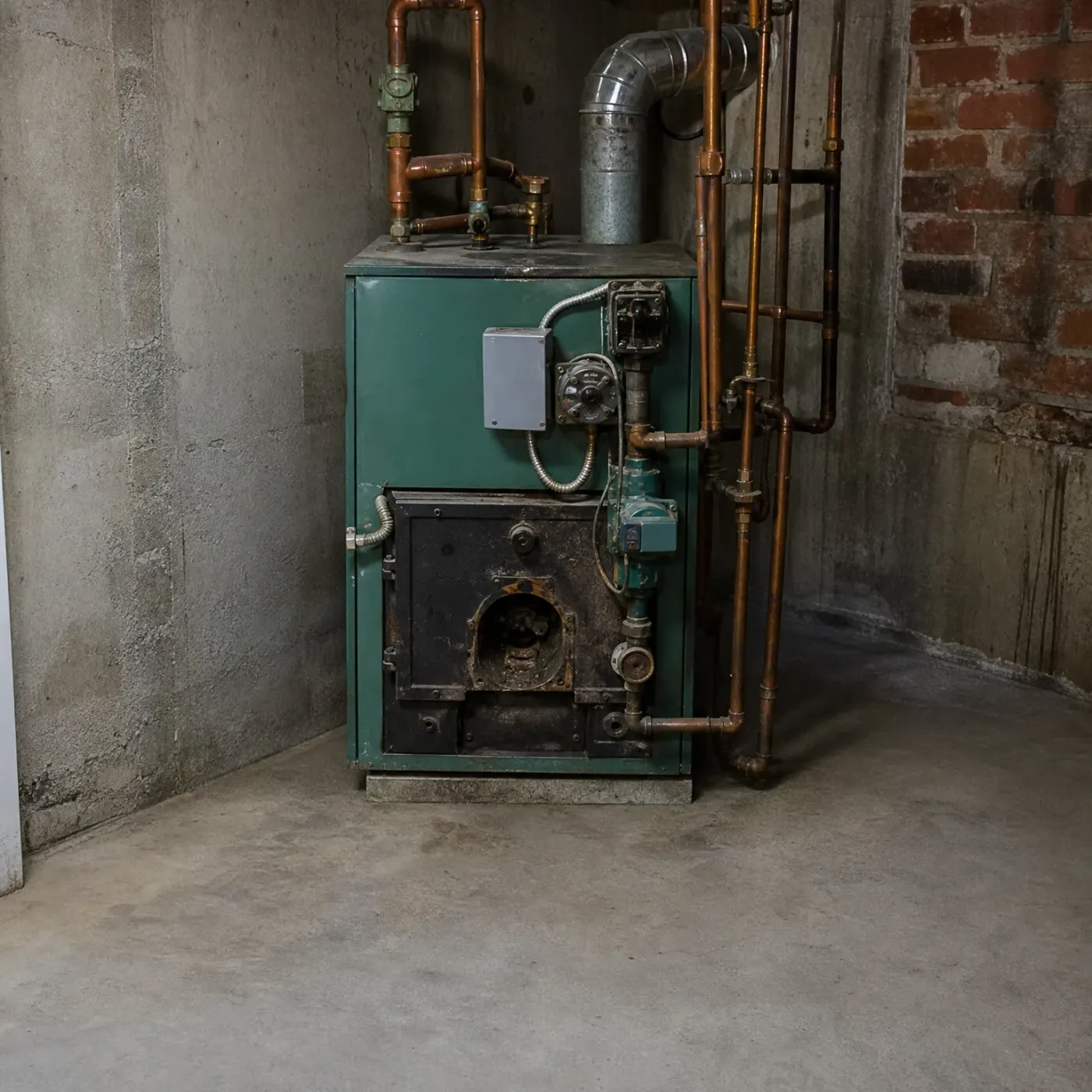
A green oil-fired boiler with a flue pipe, burner and circulator pumps sits on a concrete pad in a basement corner, surrounded by copper piping and an expansion tank against concrete walls.

The one radiator, staying cold

This one stays cold at the top, or cold all the way through, while water keeps circulating everywhere else. The valve may be open and the pipe warm right up to the radiator, which points to the block being inside it. A tech bleeds it first to rule out trapped air before checking further.

Why does that one room never warm up

You've probably got a routine by now. Walk past that radiator, put a hand on it, feel the top half cold while the bottom is warm, or feel nothing at all. Maybe you've already tried the bleed key and it helped for a week, then stopped. The room itself tells you something's off: you're running a space heater in there, or keeping the door shut so the cold doesn't bother the rest of the house. With a Minnesota winter outside, that's not a room you can just write off. A valve or a blocked line in one loop doesn't fix itself, and left alone, it's one more thing pulling on a boiler that's already working to heat every other room in the house.

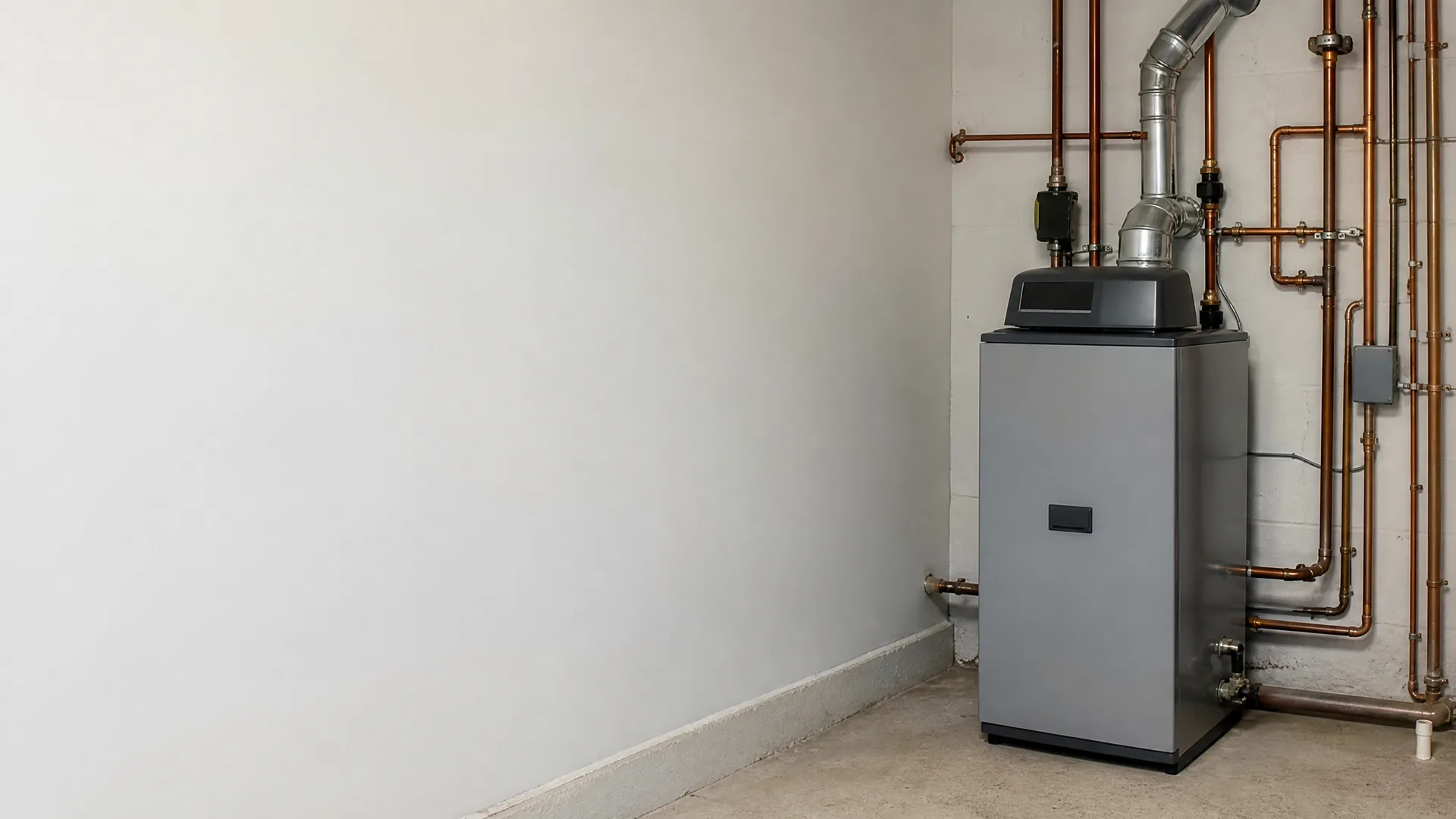
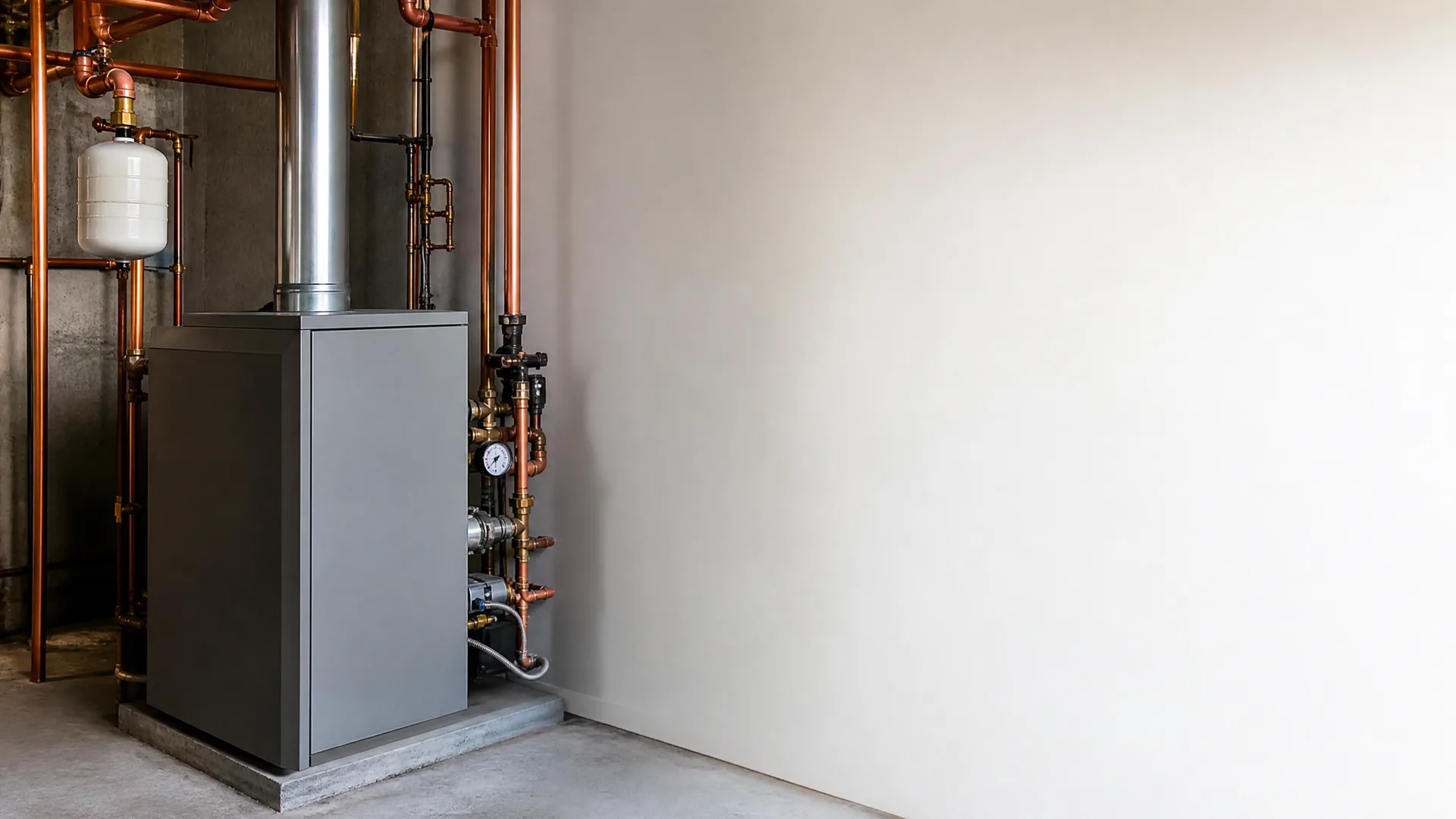
A grey floor-standing boiler with a metal flue and copper pipework, valves and a pressure gauge stands in the corner of a room with plain light walls and a concrete floor.

How bleeding actually clears it

A bleed key opens a small valve at the top of the radiator, the highest point in that loop. Air rises above water, so trapped air sits right there, right where the valve is. Opening it lets the air hiss out until water replaces it, usually in a few seconds. If water comes out steady with no more hissing, the air is gone and that radiator can fill all the way and heat end to end again.

A gray floor-standing boiler with a metal flue pipe stands in the corner of a plain painted basement room, connected to copper pipes running along the wall.

When bleeding doesn't hold

Some radiators go cold again within days or weeks of bleeding. That points past air to something mechanical at that one radiator: a valve not opening fully, or sludge settled in the bottom of that loop where flow is weakest. A boiler tech checks the valve first, since a stuck or partly closed valve is a common reason one radiator keeps losing heat while bleeding gives only a short fix.

Winter nights average 8°F statewide

Those 8°F nights are exactly when a cold radiator stops being a minor annoyance. Your boiler runs longer and more often to make up for that one room, and whatever's blocking flow there, air, a stuck valve, or sludge, gets asked to hold back more pressure the colder it gets outside.

NOAA nClimDiv 1991-2020 county normals weighted by homes

Bleed it yourself and it stays warm for a few weeks, then goes cold again. That points to a slow leak letting air back into the system, or a feed valve that isn't holding pressure the way it should.

Bleed it and it doesn't come back cold for the rest of the winter. That was just air working its way in during a refill or after some work on the system, and it's gone now.

A smiling man in a navy long-sleeve shirt sits at a wooden table in a kitchen and dining area, with a ceramic mug, a potted plant, and a sliding glass door behind him.
A smiling bearded man in a green henley shirt stands at a kitchen island with a gray mug, looking off to the side, with a dining area and shelves blurred behind him.
A smiling bearded man in a navy sweater sits at a white kitchen island with a ceramic mug, with open shelves, potted plants and a range hood behind him.
A smiling man in a dark olive long-sleeve shirt sits in a kitchen beside a counter with a dark mug, with a dining table, sideboard and hallway visible in the blurred background.

Done looking for a boiler pro

Describe your boiler job once, to one pro.

You only hire the pro if you want to.

Fixing it yourself

A bleed key handles trapped air, and that's a job you can do in five minutes with a cloth and a bucket. It won't do anything for a stuck valve or sludge sitting in that loop, and you won't know which one you're dealing with until you've opened the valve and checked. If the radiator goes cold again in a few weeks, you've spent that time without actually fixing anything, and the room stayed cold the whole time you were waiting to find out.

Getting a boiler tech out

A tech checks the valve, the loop, and the pressure in a way a bleed key can't, and finds out in one visit whether it's air, a valve that won't open, or sludge blocking that spot. Instead of spending your evenings calling around Minneapolis or St. Paul for someone who works on boilers, explaining the same cold radiator to three different companies, and comparing quotes, you send one form and the search is off your plate. The room gets looked at by someone who knows what to check first.

A green cast-iron boiler with a soot-stained front door, copper piping and a metal flue, standing on a concrete floor in a basement corner with concrete and brick walls.
Before you get your boiler repair
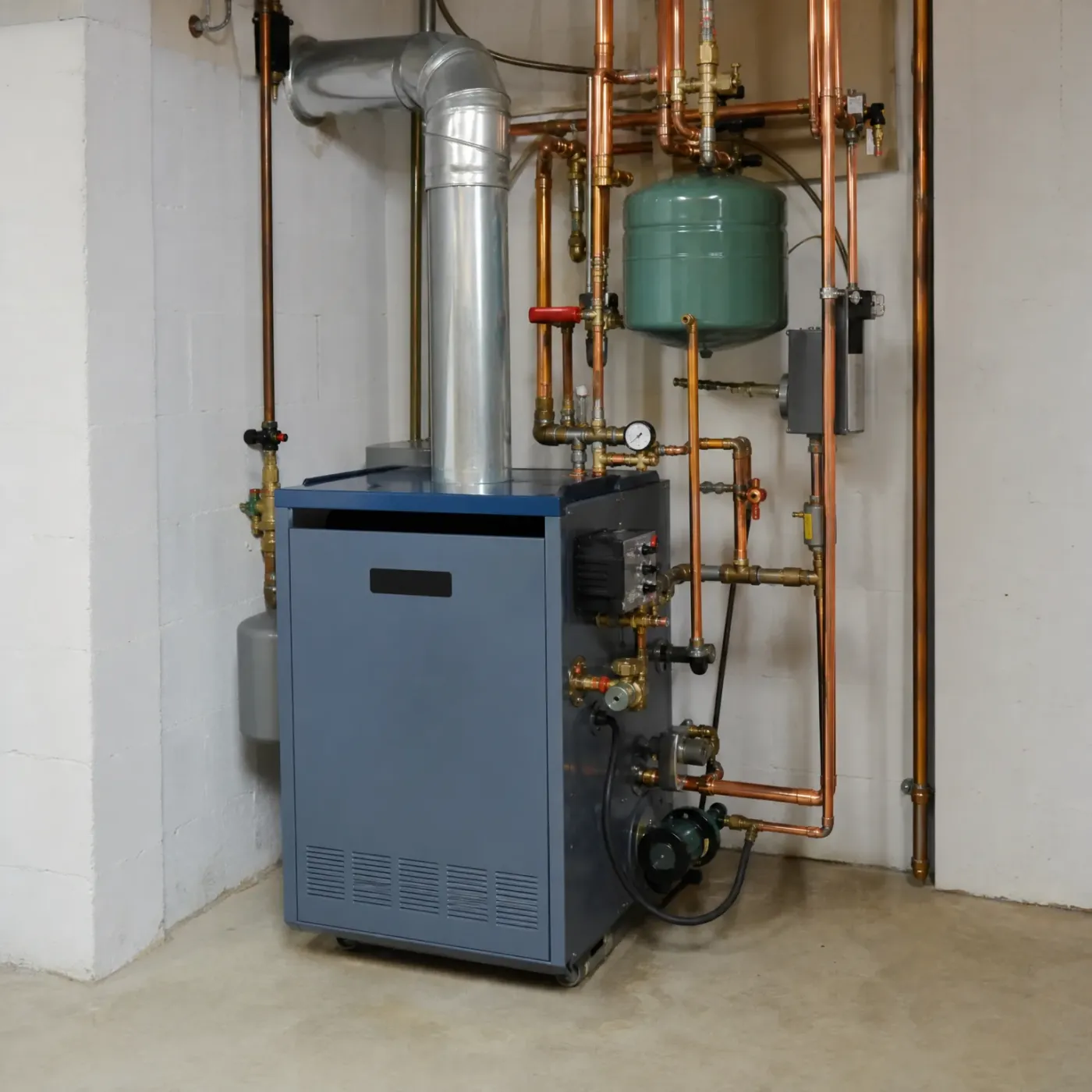
A blue-gray residential boiler in a basement corner, connected to copper piping, a green expansion tank, a circulator pump, gauges, and a metal flue pipe against painted block walls.
After you get your boiler repair

Before you get your boiler repair

You're still bleeding that same radiator every few weeks, calling around for someone who works on boilers, and explaining the same cold spot to each one you reach.

Send it today

After you get your boiler repair

A contractor finds out whether it's the valve or sludge in that loop and deals with it. You stop checking that radiator every cold morning.

Send it today
A closed dark laptop and a ceramic mug of coffee on a wooden dining table, with wooden chairs, a dark kitchen cabinet with cutting boards and a potted plant, and a leafy plant by a window in the background.

One cold radiator has a reason, and it's a small list

Air, a stuck valve, or sludge sitting in that one loop. That's the whole list. A bleed key tells you which one you're dealing with by whether the warmth holds or fades again, and a boiler tech can trace it the rest of the way, open the valve fully, or flush that line, without touching the rooms that already heat fine.

You know how this usually goes. You find a name, call, explain the cold radiator, get put off or quoted something vague, then do it again with the next name on the list. Send the form instead and that part is done. You're not the one tracking down who works on boilers around here, and you're not explaining that same cold spot to three more people before someone shows up to look at it.

A gray upholstered sofa with a matching cushion sits beside a potted plant and a wooden table holding a small green plant in a stone pot, near a curtained window.
A smiling man with dark curly hair in a navy t-shirt sits on a gray couch indoors, with a large-leafed plant and a window in the background.
A bearded man in a plaid flannel shirt stands in a kitchen looking out a window toward snow-covered shrubs, with a steaming mug on the windowsill and potted plants on a shelf behind him.

Boiler Repair

Hand off the search today

Explain the job once and skip repeating it on every call.

A black-framed smartphone standing upright against a plain white background, its screen filled with solid green.
Step 1 of 3: Equipment