Describe what your boiler is doing once, in one form.
That rumbling, popping noise from your boiler usually means water is boiling against a hot spot inside the heat exchanger before it can mix with the rest of the water in the system. It sounds alarming because it is loud, and it is worth taking seriously, but it is a known problem with a known set of causes.
Kettling shows up more in the kind of winter Minnesota has. When the boiler is working hard night after night, scale buildup, poor water flow, or a buildup of sludge inside the exchanger get exposed to constant heat, and that's when the popping starts. It does not go away on its own, and running the boiler while it kettles stresses the heat exchanger further.
Finding someone qualified to work on a boiler is not like finding someone to look at a furnace. You need a contractor who actually deals with hydronic heat, not someone who mostly does forced air and takes boiler calls on the side. Searching for that, calling a few places, explaining the popping noise and when it happens, then waiting on quotes to compare takes real time, and it's time spent on a system that is already straining.
This page connects you with a licensed boiler contractor local to Minnesota, someone who works on these systems all winter and has seen what kettling turns into when it's left alone. You explain the problem once. You are not stuck fielding calls from five different companies trying to win the job. One contractor, already familiar with what causes kettling in a Minnesota winter, follows up and takes it from there.
What's below goes through the actual causes of kettling, what a contractor checks first, and what happens if it's ignored. When you're ready, the button gets a contractor out to look at it.
That kettling noise is mineral buildup, mostly scale, coating the inside of the heat exchanger. Minnesota water leaves deposits behind as a boiler heats it, and over years those deposits harden into a layer that insulates the metal from the water around it. The water trapped against that layer boils and flashes to steam before it can mix in, and the popping and rumbling you hear is that steam collapsing. A boiler running flat out through a Minnesota winter builds scale faster than one that barely runs, which is why kettling often shows up a few years in and gets louder each season. Left alone, that hot spot stresses the heat exchanger, and a stressed heat exchanger can crack. It is not a sign to shut the system off and panic, but it is a sign the heat exchanger needs a look before the coldest months ask the most of it.
Water moving through a clean heat exchanger picks up heat evenly and carries it away as fast as the burner adds it. Scale changes that. It coats the metal in a layer that doesn't conduct heat the way the metal does, so a thin film of water sitting right against the hot surface gets far hotter than the water just past it. That film turns to steam. The bubbles don't last long. A few inches away the water is cooler, and the moment a bubble reaches it, the steam collapses back into water almost instantly. That collapse is what you're hearing, not the boiling itself. Each knock or pop is one pocket of steam giving out. Early on, the scale is thin and the effect is small, so the noise is faint and easy to ignore. Given a few more months of hard water passing through, the layer thickens, more of the surface runs hot enough to flash steam, and the noise builds along with it. The burner also has to work longer each cycle, pushing heat through that crust to reach the water at all.
What's Actually Happening Inside
Scale sits on the metal and traps a thin layer of water right against the hottest part of the heat exchanger.
That trapped water flashes to steam bubbles before it can escape into the rest of the water flowing through the boiler.
The bubbles collapse the moment they hit cooler water a few inches away, and each collapse makes a sharp knock or pop.
A clean heat exchanger spreads heat evenly, so the water never gets hot enough in one spot to flash into steam.
The scale layer also forces the burner to run longer to get the same water temperature, since it has to push heat through an insulating crust first.
Kettling usually starts quiet and gets louder over months as the scale keeps building on top of itself.
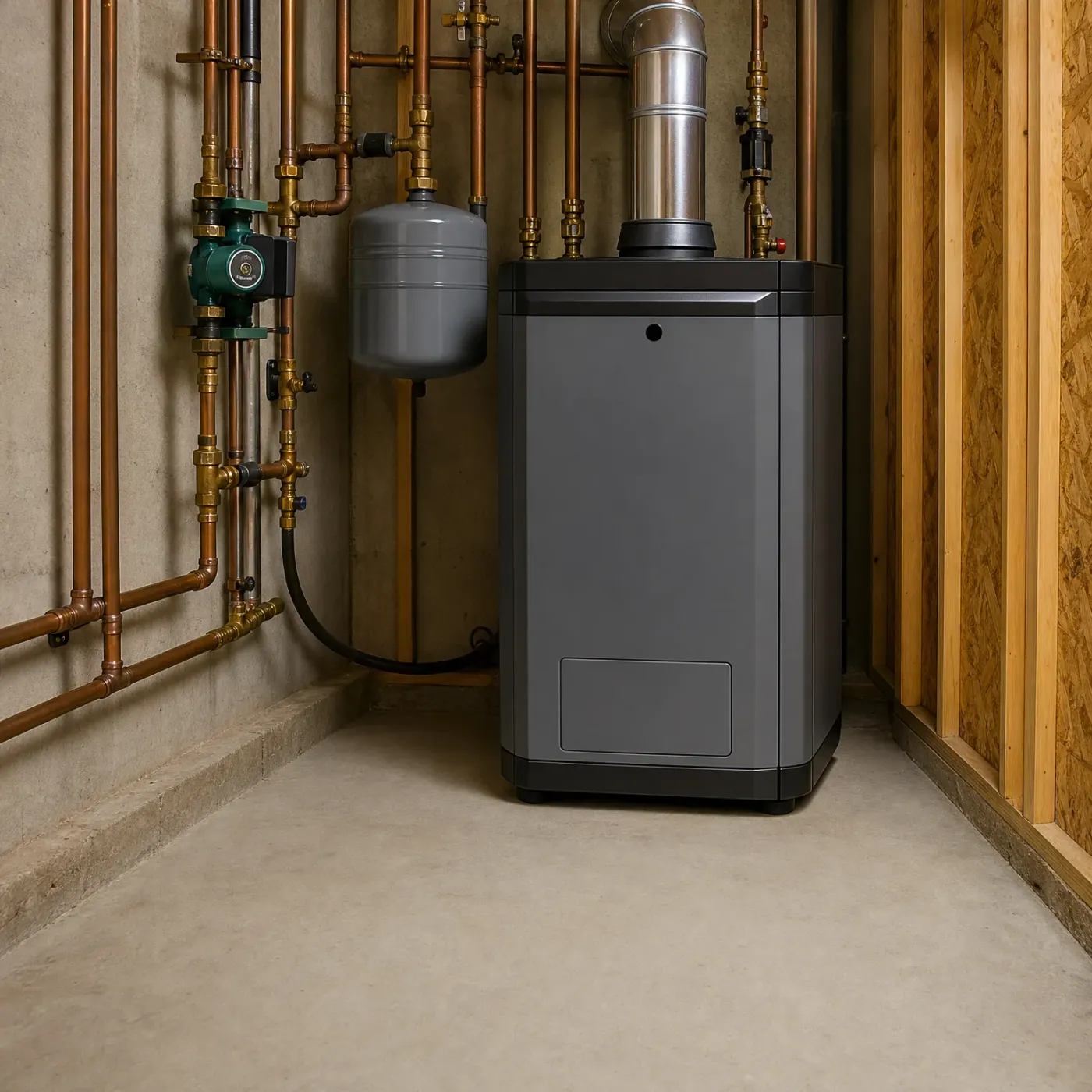
Water moves freely past the heat exchanger here, picking up heat evenly with no trapped steam to knock against the metal.
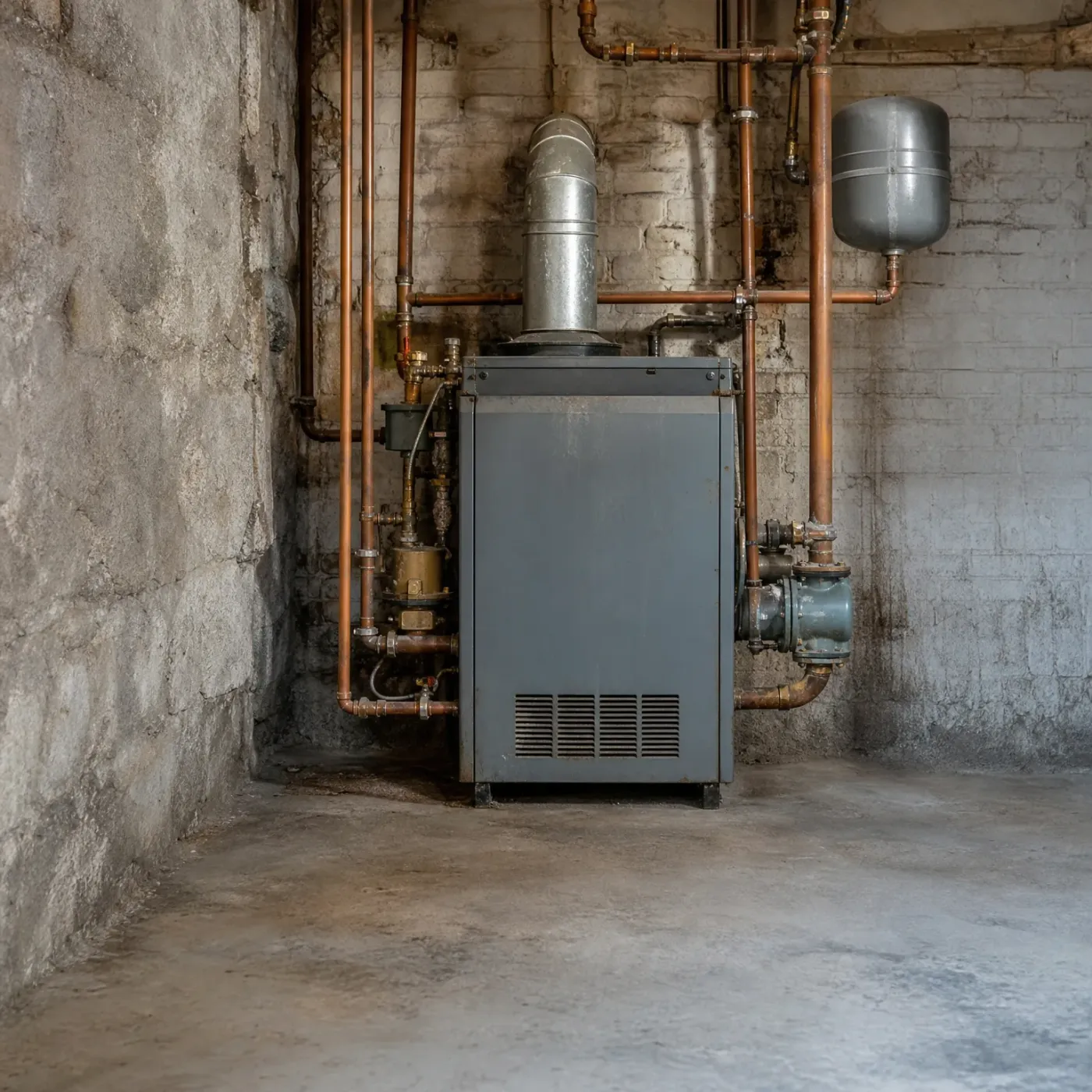
Scale lines the heat exchanger in this one, and the popping you hear is steam pockets collapsing under the cast iron.
That noise will not fix itself, and running the boiler through another Minnesota winter with scale on the heat exchanger wears on the metal every time it fires. Finding someone to deal with it usually means searching around, calling a few shops, explaining the popping and the rumbling over and over, then sitting with quotes trying to tell them apart. This connects you with one licensed boiler contractor local to Minnesota instead, someone who works on these systems all season and has seen what years of hard water does to a heat exchanger here. You explain it once. No list of companies calling you back at once, no sorting through bids to guess who actually knows what they're dealing with. Just the one call, from someone who already knows what kettling in a Minnesota boiler usually means before they walk in the door.
Why the noise gets louder over time
Scale builds in layers, a little more each heating season as minerals drop out of the water. A thin coat might only muffle the sound, but as it thickens, more water gets trapped against the metal before it can mix in, and more steam bubbles form and collapse. That's why kettling often starts as a faint tick and turns into a steady knock over a couple of winters. The buildup doesn't reverse on its own, so the noise is a record of how long it's been there.
What the sound is not
Kettling is easy to mistake for a loose part or a pump about to fail, since both can make a boiler knock or rattle. The difference is where the noise comes from. A mechanical issue tends to be steady and tied to the pump running or the burner cycling. Kettling comes specifically from the heat exchanger itself and tracks with how hard the boiler is firing, often loudest right after it kicks on. A contractor can tell the two apart by where the sound is loudest on the unit.
Winter nights average 8°F statewide
Winter nights here average 8°F, so your boiler is firing hard and often for months at a stretch. Every one of those cycles pushes heat through the exchanger, and if scale is already coating it, each firing is another chance for trapped water to flash into the pops you're hearing.
NOAA nClimDiv 1991-2020 county normals weighted by homes
Kettling means scale, and scale does not go away on its own
The noise is water flashing to steam against a layer of scale inside your heat exchanger. That layer only builds with time, and nothing short of a descale or an exchanger replacement gets rid of it. A boiler that keeps kettling through another Minnesota winter is firing hard against metal that's already stressed, night after night at 8°F.
You know by now whether that sound has been getting louder. A local plumber who works on boilers all season can look at yours, tell you how far the scale has gone, and say what it needs. That's one call instead of several, one visit instead of explaining the same popping sound to three different shops and sorting through whatever they each quote you. Someone who services this equipment every winter here has heard this exact noise plenty of times before.
Boiler Repair
One form, no calling around
Step 1 of 3: Equipment
Tell a local repair pro what your boiler is doing.
A local pro who knows boilers gets your details and gets in touch.
Send it once and finding someone is no longer on you.
Send the request today and let a boiler pro reach out to you.
Fill out one short form instead of calling around.
Explain the job once and skip repeating it on every call.
The pro who reaches out is licensed in Minnesota.
Only one pro gets your request, so you hear from one company.