Why your boiler is leaking water in Minnesota

Step 1 of 3: Equipment

A leaking boiler usually comes down to pressure or a worn seal. Inside the boiler, the pressure relief valve opens when pressure gets too high, and that water has to go somewhere, often dripping from a small pipe near the floor. A faulty valve can open even at normal pressure. Other times the leak is from a corroded tank, a loose fitting, or a pump seal that has worn out after years of running every winter. In Minnesota, that boiler is working hard from fall through spring, and all those heating cycles put real wear on seals and joints. A small drip rarely stays small. Left alone, it can corrode the parts around it, trip a safety switch, or leave you without heat on a cold night. Figuring out which part is actually failing means shutting off the system and opening it up, not just watching where the water shows up.

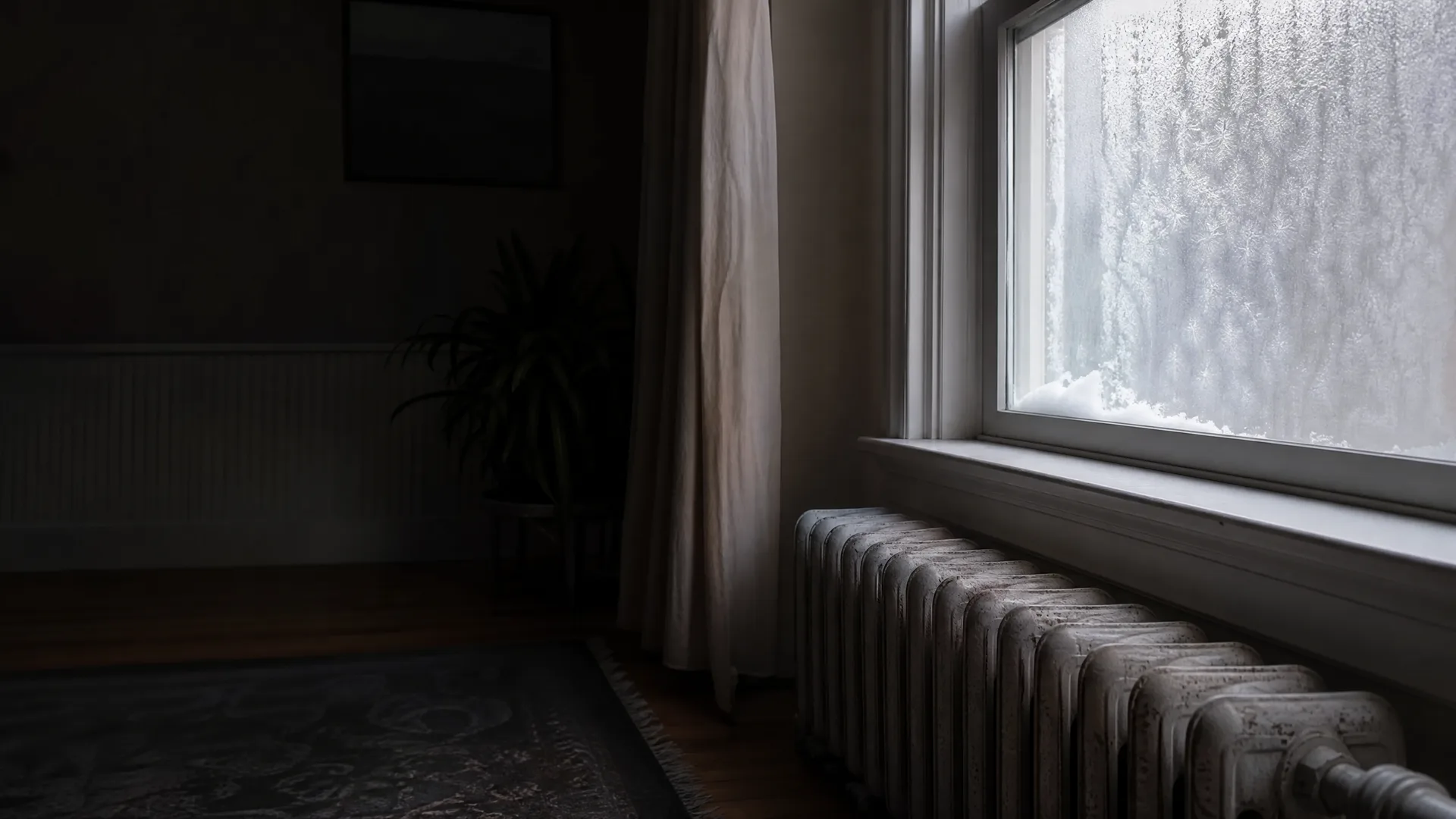
A dimly lit room with a cast-iron column radiator beneath a wide window covered in frost and snow, with a pale curtain, a potted plant, and a patterned rug on a wood floor.

You're up before the house is warm, and the living room is colder than it should be. Frost has crept across the inside of the window glass above the radiator, and under it there's a damp patch spreading on the floor where the pipe meets the baseboard. You touch the radiator. It's barely warm on one end, cold on the other. Outside, it's well below zero, the kind of January morning that doesn't forgive a boiler that isn't right. You get a towel down first, then stand there a minute, watching the drip, wondering how long it's been going before you noticed.

Relief Valve or Worn Seal

Relief Valve

  • Opens on its own when pressure climbs past the point it's set for, usually around 30 psi.
  • Water drips from a small pipe near the floor, often behind the boiler where you'd have to look to notice it.
  • A fill valve left open or a bad expansion tank can push pressure up and make the relief valve open when it shouldn't have to.
  • Once pressure drops back down, the dripping can stop on its own, which is why people sometimes miss it until the valve wears out from opening too often.
  • A valve that won't fully reseat keeps weeping water even at normal pressure, and that one needs replacing rather than just adjusting.

Worn Seal

  • Shows up as water around a fitting, a circulator pump, or where two sections of the boiler meet, not from a pipe stub like the relief valve.
  • Gaskets and seals harden and shrink over years of heating and cooling, and once they crack they don't reseal themselves.
  • The leak is usually slow at first, a small puddle or a stain on the floor rather than a steady drip.
  • Mineral buildup in Minnesota's water can speed up wear on pump seals, since dissolved minerals scrape at the seal every time the pump runs.
  • A seal leak calls for taking the part apart and replacing the gasket or seal itself, not just tightening a bolt.
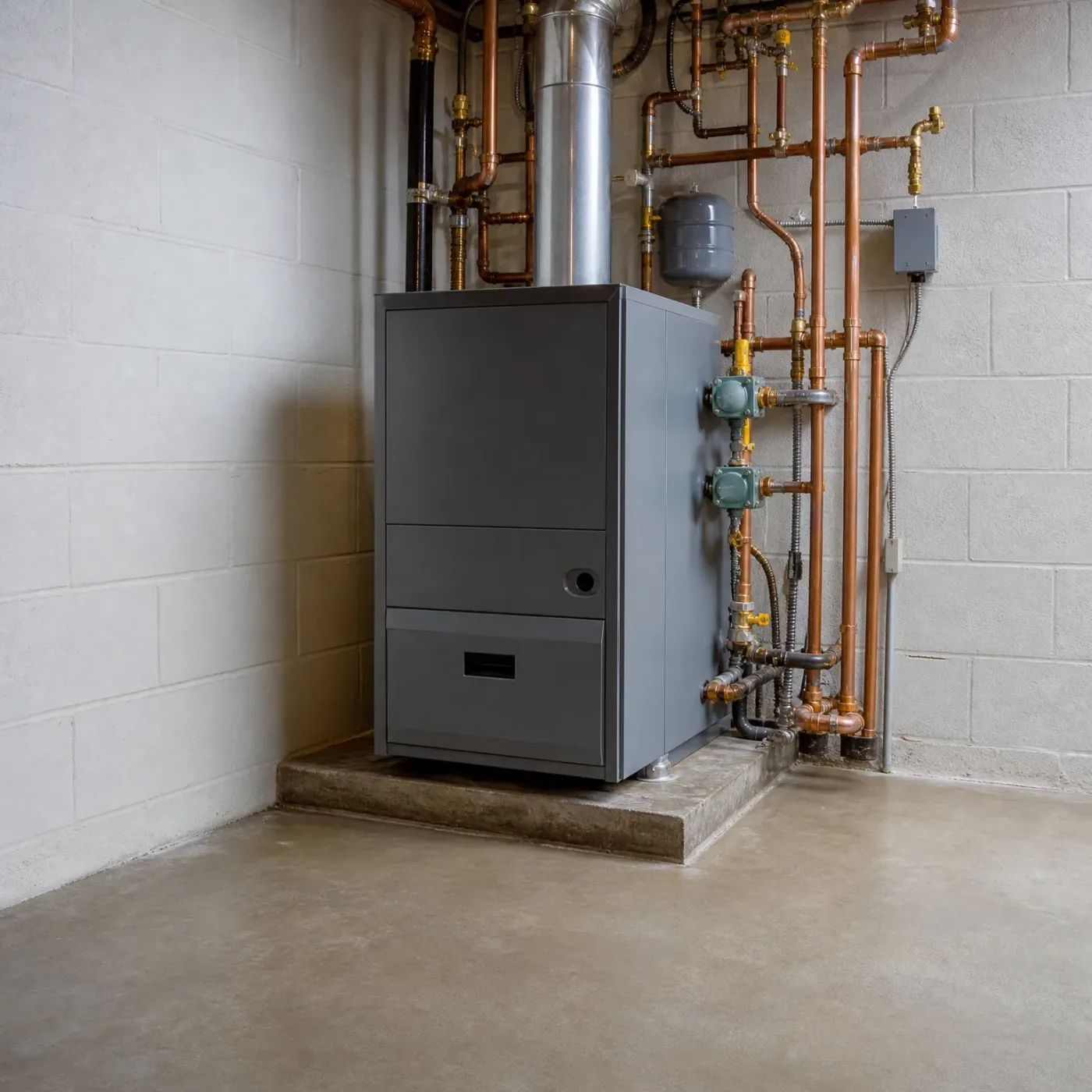
A gray boiler unit on a concrete pad in a basement corner, connected to copper piping, valves and a metal flue against painted concrete block walls.

Running the way it should

The pad is dry underneath, the pipe fittings have no crust of mineral buildup on them, and the pressure gauge sits where it's supposed to. The expansion tank is doing its job, absorbing the swings so the relief valve never has a reason to open.

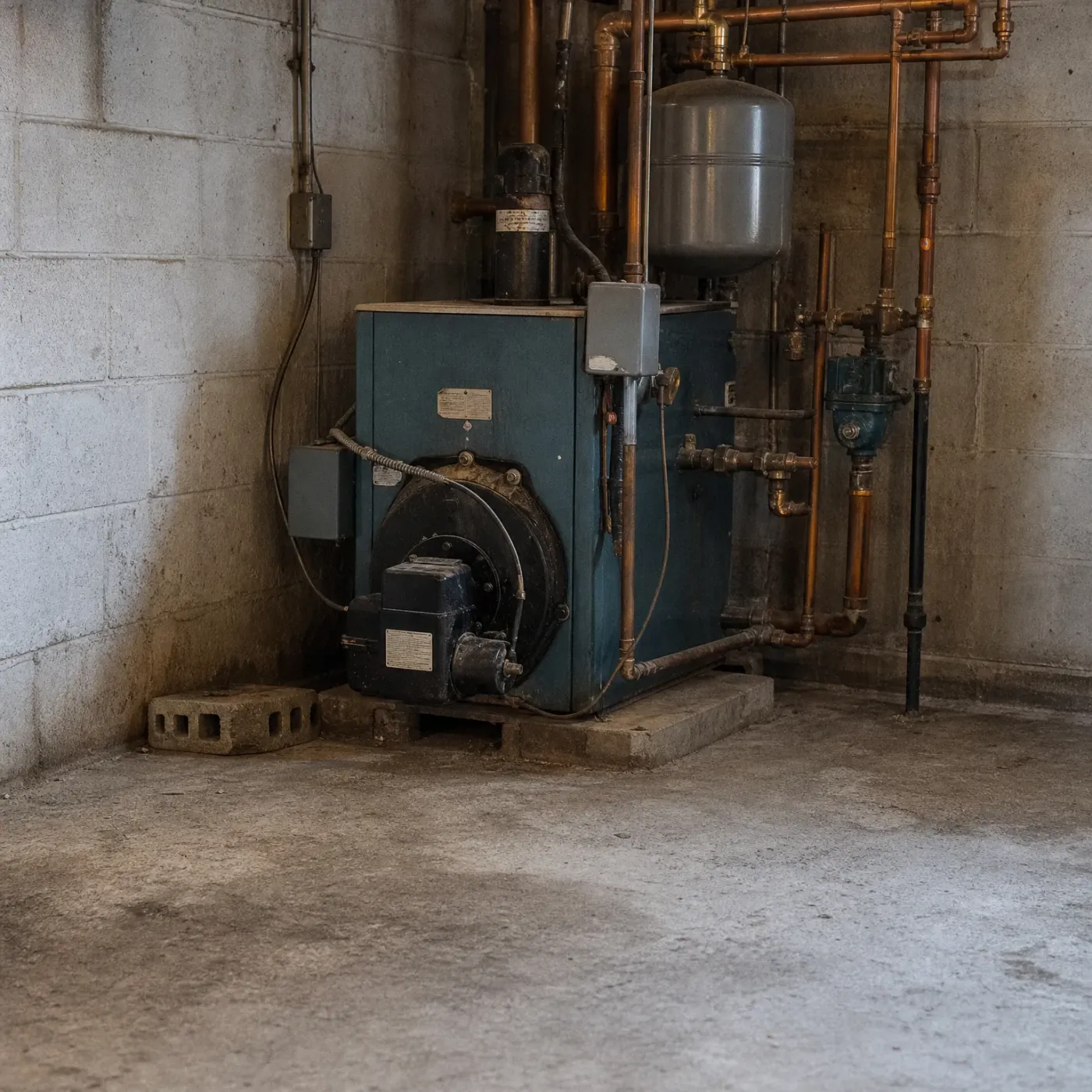
A blue oil-fired boiler with a burner unit sits on a concrete pad in a basement corner, with copper piping, valves and a gray expansion tank overhead against concrete block walls.

Signs something's wrong

Rust streaks run down the side of the tank, and the fittings below it show a white or greenish crust where water has dripped and dried more than once. An old boiler like this one has had years for a seal to wear or a joint to loosen, and the stains on the floor show where it's been leaking for a while.

A smiling man in a dark navy sweater sits on a light sofa in a living room, with a glass bowl of popcorn on a wooden coffee table and bookshelves behind him.
A smiling man in a dark green sweater sits on a tan leather sofa in a dimly lit living room, with a bowl of popcorn in the foreground and a kitchen area blurred behind him.
A smiling middle-aged man in a dark shirt sits on a gray sofa in a living room, with a bowl of popcorn on a side table and shelves, a window and kitchen area behind him.
A smiling bearded man in a dark gray t-shirt sits on a gray couch in a living room, with a large glass bowl of popcorn on a wooden table in the foreground.

Let someone else find the pro

Explain the job once and skip repeating it on every call.

No fee to send it, and nothing to sign.

Where the water is actually coming from

  • The circulator pump has a seal around its shaft, and once that seal wears, water weeps out where the motor meets the pump housing.
  • A cracked heat exchanger lets water escape inside the cabinet, and you'll often smell it before you see a puddle.
  • Loose fittings at the unions or the boiler drain valve let water seep out slowly, leaving a crust of white mineral deposit behind.
  • The expansion tank has a bladder inside that separates air from water, and once it fails, the system has nowhere to absorb pressure swings.
  • A cracked cast iron section lets water out during the heating cycle, then the leak can slow or stop once the metal cools and contracts.
  • Low water pressure from a leak can trip the boiler's safety switch, so a leak sometimes shows up first as no heat at all.

Most leaks trace back to one of a handful of spots, and where you find the water narrows it down fast. The circulator pump sits where the motor meets the housing, and that's sealed by a shaft seal. Seals wear over years of spinning, and once one goes, you'll see water weeping right at that joint, not sprayed around the room. A cracked heat exchanger is a different problem entirely. Water gets into the cabinet itself, and because it's warm and the space is enclosed, you'll often catch a musty or metallic smell before you ever spot a puddle on the floor. Fittings are the simple case. Unions and the boiler drain valve get snugged down when the system's installed, and over time they can work loose just enough to seep. That kind of leak is slow, but it leaves a tell: a white, crusty mineral buildup where the water has evaporated and left what it was carrying behind. The expansion tank works differently than all of these. It has a rubber bladder inside that keeps air on one side and water on the other, and that air cushion is what absorbs the pressure swings as the water heats and cools. Once the bladder fails, the system loses that cushion, and pressure has to go somewhere else, often out through the relief valve. And a cracked cast iron section can leak only while the boiler's firing and running hot, then seem to stop once things cool back down, which is why that one's easy to miss.

Winter nights average 8°F statewide

At 8°F, your boiler runs long stretches without much of a break. That kind of steady run time puts real strain on a worn seal or a valve already holding more pressure than it should, and it's often what turns a slow drip into standing water on the floor.

NOAA nClimDiv 1991-2020 county normals weighted by homes

Pressure in a boiler loop builds from heat, not from the water main, so a relief valve that's weeping isn't random. It's responding to something upstream that's pushing the system past 30 psi.

That's why a drip rarely stays a drip. Once a valve seat wears from repeated opening, it stops sealing fully when it closes, and the leak keeps going even after pressure drops back down.

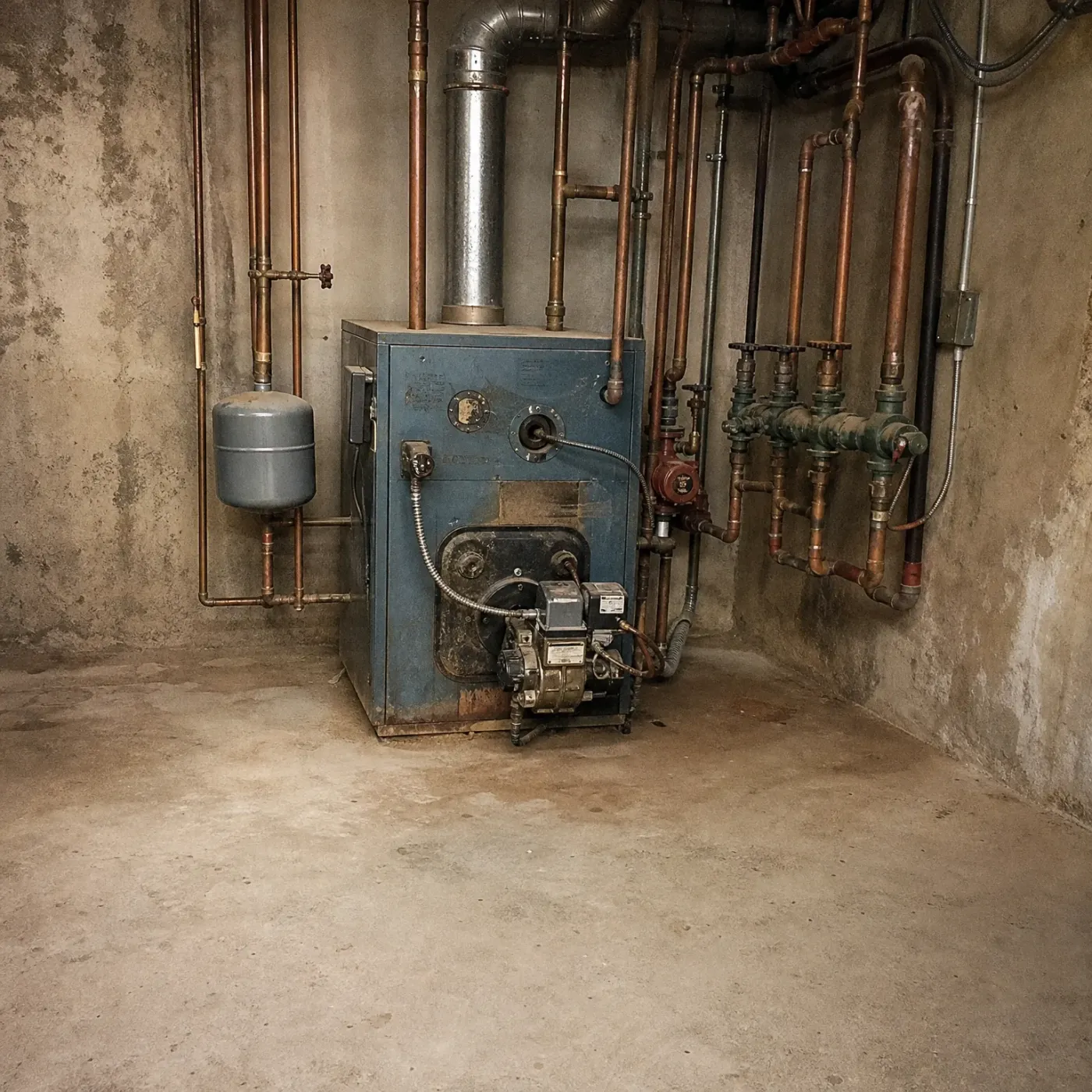
An older blue boiler with a burner unit stands in a concrete basement corner, connected to copper and steel piping, valves and a gray expansion tank on the wall.
Before you get your boiler repair
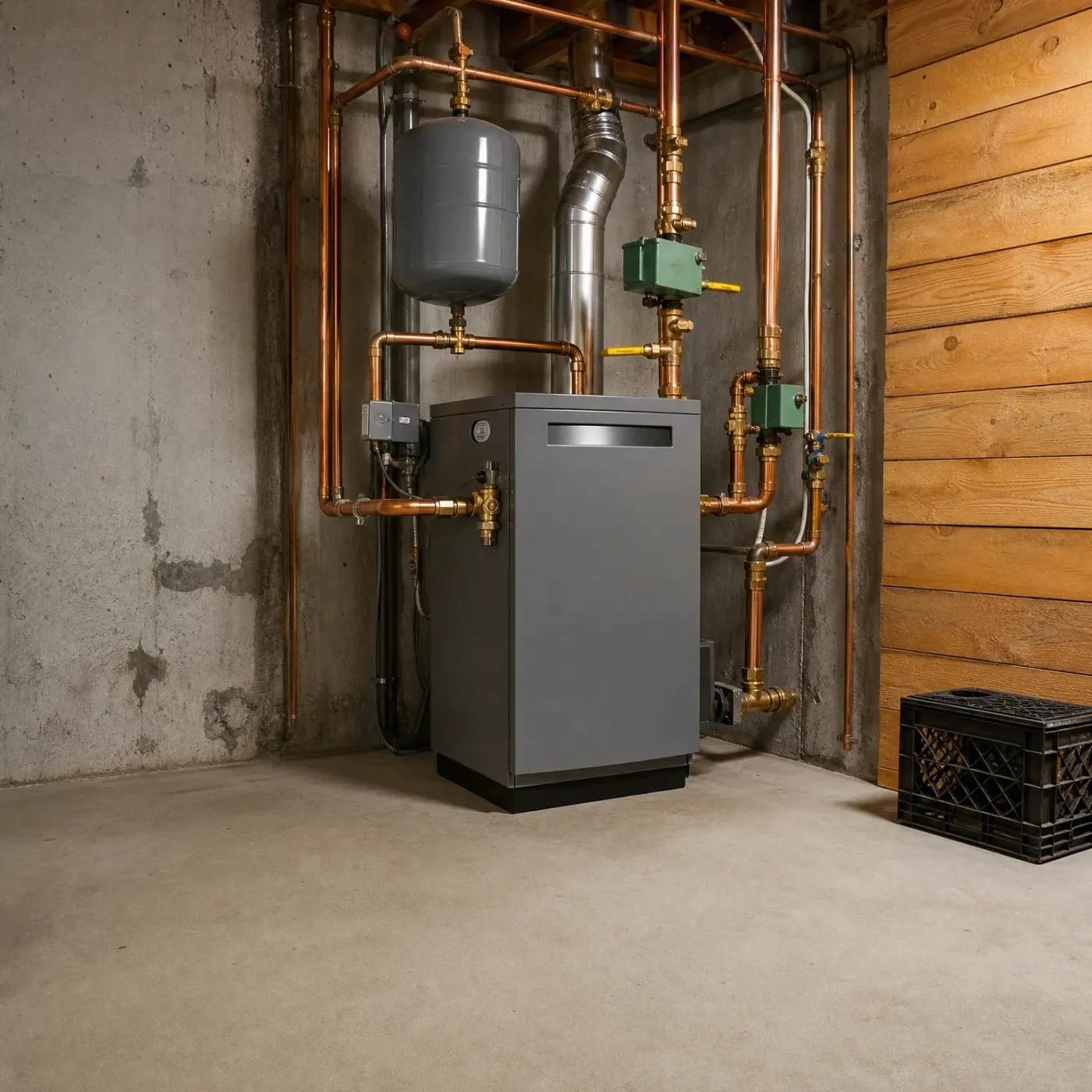
A gray boiler unit in a basement corner with copper piping, brass valves, a gray expansion tank, a metal flue duct, concrete walls and a wood-paneled wall, with a black plastic crate on the floor at right.
After you get your boiler repair

Left alone

A slow drip keeps going. The floor around the boiler stays damp, fittings corrode, and a relief valve that's already weeping tends to wear faster, not slower.

Hand off my repair

Looked at now

Someone traces the water back to its source, pressure, a worn seal, or a crack, and deals with the actual cause instead of just the puddle.

Hand off my repair
A wooden table in the foreground holds a closed laptop and a ceramic mug of coffee, with a spindle-back wooden chair behind it, a beige wall with paneled wainscoting, a window at left, and a kitchen counter with a cutting board, bowl of fruit and greenery at right.

A leak doesn't fix itself

Water on the floor by your boiler means something inside is past where it should be, pressure, a worn seal, a valve that's given out. That's the whole answer. What's left is finding the one thing it actually is and getting it fixed before the winter puts more hours on a system already struggling.

You don't have to spend your evening on it. No calling around to ask who even works on boilers in your area, no explaining the drip and the damp floor over and over to each one, no sitting with a stack of quotes trying to guess which is fair. Send the form and that part is done. A licensed contractor takes it from there, and you go back to your evening knowing where things stand.

A wooden table holding a stone vase with a bare branch, two stacked books and a small dark bowl, beside a window with green foliage outside and a sofa in the dim background.
A woman in a dark knit turtleneck sweater reclines on a couch under a cream knit blanket, looking down at an open book, with a lit table lamp and framed pictures behind her.
A smiling middle-aged man in a dark green sweater sits at a candlelit table with wine glasses and a plate of greens in a dimly lit interior.

Done looking for a boiler pro

A leaking boiler isn't something to watch and wait on. The source is pressure, a worn seal, or a valve that's given out, and finding out which one takes someone looking at your system directly. Send the form and you're done hunting, no calling around to find who even works on boilers, no explaining the same drip and the same damp floor over and over. Someone gets matched to the job, and from there it's in their hands, not yours.

Send it today

One form replaces the calls you'd make to find a boiler pro.

You're not committing to anything by asking.