Why your boiler won't turn on in a Minnesota winter
Skip searching for a boiler pro and answer a few questions instead.
A boiler that won't fire on a cold morning in Minnesota is not something to leave for a few days. When the thermostat calls for heat and nothing happens, or the burner tries and fails, the cause is usually something specific: a closed valve, a pressure switch out of range, an igniter that won't light, a float switch tripped on the condensate line. Figuring out which one it is from the symptoms alone is hard to do with any confidence, and in the meantime your house keeps losing heat.
Most people in this spot start by searching around, calling a few contractors, waiting on callbacks, and telling the same story about the boiler two or three times before anyone even gets to the house. That takes hours you don't have when it's below zero outside.
This page skips that part. Tell it what the boiler is doing, or not doing, and it connects you with one licensed contractor near you in Minnesota, not a handful of companies competing for the job and blowing up your phone. The contractor who takes the request is someone who services this kind of equipment through winters like this one, who has seen the same ignition failures and stuck valves on other boilers in other houses nearby, and who shows up already knowing roughly what to check first.
You still have to be home for the visit, and the repair itself takes as long as it takes. Nothing about a cold system gets simpler because the request was easy to make. But the part where you spend an afternoon vetting contractors and explaining the same symptoms over and over is gone. One request, one contractor, and you can get back to the actual problem, which is a boiler that needs to be running again before the house gets any colder.
Why won't my boiler turn on when it's freezing out?
Zero degrees outside and your boiler sits there doing nothing. You've checked the thermostat twice. The cold snap is the whole reason you need it working, and that's usually the reason it stopped. A boiler that ran fine in November can fail the first week it really has to work, because the parts that give out tend to give out under load, not sitting idle.
Cold snaps push a weak part past the point where it still works
A boiler can sit most of the fall barely running, then get asked to run nearly nonstop once Minnesota hits single digits. A pressure switch that was borderline, an igniter that was already weakening, or a condensate line with a partial clog can all hold on through mild weather and fail the first night it has to work hard. The cold itself is often part of it directly too: a condensate drain line that runs near an outside wall can freeze and block, which trips a safety switch and shuts the whole unit down. None of this means something was done wrong. It means the system had a weak point, and a hard freeze is exactly when a weak point shows itself.
Running right
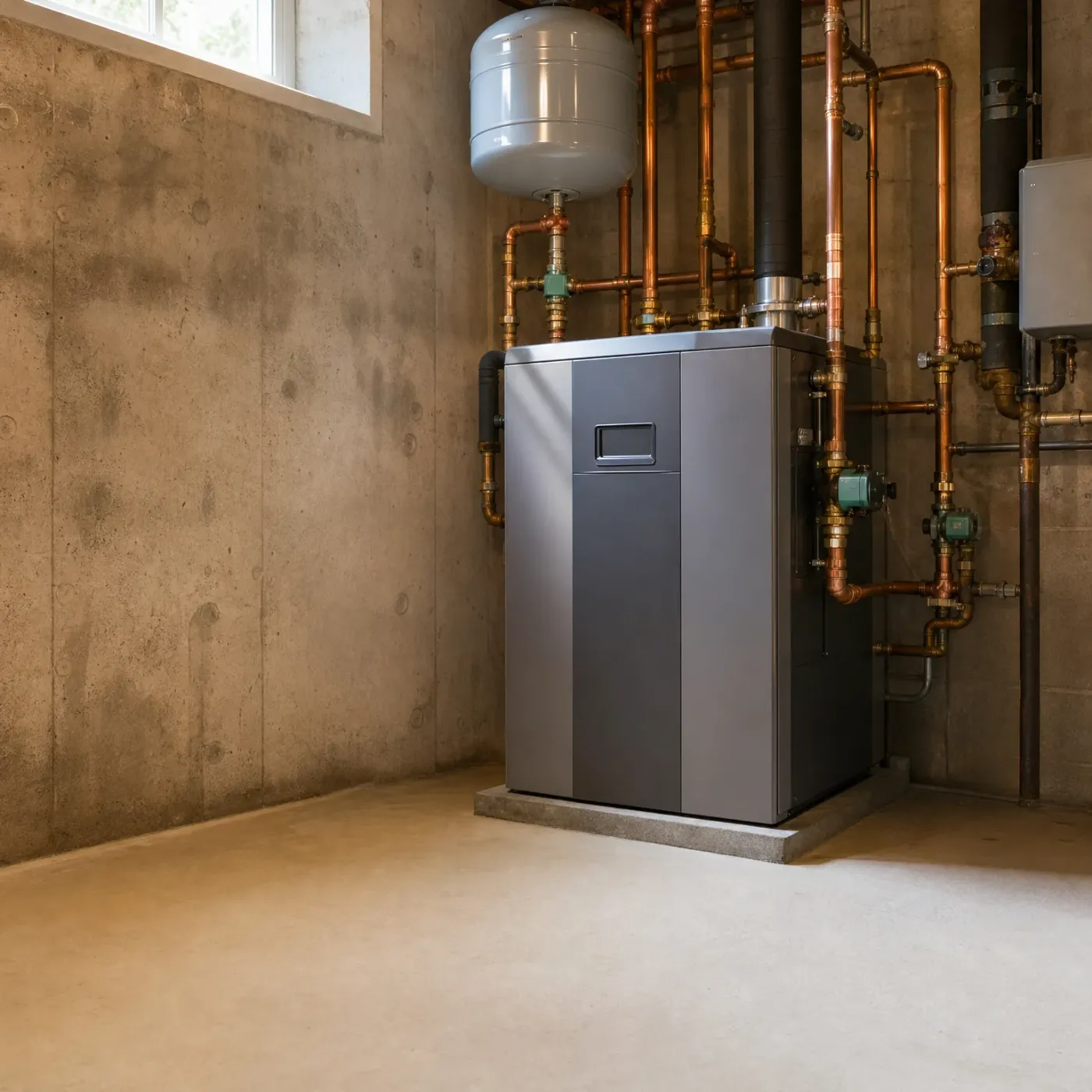
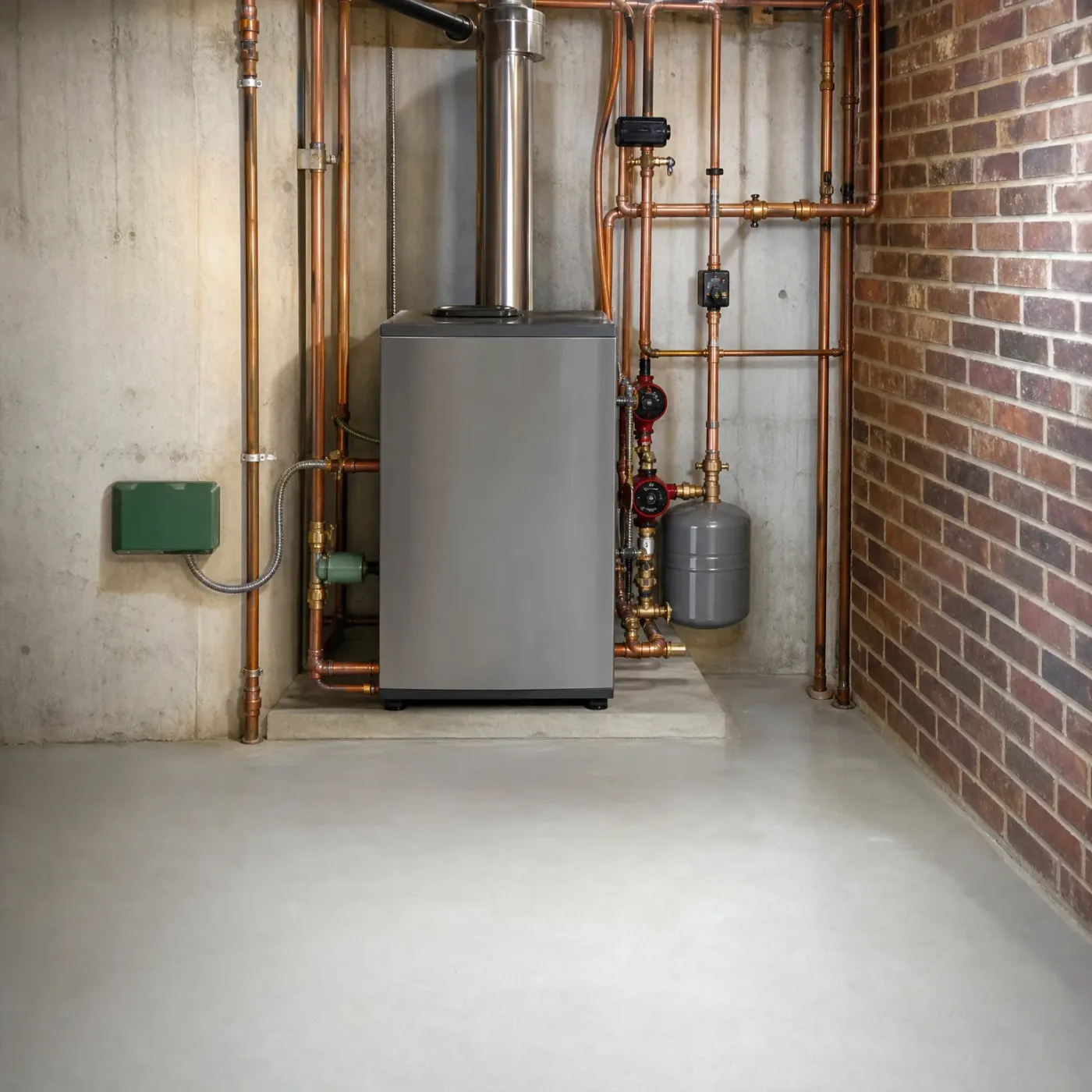
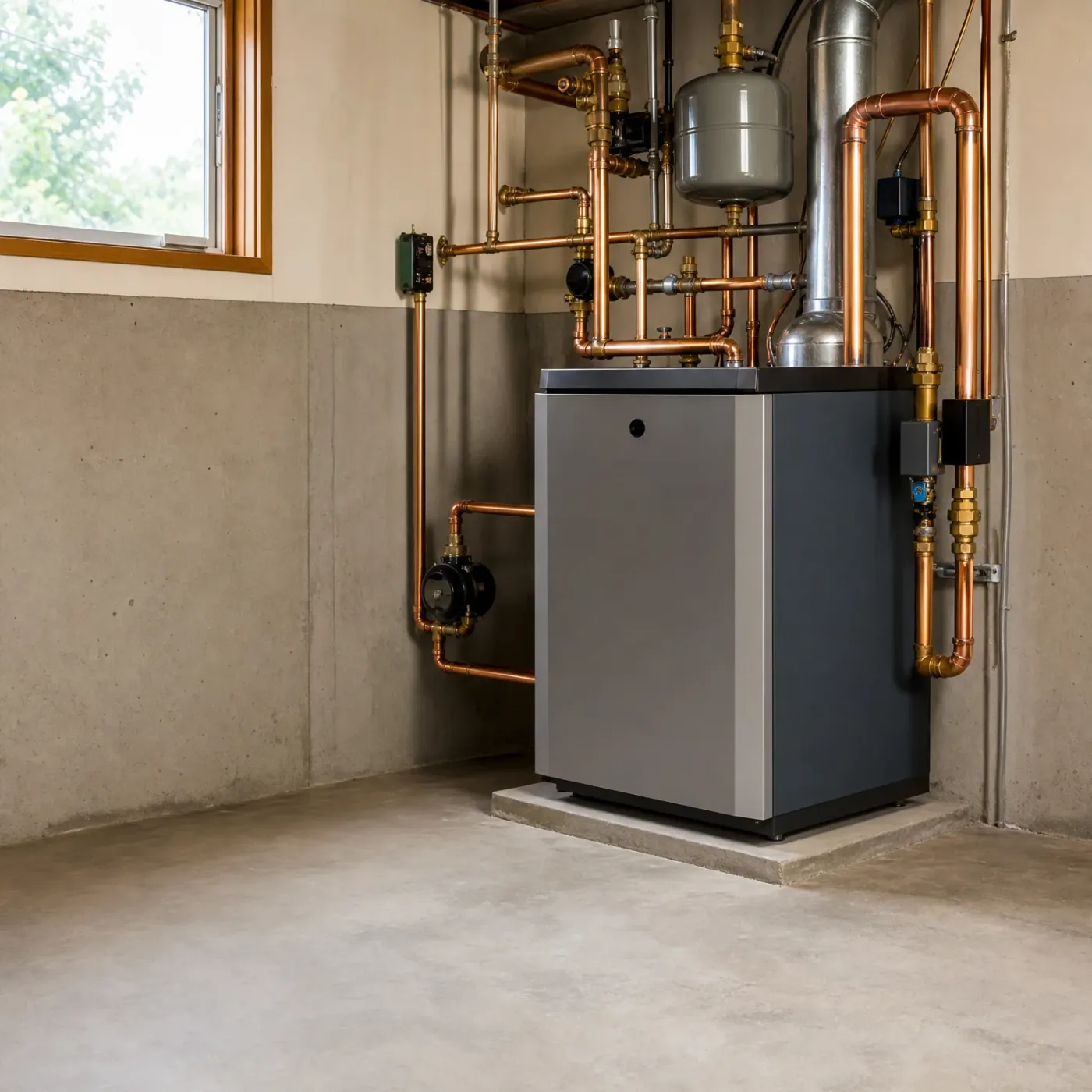
Heat exchanger warm, pressure holding steady, pumps cycling on cue. The gauge sits where it should and the burner lights the moment the thermostat calls. No short cycling, no lockout code, no cold radiator in the back bedroom. This is what you want to find when you walk down those basement stairs.
Won't fire
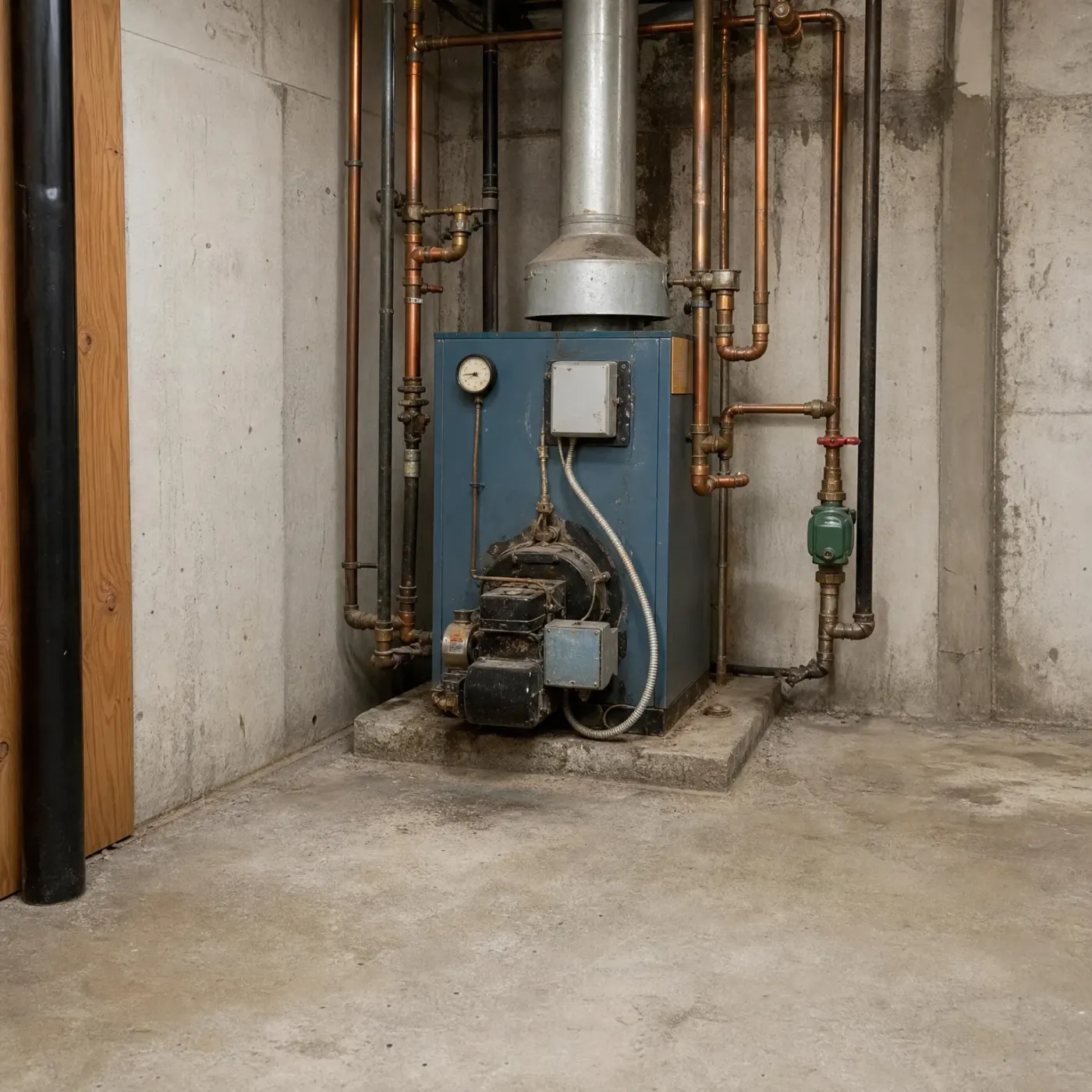
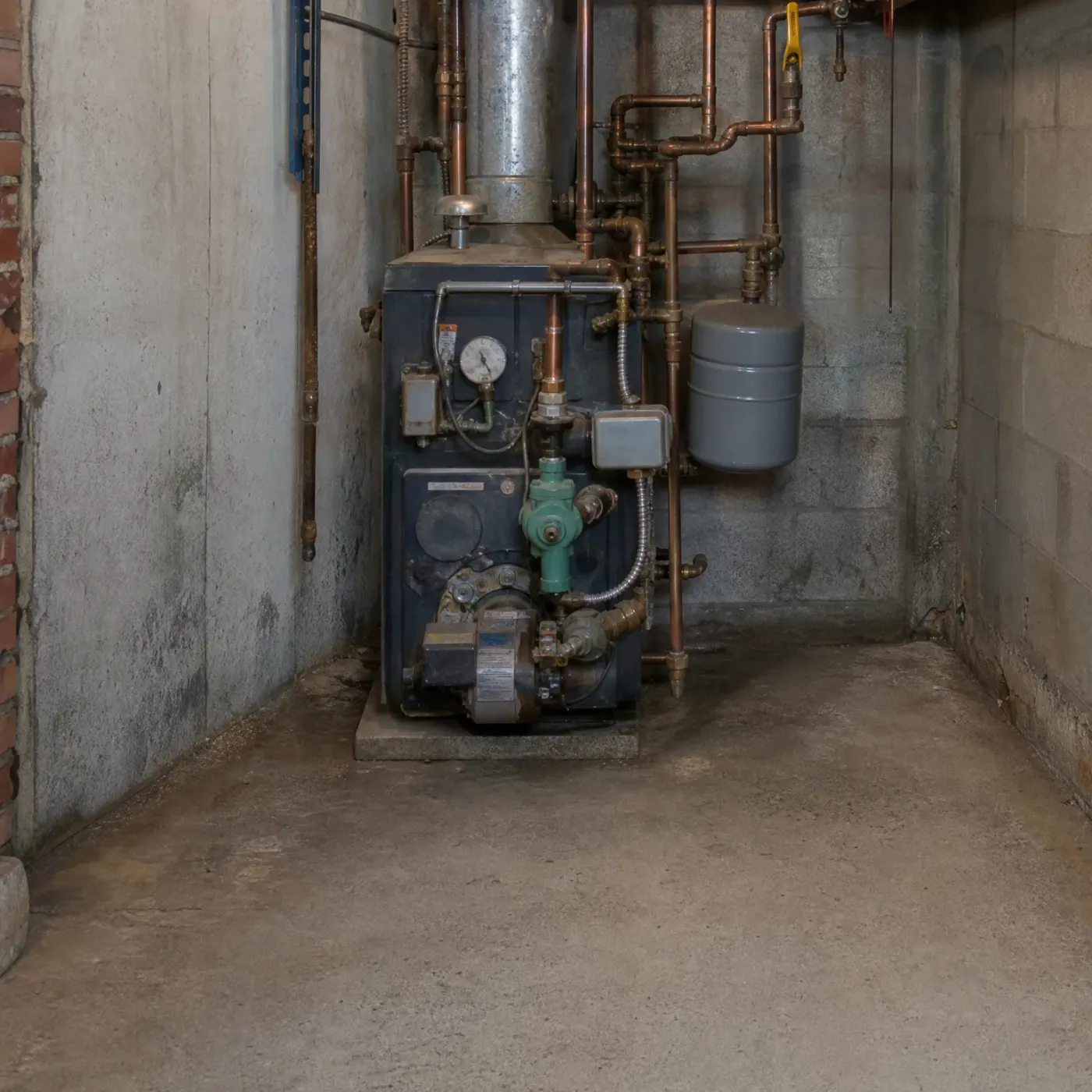
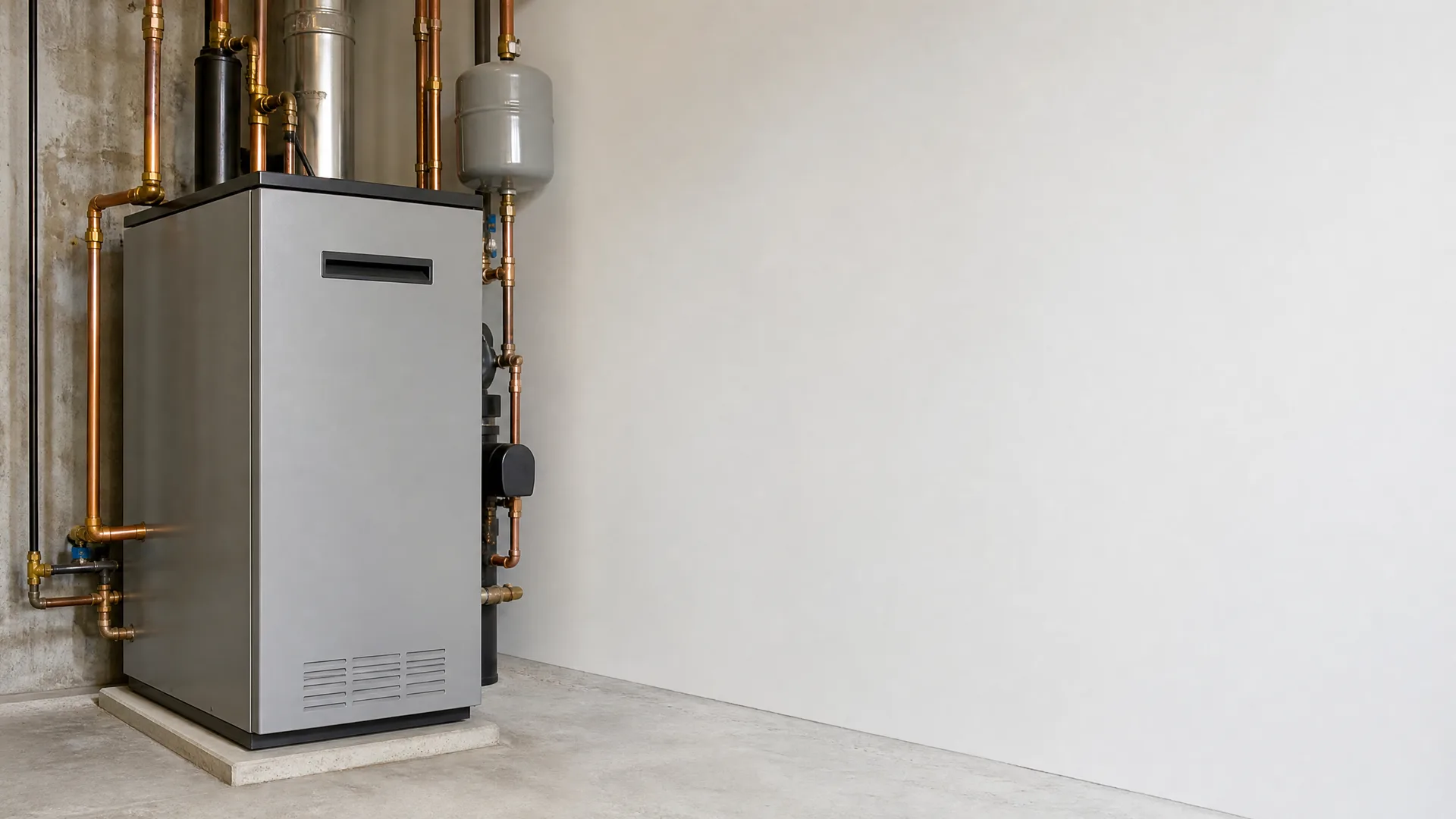
The gauge reads low, the flue looks sooty, and the burner tries twice then gives up. Maybe a frozen condensate line, maybe a pressure switch that won't make contact in the cold. Whatever it is, a boiler that acts like this on a Minnesota morning needs a look before the house loses more heat.
32°F outside, condensate lines freeze fast
A frozen condensate line blocks drainage and trips the pressure switch. In a Minnesota cold snap this happens within hours, not days, once the temperature drops.
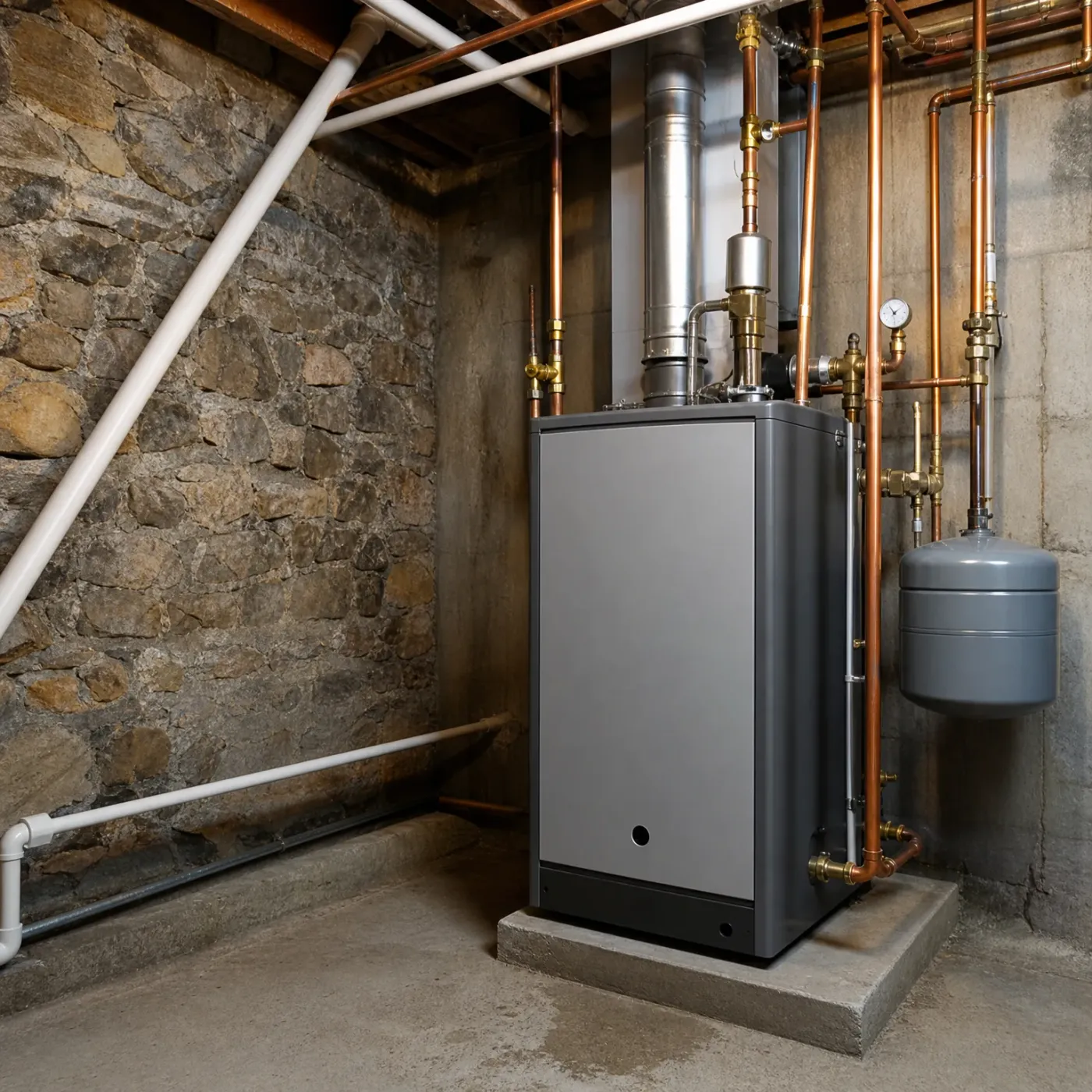
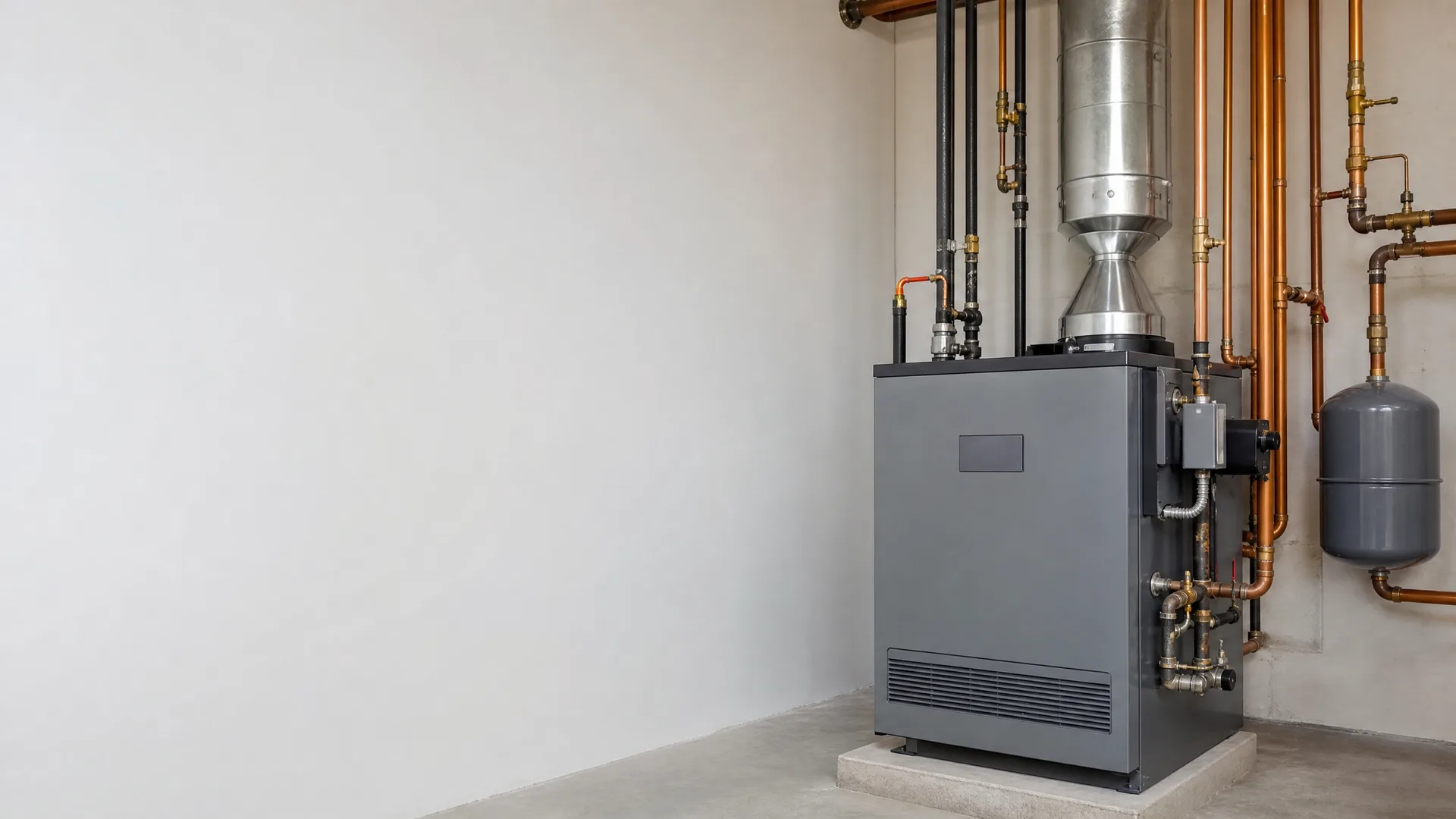
The pressure gauge sits mid-range, the pumps cycle without hesitation, and every pipe run stays warm end to end.
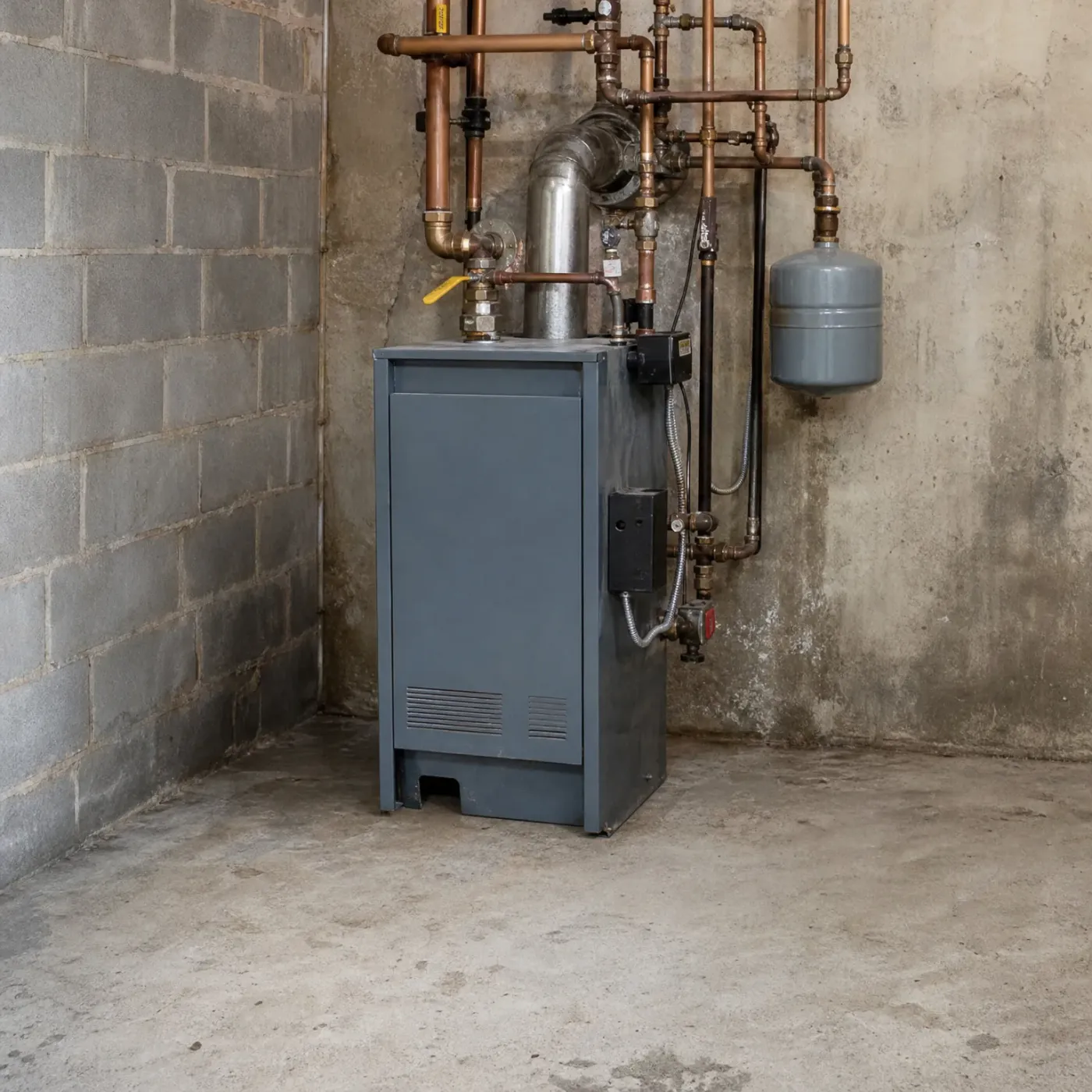
A single frozen line or stuck valve can idle the whole system, and nothing in that alcove will tell you which.
1
Thermostat calls for heat and sends power to the control board.
2
Control board checks the pressure switch and safety limits before firing.
3
Igniter heats up or the pilot lights the main burner.
4
Flame sensor confirms ignition within seconds or shuts the burner down.
Before you get your boiler repairAfter you get your boiler repair
Winter nights average 8°F statewide
Winter nights here average 8°F. At that temperature a boiler isn't optional for a night or two while you wait around for someone to call you back. A no-heat call on an 8°F night needs a contractor who can get to your house the same day, not a week of phone tag with different companies.
NOAA nClimDiv 1991-2020 county normals weighted by homes
What the cold does to your house
Once the boiler stops firing, your house starts losing the fight against a Minnesota night fast. Pipes along outside walls are the first to feel it, and a basement utility sink or a laundry line can freeze solid before morning. Rooms farthest from the mechanical room go cold first, which is why the back bedroom or the addition over the garage is usually where someone notices before anyone checks the thermostat.
Finding someone who answers tonight
A no-heat call at night usually means working down a list, explaining the same problem to whoever picks up, then waiting to see who actually shows. That search gets handed to one local contractor who already knows what fails on a boiler in a hard freeze, from a stuck zone valve to a tripped pressure switch. You explain it once, to someone who services this equipment all winter, not a dispatcher sorting calls between three companies.
A boiler that won't fire almost always comes down to one of a short list of causes: a closed valve, low pressure, a frozen condensate line, a failed igniter, a tripped safety switch. Finding which one it is takes someone who checks the system in order rather than guessing. That's the kind of work a boiler contractor who services this equipment every winter in Minnesota does without wasting a visit on the wrong part first. You won't need to call around to find that person or explain the problem more than once. One licensed local contractor gets the details of your system and your situation, and takes it from there. Your boiler isn't working because something specific inside it stopped doing its job, and that part gets found, not guessed at. Once it's found, it gets fixed, and the house starts warming up again the way it's supposed to on a cold Minnesota night.
Boiler Repair
Skip the calls to every shop
Step 1 of 3: Equipment
Tell a local repair pro what your boiler is doing.
Describe your boiler job, and a local pro who handles it gets in touch.
Get the boiler repair search off your mind today.
Once you send the form, finding a pro is off your list.
Describe your boiler job once, to one pro.
Fill out one short form instead of calling around.